
How effective is a urine test for kidney infection?
Short answer
A urine test is useful for detecting infection and guiding treatment, but symptoms and clinical assessment remain essential for kidney infection.
This answers one question. It is not a diagnosis and does not replace an assessment by a licensed doctor.
At a glance
- Urine test can show
- Inflammation, blood, or bacteria
- Culture can help
- Match treatment to the identified germ
What the result can mean
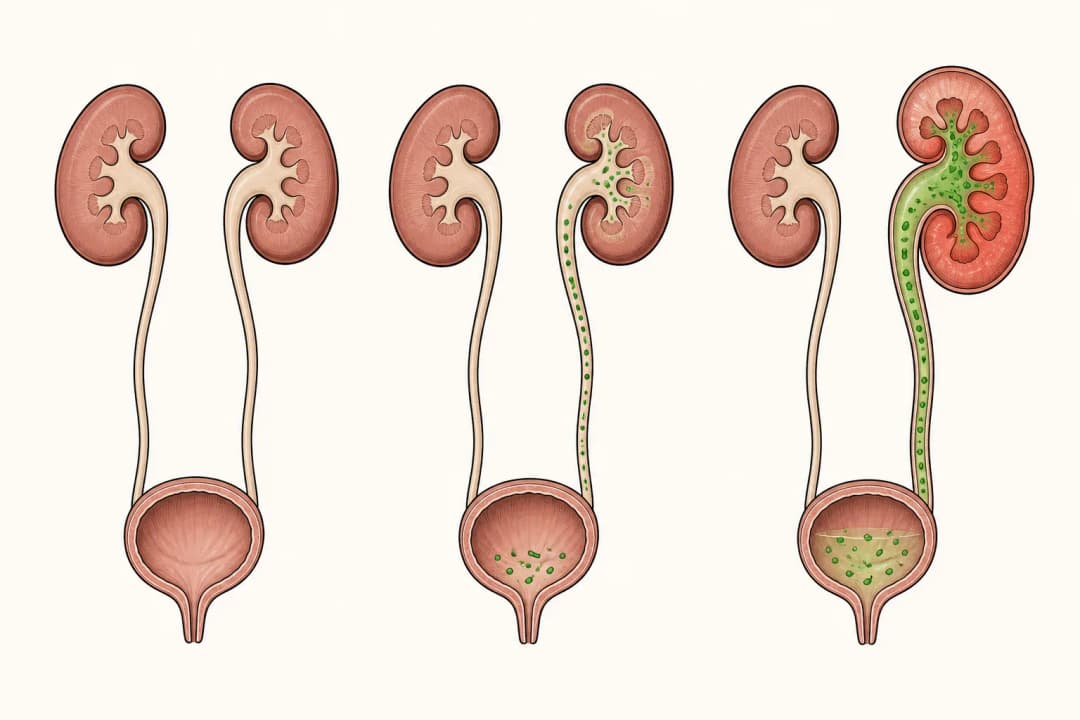
A kidney infection can cause fever, chills, pain in the side or back, nausea, and urinary symptoms, although the pattern varies. Urine testing may detect white blood cells, blood, or bacteria. A culture can identify the germ and help a clinician choose an appropriate antibiotic. A negative or unclear sample does not always settle the question, particularly after antibiotics, with a poor-quality sample, or when symptoms are strong. Blood tests or scans may be considered when illness is severe, symptoms do not improve, or a blockage is suspected.
What to do next
Provide a clean, midstream sample before taking an antibiotic when possible, following the collection instructions. Tell the clinician about pregnancy, kidney problems, allergies, recent antibiotics, and previous resistant infections. Take prescribed treatment as directed and arrange review if fever, pain, or vomiting persists. Fluids may help you avoid dehydration, but they do not replace assessment or treatment.
When to seek care urgently
Get urgent medical help for fever with flank pain, confusion, faintness, repeated vomiting, marked weakness, or difficulty keeping fluids down. Seek prompt advice during pregnancy, with a known urinary blockage or kidney condition, or if symptoms worsen after treatment begins. A kidney infection can become serious when infection spreads beyond the urinary tract.
Questions for your doctor
Ask whether your sample needs a culture, how the symptoms fit with a kidney infection, when results are expected, and what improvement should look like. Clarify which warning signs mean you should return immediately and whether further testing is needed.
Find care
General Clinics & Polyclinics in Abu Dhabi
That answer is general. If you want it applied to your own case, these are licensed general clinics & polyclinics listed in Abu Dhabi.
27 Ar Ruwwad St - Shakhbout City - MSH4 - Abu Dhabi - United Arab Emirates
Accepts: Daman, Thiqa, Cigna, MetLife +20 more
Al Ruwais, Al Dhafrah
Accepts: Daman, Thiqa, AXA, Cigna +16 more
Al Bahyah - Al Bahyah Old - Abu Dhabi - United Arab Emirates
Accepts: Daman, Thiqa, Cigna, Allianz Care +18 more
Abu Dhabi
Accepts: Daman, Thiqa, AXA, Cigna +27 more
Ordered by verification status and how complete each clinic's public record is, then alphabetically. This is a directory listing, not a ranking — Zavis does not rate or recommend providers.
A factual listing drawn from the DHA, DOH and MOHAP licence registers. It is not a referral, an endorsement, or advice that any of these providers is right for you.
Questions people ask
Can a urine test alone diagnose a kidney infection?
No. The result is interpreted alongside fever, pain, examination, medical history, and sometimes blood tests or imaging.
Can antibiotics affect the result?
Yes. Antibiotics taken before collection can reduce detectable bacteria, so tell the clinician about any recent doses.
Related
Related reading
Keep reading
Medical disclaimer. This page is general health information, not medical advice, and it cannot diagnose you. Always consult a licensed healthcare provider about your own symptoms and treatment. In an emergency in the UAE, call 998 for an ambulance.