
How effective is strength training rehabilitation for osteopenia?
Short answer
Strength training rehabilitation can support osteopenia by improving muscle strength, balance, and safe loading of the skeleton, while helping protect everyday function.
This answers one question. It is not a diagnosis and does not replace an assessment by a licensed doctor.
At a glance
- Main target
- Strength, balance, and safe skeletal loading
- Safety focus
- Technique, fracture history, and controlled progression
- Helpful complement
- Walking, balance practice, and fall prevention
What this means
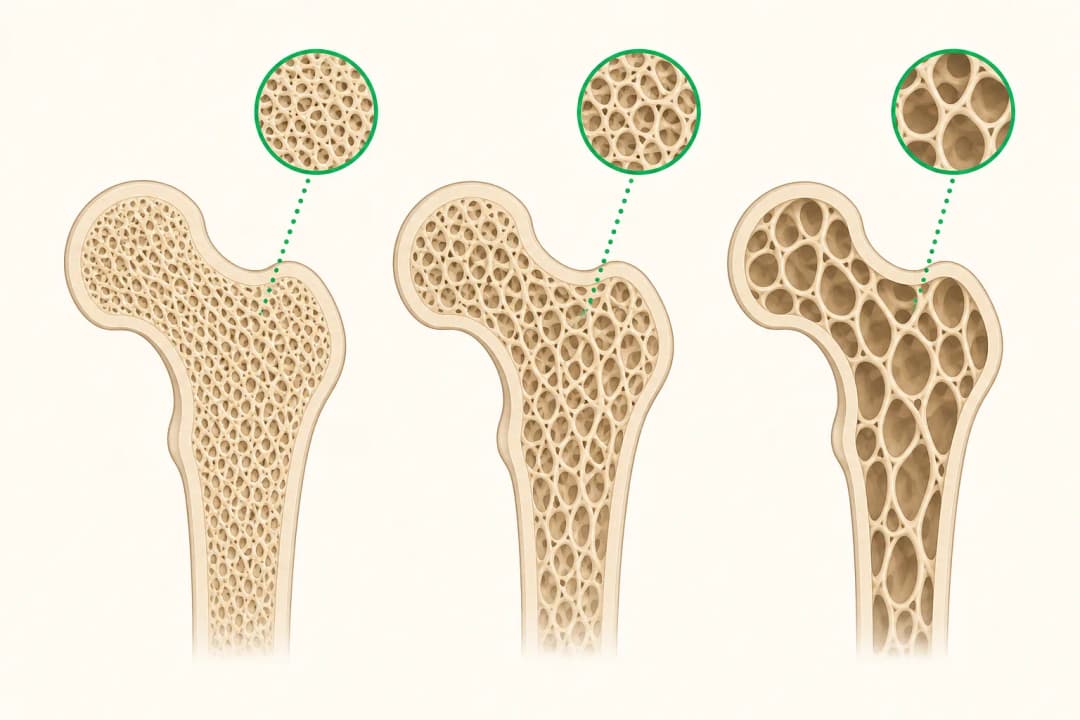
Osteopenia means bone density is below the usual range but is not the same as having a fracture. Strength work gives muscles a reason to adapt and can help you move, lift, and balance with more control. It is only one part of bone care: the right programme also considers previous fractures, posture, balance, medical conditions, and any medicines that affect bones. Exercises should use sound technique and a suitable load; forceful bending, twisting, or impact may not be appropriate for everyone.
Building a safe programme
Ask a physiotherapist or doctor to review your fracture history, bone assessment, balance, and current activity before starting unfamiliar resistance work. Begin with movements you can control, such as supported lower-limb exercises, posture work, and resistance selected for your capacity. Progress gradually and keep the back in a comfortable position during lifting. Walking, balance practice, and home safety can complement strengthening. Learn about [Strength Training Rehabilitation](/treatments/physiotherapy-and-rehabilitation/strength-training-rehabilitation/).
When to seek care
Contact a clinician about new, persistent, or focal bone or back pain, a change in posture, or pain after a minor incident. Seek urgent care after a fall with severe pain, inability to bear weight, sudden loss of movement, or suspected fracture. Do not push through sharp pain during resistance work.
Questions to ask
Ask which movements and loads are suitable for your bone health, whether spinal flexion or impact should be modified, and how balance training fits the plan. Ask how often progress should be reviewed and what symptoms should stop an exercise.
Find care
General Clinics & Polyclinics in Abu Dhabi
That answer is general. If you want it applied to your own case, these are licensed general clinics & polyclinics listed in Abu Dhabi.
27 Ar Ruwwad St - Shakhbout City - MSH4 - Abu Dhabi - United Arab Emirates
Accepts: Daman, Thiqa, Cigna, MetLife +20 more
Al Ruwais, Al Dhafrah
Accepts: Daman, Thiqa, AXA, Cigna +16 more
Al Bahyah - Al Bahyah Old - Abu Dhabi - United Arab Emirates
Accepts: Daman, Thiqa, Cigna, Allianz Care +18 more
Abu Dhabi
Accepts: Daman, Thiqa, AXA, Cigna +27 more
Ordered by verification status and how complete each clinic's public record is, then alphabetically. This is a directory listing, not a ranking — Zavis does not rate or recommend providers.
A factual listing drawn from the DHA, DOH and MOHAP licence registers. It is not a referral, an endorsement, or advice that any of these providers is right for you.
Questions people ask
Can exercise reverse osteopenia?
Exercise can support muscle, balance, function, and bone loading, but its effect varies. A clinician can combine it with the rest of your bone-health plan.
Is heavy lifting suitable for everyone with osteopenia?
Not automatically. The appropriate resistance depends on fracture history, technique, symptoms, and overall health, so build it with professional guidance.
Keep reading
Medical disclaimer. This page is general health information, not medical advice, and it cannot diagnose you. Always consult a licensed healthcare provider about your own symptoms and treatment. In an emergency in the UAE, call 998 for an ambulance.