
How effective is shockwave therapy for gluteal tendinopathy?
Short answer
Shockwave therapy may ease outer-hip pain and improve function in gluteal tendinopathy, but it is not a guaranteed cure and works best within a tailored rehabilitation plan.
This answers one question. It is not a diagnosis and does not replace an assessment by a licensed doctor.
At a glance
- Commonly affected function
- Walking, stairs, side-lying, and single-leg loading
- Useful progress signs
- Less night pain and improved tolerance of hip loading
What response to expect
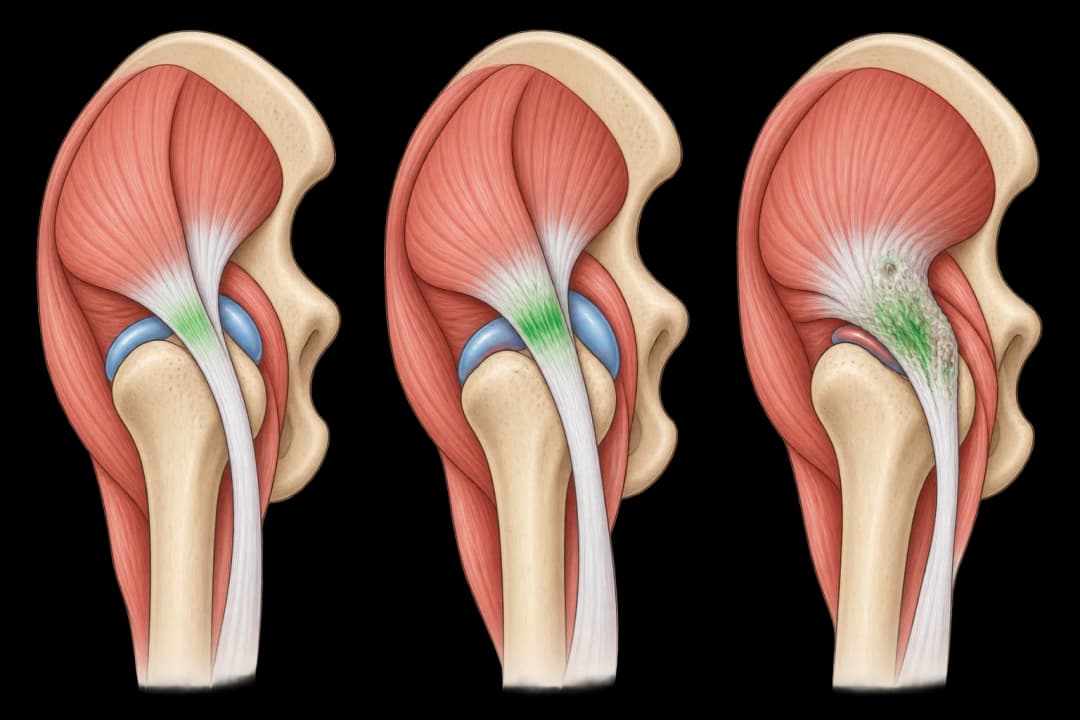
Gluteal tendinopathy affects the tendons of muscles that stabilise the hip. Pain may increase when lying on the affected side, climbing stairs, walking uphill, or standing on one leg. Shockwaves are directed at the tendon to stimulate a local treatment response. The aim is symptom reduction and better loading tolerance, not instant repair.
Some people notice soreness after a session before improvement develops. The result depends on factors such as tendon irritability, hip strength, sleeping position, activity demands, and whether another problem is contributing to the pain. A useful outcome is being able to walk, sleep, or use stairs with less pain and more confidence.
Steps that support recovery
Have the diagnosis checked before treatment, particularly if pain travels below the knee or there is numbness, back pain, or substantial weakness. A rehabilitation plan commonly adjusts compressive positions, such as lying directly on the painful side or standing with the hip dropped, then builds hip and trunk strength gradually.
Follow the agreed activity limits between sessions. Do not judge the treatment by one painful day; instead, compare walking tolerance, sleep, and stair use across several days. Tell your clinician if exercises or shockwave sessions repeatedly cause a flare that does not settle.
When to seek medical care
Arrange prompt medical review after a fall or sudden force, or if you develop inability to bear weight, rapidly increasing swelling, fever, new numbness, or marked weakness. These signs may point to an injury or another cause that needs different care.
Questions to ask your clinician
How was gluteal tendinopathy distinguished from a back or joint problem? Which positions should I change? What level of soreness is expected after treatment? How will we measure progress, and what is the next option if my function does not improve?
Find care
General Clinics & Polyclinics in Abu Dhabi
That answer is general. If you want it applied to your own case, these are licensed general clinics & polyclinics listed in Abu Dhabi.
27 Ar Ruwwad St - Shakhbout City - MSH4 - Abu Dhabi - United Arab Emirates
Accepts: Daman, Thiqa, Cigna, MetLife +20 more
Al Ruwais, Al Dhafrah
Accepts: Daman, Thiqa, AXA, Cigna +16 more
Al Bahyah - Al Bahyah Old - Abu Dhabi - United Arab Emirates
Accepts: Daman, Thiqa, Cigna, Allianz Care +18 more
Abu Dhabi
Accepts: Daman, Thiqa, AXA, Cigna +27 more
Ordered by verification status and how complete each clinic's public record is, then alphabetically. This is a directory listing, not a ranking — Zavis does not rate or recommend providers.
A factual listing drawn from the DHA, DOH and MOHAP licence registers. It is not a referral, an endorsement, or advice that any of these providers is right for you.
Questions people ask
Can shockwave therapy fix weak hip muscles?
No. It may help pain, but strength and load tolerance still need to be rebuilt through appropriately progressed exercise.
Should I sleep on the painful side?
Direct pressure can aggravate some people. Ask your clinician about a supported position that reduces compression while symptoms settle.
Related
Related reading
Keep reading
Medical disclaimer. This page is general health information, not medical advice, and it cannot diagnose you. Always consult a licensed healthcare provider about your own symptoms and treatment. In an emergency in the UAE, call 998 for an ambulance.