
How effective is hair transplant for female pattern hair loss?
Short answer
Hair transplant may improve coverage for selected people with female pattern hair loss, but suitability depends on the distribution of thinning and the strength of donor hair.
This answers one question. It is not a diagnosis and does not replace an assessment by a licensed doctor.
At a glance
- Best candidates
- People with adequate, stable donor density
- Common challenge
- Diffuse thinning across the top of the scalp
- Before surgery
- Confirm the diagnosis and reversible causes
Why suitability varies
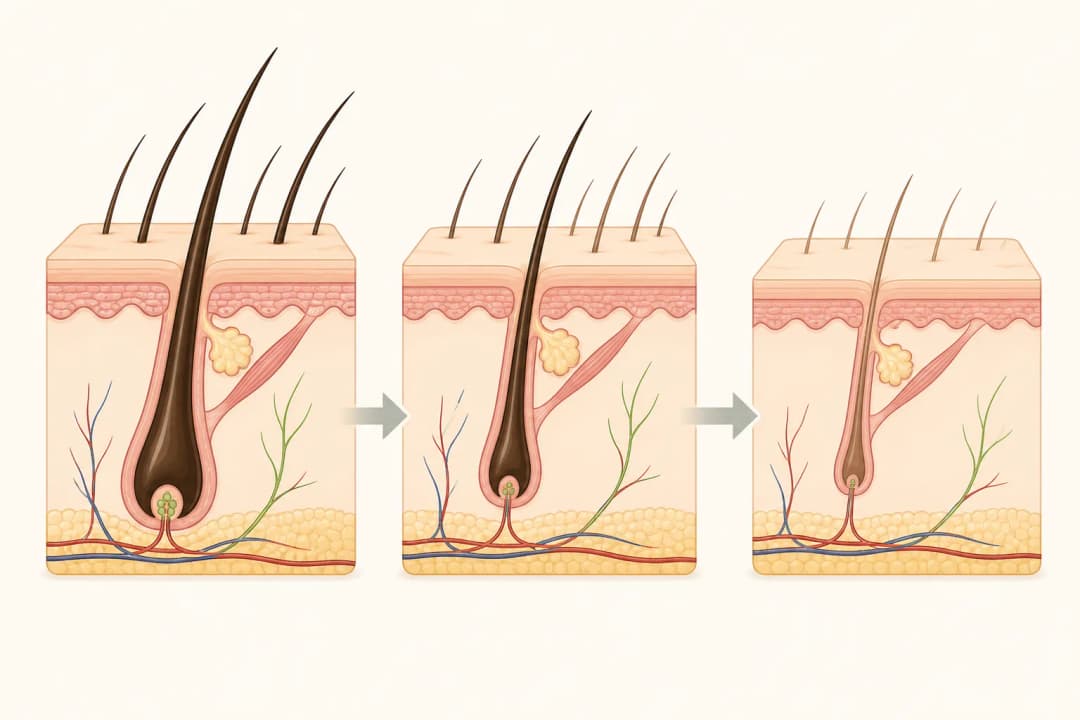
Female pattern hair loss often causes diffuse reduction in density across the top of the scalp rather than a single empty area. A transplant works by moving follicles from a donor region, so it is more suitable when that region remains dense and stable. If thinning also affects the donor zone, there may be less hair available to redistribute. The planned hairline, hair thickness, curl, scalp visibility, and continuing change in native hair all influence the visual result. Other causes of shedding, including iron deficiency, thyroid problems, hormonal changes, or inflammatory scalp disease, may need assessment before surgery.
How to prepare
Start with a diagnosis and scalp examination rather than booking a procedure based on photographs alone. Ask whether your pattern is stable enough for surgery and whether medical treatment could protect existing follicles. Discuss donor density, the area that can reasonably be covered, the expected appearance during healing, and how future thinning would be managed. Tell the clinician about pregnancy plans, hormonal treatment, medicines, and conditions that affect wound healing. Follow the clinic’s instructions for hair washing, activity, and protection from sun after treatment. Read more about Hair Transplant when comparing options.
When to seek care
Arrange medical assessment promptly for rapid shedding, sharply defined patches, scalp tenderness, pustules, heavy scale, or loss of brows. After surgery, contact the treating clinic about worsening pain, persistent bleeding, spreading redness, fever, or discharge. These signs need review rather than extra hair products or home remedies.
Questions for your doctor
What type of hair loss do I have, and has it been evaluated for reversible causes? Is my donor area sufficiently dense? What coverage can be planned without overusing donor follicles? How might ongoing thinning change the result? Which treatments can support my existing hair?
Find care
General Clinics & Polyclinics in Abu Dhabi
That answer is general. If you want it applied to your own case, these are licensed general clinics & polyclinics listed in Abu Dhabi.
27 Ar Ruwwad St - Shakhbout City - MSH4 - Abu Dhabi - United Arab Emirates
Accepts: Daman, Thiqa, Cigna, MetLife +20 more
Al Ruwais, Al Dhafrah
Accepts: Daman, Thiqa, AXA, Cigna +16 more
Al Bahyah - Al Bahyah Old - Abu Dhabi - United Arab Emirates
Accepts: Daman, Thiqa, Cigna, Allianz Care +18 more
Abu Dhabi
Accepts: Daman, Thiqa, AXA, Cigna +27 more
Ordered by verification status and how complete each clinic's public record is, then alphabetically. This is a directory listing, not a ranking — Zavis does not rate or recommend providers.
A factual listing drawn from the DHA, DOH and MOHAP licence registers. It is not a referral, an endorsement, or advice that any of these providers is right for you.
Questions people ask
Can everyone with female pattern hair loss have a transplant?
No. Diffuse loss, weak donor density, or an unconfirmed diagnosis may make surgery unsuitable or less predictable.
Will a transplant treat the underlying cause?
No. It redistributes follicles, so a separate plan may be needed to support hair that remains in place.
Related
Related reading
Keep reading
Medical disclaimer. This page is general health information, not medical advice, and it cannot diagnose you. Always consult a licensed healthcare provider about your own symptoms and treatment. In an emergency in the UAE, call 998 for an ambulance.