
How effective is genomic tumour profiling for cancer of unknown primary?
Short answer
Genomic tumour profiling can help some people with cancer of unknown primary by finding treatment-relevant changes, but it may not identify the original cancer site.
This answers one question. It is not a diagnosis and does not replace an assessment by a licensed doctor.
At a glance
- Main use
- Look for molecular clues and possible treatment matches
- Key limit
- It may not locate the primary tumour
What the test adds
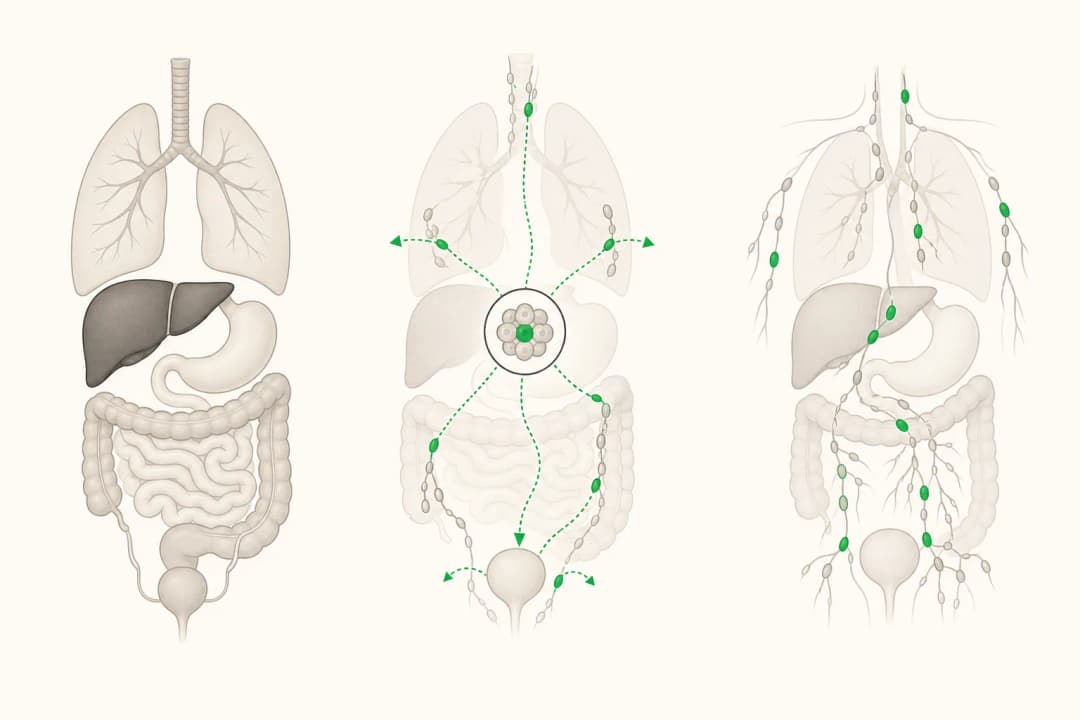
Cancer of unknown primary means cancer has been found but its starting site remains unclear after clinical assessment and pathology. Profiling examines molecular features in tumour tissue. It may suggest a tissue of origin, reveal a change that has a potential treatment match, or show features that help the team understand the disease.
The report is interpreted alongside scans, biopsy findings, examination and laboratory results. A predicted tissue of origin is not the same as proof, and a target does not guarantee benefit. Some tumours have no finding that can be acted on with an available treatment.
Decisions after profiling
Ask whether the tissue sample is sufficient and whether the test is being used to seek a tissue-of-origin clue, a treatment target, or both. Ask the oncology team to rank findings by confidence and explain how each could alter treatment.
Discuss standard treatment, targeted options and trial referrals together. Keep the molecular report for future consultations. If the cancer changes, ask whether a new biopsy is appropriate, since the profile from an earlier sample may not capture the current biology.
When to seek medical care
Speak with the oncology team when the report is available or when a proposed treatment depends on it. Seek urgent assessment for sudden breathlessness, severe pain, new weakness or confusion, or fever during treatment; profiling is planned testing rather than emergency care.
Questions for your doctor
Ask whether the result suggests a likely origin, which findings are actionable, how strong the treatment evidence is, and what happens if no match is found. Ask whether a second pathology review or fresh tissue would clarify the plan.
Questions people ask
Can profiling identify where the cancer began?
It may provide a clue, but the result must be combined with pathology and imaging and may remain uncertain.
What if no target is found?
The oncology team can still use the clinical and pathology findings to discuss appropriate treatment options.
Related
Related reading
Keep reading
Cancer care in the UAE
Hospitals & Medical Centers in Abu Dhabi
Most UAE cancer care is delivered inside hospital services rather than by standalone oncology clinics, so these are licensed hospitals & medical centers listed in Abu Dhabi. Confirm the specific cancer service exists before you travel, and know that asking for a second opinion is routine.
Ahalia Hospital Musaffah Building - Musaffah - Musaffah Industrial - Abu Dhabi - United Arab Emirates
Accepts: Daman, Thiqa, AXA, Cigna +26 more
Al Ruwais Industrial City - Abu Dhabi - United Arab Emirates
Accepts: Daman, Thiqa, AXA, Cigna +30 more
Abu Dhabi, Abu Dhabi
Accepts: Daman, Thiqa, AXA, Cigna +30 more
Second opinions are routine in cancer care and asking for one does not affect your treatment. How to arrange a second opinion in the UAE.
Ordered by verification status and how complete each clinic's public record is, then alphabetically. This is a directory listing, not a ranking — Zavis does not rate or recommend providers.
A factual listing drawn from the DHA, DOH and MOHAP licence registers. It is not a referral, an endorsement, or advice that any of these providers is right for you.
Medical disclaimer. This page is general health information, not medical advice, and it cannot diagnose you. Always consult a licensed healthcare provider about your own symptoms and treatment. In an emergency in the UAE, call 998 for an ambulance.