
How effective is exercise therapy for scapular dyskinesis?
Short answer
Exercise therapy can improve shoulder-blade control, strength and activity tolerance in scapular dyskinesis, although progress depends on its cause and consistent practice.
This answers one question. It is not a diagnosis and does not replace an assessment by a licensed doctor.
At a glance
- Treatment target
- Smooth, coordinated shoulder-blade movement
- Useful measure
- Improved control during reaching and lifting
Understanding the movement
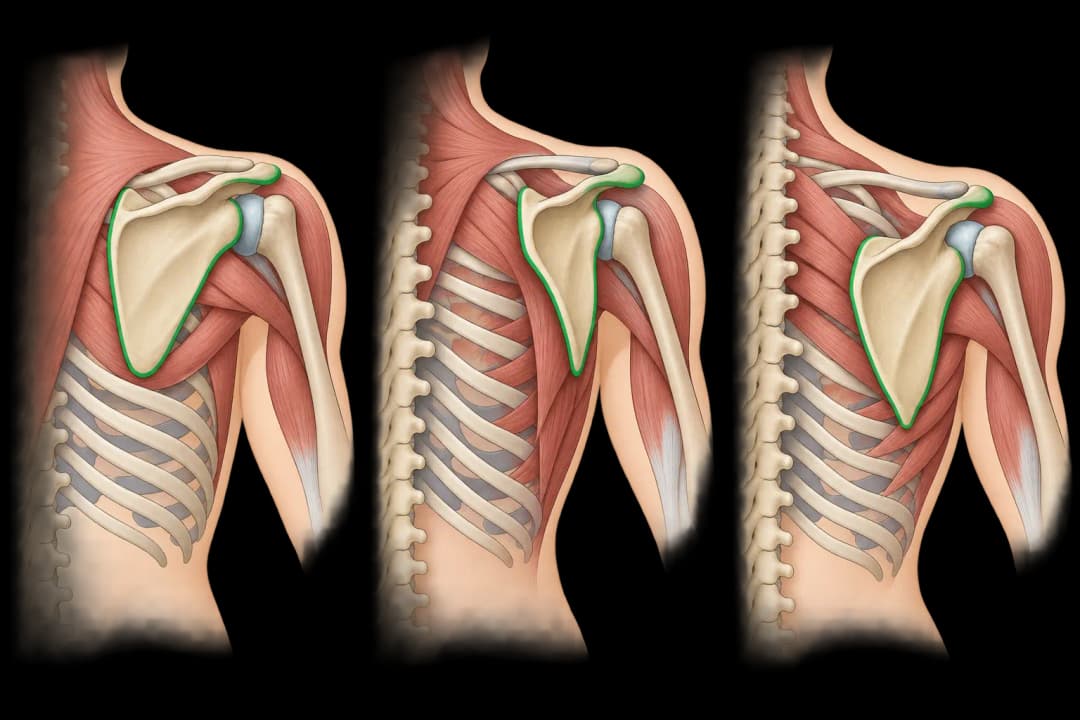
Scapular dyskinesis describes altered movement or positioning of the shoulder blade during arm motion. It may be influenced by weakness, stiffness, pain, nerve problems or repeated overhead demands. Exercise cannot be chosen from appearance alone; an assessment looks at the neck, shoulder, ribs, posture and the way the blade moves.
Treatment commonly aims to improve timing and endurance in the muscles that guide the shoulder blade. Better control may reduce fatigue or discomfort during reaching, pushing and lifting, but a visible difference can remain while function improves.
Practising the right movements
Your programme may start with low-load shoulder-blade setting, wall slides, serratus-focused work or rowing patterns, then progress to resistance and task-specific overhead control. Keep the neck relaxed and avoid shrugging to complete a repetition. Quality and smooth control matter more than using a heavy load.
Practise regularly as prescribed and change only one variable at a time. A mirror or video can help you notice unwanted winging, but do not treat a visual cue as a diagnosis. Persistent symptoms deserve reassessment rather than endless exercise changes.
When to seek care
Arrange an examination for new winging, arm weakness, numbness, loss of shoulder motion or pain that restricts work and sleep. Seek prompt care after trauma, with rapidly worsening weakness, severe swelling, fever, or a hot joint. Sudden neurological symptoms require emergency assessment.
Questions to ask
Ask what is driving the altered movement, which muscles need attention, and how to tell useful fatigue from overload. Ask when overhead activity is appropriate and whether the neck or nerves need further assessment.
Find care
General Clinics & Polyclinics in Abu Dhabi
That answer is general. If you want it applied to your own case, these are licensed general clinics & polyclinics listed in Abu Dhabi.
27 Ar Ruwwad St - Shakhbout City - MSH4 - Abu Dhabi - United Arab Emirates
Accepts: Daman, Thiqa, Cigna, MetLife +20 more
Al Ruwais, Al Dhafrah
Accepts: Daman, Thiqa, AXA, Cigna +16 more
Al Bahyah - Al Bahyah Old - Abu Dhabi - United Arab Emirates
Accepts: Daman, Thiqa, Cigna, Allianz Care +18 more
Abu Dhabi
Accepts: Daman, Thiqa, AXA, Cigna +27 more
Ordered by verification status and how complete each clinic's public record is, then alphabetically. This is a directory listing, not a ranking — Zavis does not rate or recommend providers.
A factual listing drawn from the DHA, DOH and MOHAP licence registers. It is not a referral, an endorsement, or advice that any of these providers is right for you.
Questions people ask
Will exercise completely change the shape of my shoulder blade?
It may improve movement and function, but visible appearance depends on the cause and may not change fully.
Can I keep using the arm?
Usually activity can be modified, keeping movements controlled and reducing tasks that repeatedly provoke symptoms until guidance is available.
Keep reading
Medical disclaimer. This page is general health information, not medical advice, and it cannot diagnose you. Always consult a licensed healthcare provider about your own symptoms and treatment. In an emergency in the UAE, call 998 for an ambulance.