
How effective is exercise therapy for groin strain?
Short answer
Exercise therapy is often useful for groin strain because graded strengthening can reduce pain, restore adductor capacity, and prepare the hip for activity, though recovery varies by injury severity.
This answers one question. It is not a diagnosis and does not replace an assessment by a licensed doctor.
At a glance
- Training focus
- Adductor strength, hip control, and gradual load tolerance.
- Return to sport
- Add speed and direction changes progressively.
What this means
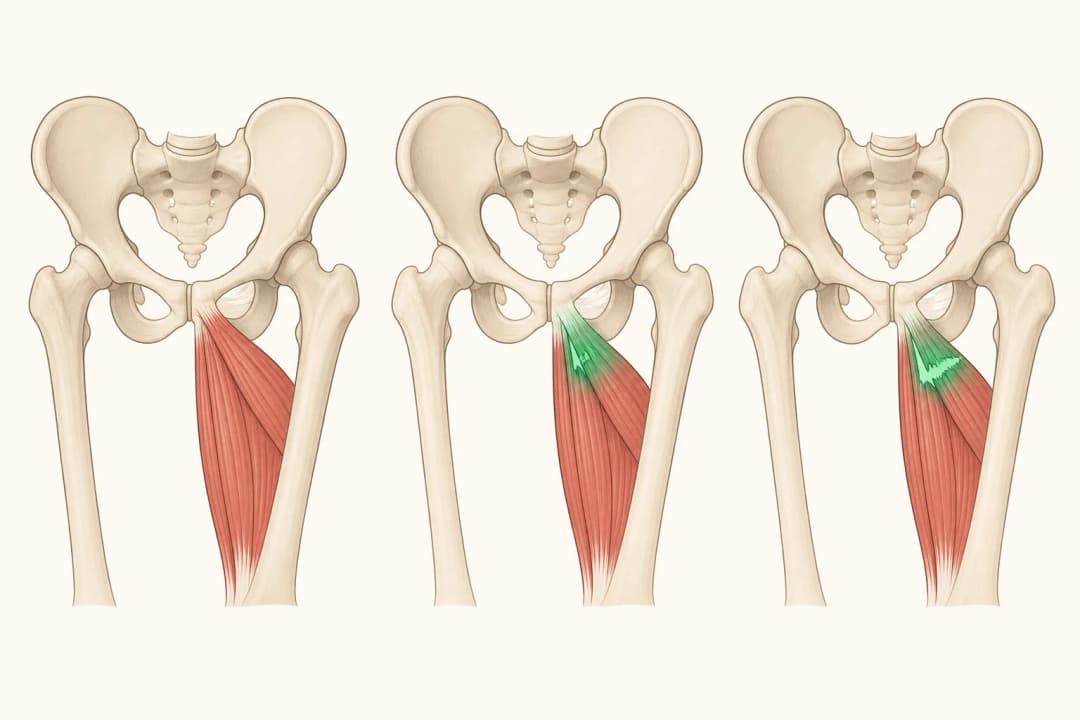
A groin strain commonly involves the adductor muscles on the inner thigh. Early rehabilitation aims to keep movement comfortable while protecting the injured tissue. Later exercises build the ability to squeeze, lengthen, and load the adductors during walking, changing direction, kicking, or climbing stairs.
A clinician may check the injury mechanism, tenderness, hip movement, resisted strength, and nearby areas such as the lower abdomen or hip joint. This helps separate a straightforward muscle strain from another cause of groin pain and sets a safe starting level.
How to approach the programme
Early work may include gentle hip movement and low-effort isometric squeezes. As discomfort settles, the programme can progress to bridges, side-lying or standing adduction, split-stance work, and controlled changes of direction. The exact sequence depends on strength and irritability, so copying an advanced sports drill too soon can prolong symptoms.
Use pain and next-day response as feedback. A small, settling discomfort may be acceptable, while sharp pain, increasing limp, or worsening symptoms after exercise means the load needs review. Return to sport should include sport-specific speed and direction changes, not only pain-free walking.
When to seek care
Get assessed if pain followed a sudden force, bruising is extensive, walking is difficult, or strength does not improve with sensible activity changes. Seek prompt care for severe pain, a visible deformity, numbness, fever, or inability to put weight through the leg.
Useful questions
Ask which exercise level fits the suspected strain, what symptoms signal too much load, and which tests should be passed before running or sport. Ask whether your hip, pelvis, or lower back also needs assessment if the pain pattern is unusual.
Find care
General Clinics & Polyclinics in Abu Dhabi
That answer is general. If you want it applied to your own case, these are licensed general clinics & polyclinics listed in Abu Dhabi.
27 Ar Ruwwad St - Shakhbout City - MSH4 - Abu Dhabi - United Arab Emirates
Accepts: Daman, Thiqa, Cigna, MetLife +20 more
Al Ruwais, Al Dhafrah
Accepts: Daman, Thiqa, AXA, Cigna +16 more
Al Bahyah - Al Bahyah Old - Abu Dhabi - United Arab Emirates
Accepts: Daman, Thiqa, Cigna, Allianz Care +18 more
Abu Dhabi
Accepts: Daman, Thiqa, AXA, Cigna +27 more
Ordered by verification status and how complete each clinic's public record is, then alphabetically. This is a directory listing, not a ranking — Zavis does not rate or recommend providers.
A factual listing drawn from the DHA, DOH and MOHAP licence registers. It is not a referral, an endorsement, or advice that any of these providers is right for you.
Questions people ask
Can I exercise with a groin strain?
Gentle, prescribed movement may be appropriate, but high-load stretching, sprinting, and cutting should wait until strength and symptoms allow.
Why does the pain return after exercise?
The load may have progressed faster than the tissue’s current capacity, or another source of groin pain may need checking.
Keep reading
Medical disclaimer. This page is general health information, not medical advice, and it cannot diagnose you. Always consult a licensed healthcare provider about your own symptoms and treatment. In an emergency in the UAE, call 998 for an ambulance.