
How effective is bisphosphonate therapy for hip fracture?
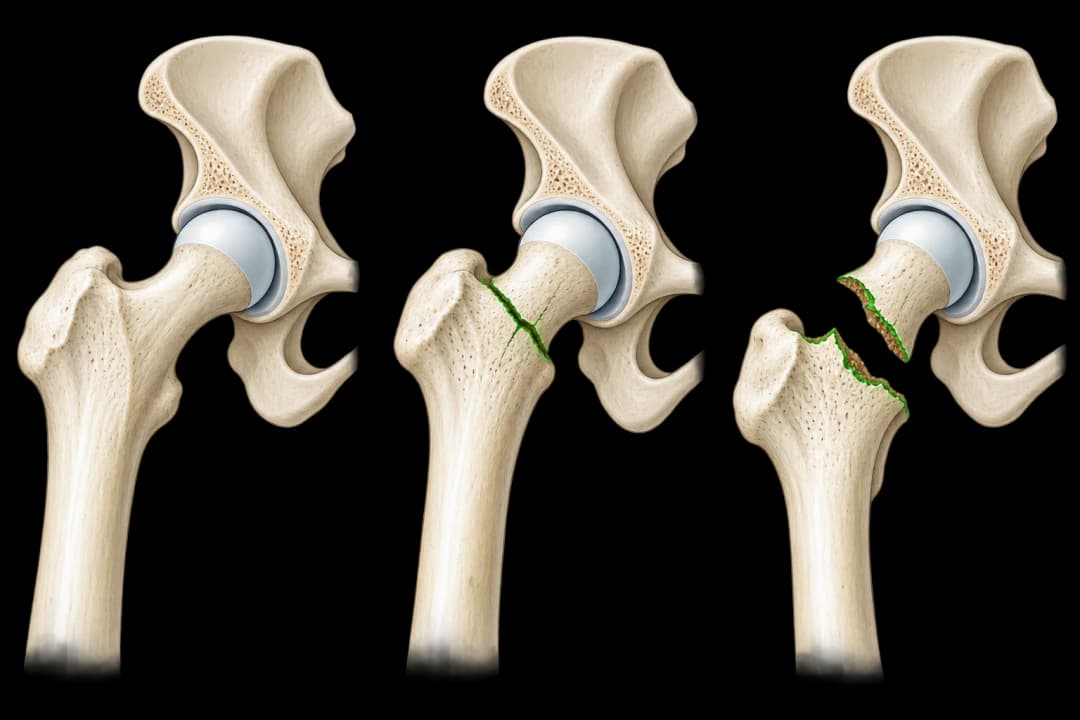
Short answer
Bisphosphonate therapy can reduce future fragility-fracture risk after a hip fracture by slowing bone breakdown, but it does not reunite the broken bone or replace rehabilitation.
This answers one question. It is not a diagnosis and does not replace an assessment by a licensed doctor.
At a glance
- Main purpose
- Reduce the risk of additional fragility fractures.
- What it cannot do
- It does not fix the existing hip fracture or replace rehabilitation.
- Before treatment
- Review kidney health, calcium status, dental needs, and other medicines.
Its role after a hip fracture
A hip fracture can signal that the skeleton is less able to withstand an ordinary fall or load. Bisphosphonates attach to bone and reduce the activity of cells that remove old bone. Over time, this can support stronger bone and help protect other vulnerable areas. The medicine is prevention-focused: it does not stabilize the current fracture, correct displacement, or restore walking strength. Surgery, pain management, physiotherapy, nutrition, and fall prevention address those separate needs. The treatment choice depends on kidney function, dental health, fracture recovery, and overall bone risk.
Planning treatment
Ask the treating team when your hip and general health make medication suitable. Take the prescribed form exactly as directed; some tablets require a full glass of water and remaining upright for a period afterward. Tell the clinician about swallowing problems, kidney disease, low calcium, dental procedures, or medicines and supplements you use. Keep follow-up appointments so symptoms, mobility, calcium or vitamin status, and the wider fracture-prevention plan can be reviewed. Do not stop or restart treatment without guidance.
When to seek care
Contact your care team promptly for severe new thigh or groin pain, difficulty swallowing, persistent heartburn, or symptoms suggesting low calcium such as muscle spasms or tingling. After the fracture, urgent review is needed for worsening wound redness, fever, sudden breathlessness, chest pain, or a new inability to stand or walk. These problems need assessment rather than assuming they are medication effects.
Questions for your doctor
When should I start or resume a bisphosphonate? Which form fits my kidney function and swallowing history? Do I need calcium or vitamin D assessment? How will you monitor bone health? What dental care should happen before treatment?
Find care
General Clinics & Polyclinics in Abu Dhabi
That answer is general. If you want it applied to your own case, these are licensed general clinics & polyclinics listed in Abu Dhabi.
27 Ar Ruwwad St - Shakhbout City - MSH4 - Abu Dhabi - United Arab Emirates
Accepts: Daman, Thiqa, Cigna, MetLife +20 more
Al Ruwais, Al Dhafrah
Accepts: Daman, Thiqa, AXA, Cigna +16 more
Al Bahyah - Al Bahyah Old - Abu Dhabi - United Arab Emirates
Accepts: Daman, Thiqa, Cigna, Allianz Care +18 more
Abu Dhabi
Accepts: Daman, Thiqa, AXA, Cigna +27 more
Ordered by verification status and how complete each clinic's public record is, then alphabetically. This is a directory listing, not a ranking — Zavis does not rate or recommend providers.
A factual listing drawn from the DHA, DOH and MOHAP licence registers. It is not a referral, an endorsement, or advice that any of these providers is right for you.
Questions people ask
Is bisphosphonate therapy a substitute for hip fracture surgery?
No. A hip fracture may need surgical stabilization and rehabilitation; bisphosphonate therapy addresses underlying bone fragility.
Can treatment start while I am still recovering?
Timing is individualized and should account for fracture care, healing, kidney function, calcium status, and the clinician's treatment plan.
Related
Related reading
Keep reading
Medical disclaimer. This page is general health information, not medical advice, and it cannot diagnose you. Always consult a licensed healthcare provider about your own symptoms and treatment. In an emergency in the UAE, call 998 for an ambulance.