
How does Mirena stop periods?
Short answer
Mirena can stop periods by releasing levonorgestrel in the uterus, which thins the womb lining and reduces menstrual bleeding.
This answers one question. It is not a diagnosis and does not replace an assessment by a licensed doctor.
At a glance
- Hormone
- Levonorgestrel is released inside the uterus.
- Main effect
- The womb lining becomes thinner.
- Bleeding pattern
- Periods may become lighter, irregular or absent.
What happens in the womb
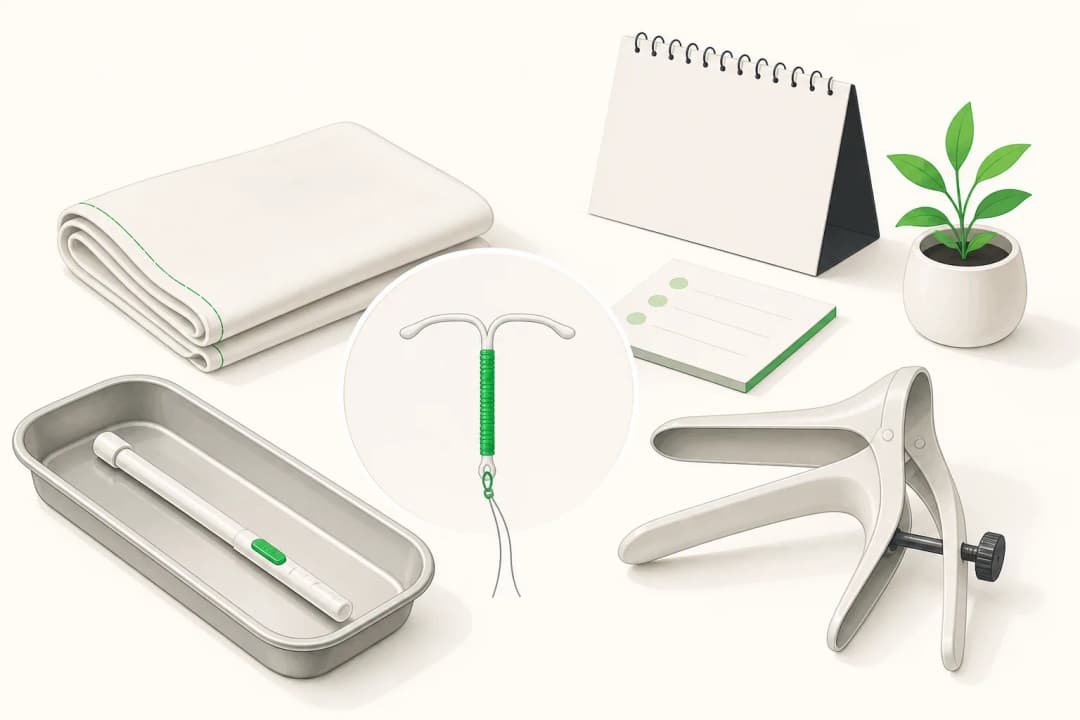
Mirena is a hormonal intrauterine device placed inside the womb. It releases levonorgestrel mainly at the uterine lining, where it makes the lining thinner and cervical mucus thicker. With less lining to shed, monthly bleeding often becomes lighter. Some people eventually have no bleeding, while others continue to have occasional spotting or light periods.
Irregular bleeding is common during the early adjustment period. Mirena can reduce heavy bleeding linked with conditions such as fibroids or adenomyosis, but it does not remove those conditions. A [Hormonal IUD Device](/materials/hormonal-iud-device/) may also provide contraception; your clinician can explain its duration and suitability.
Choosing and living with Mirena
Before insertion, discuss your bleeding pattern, pregnancy plans, pelvic symptoms and any history of womb or cervical disease. After placement, learn how to check the threads if your clinician recommends it and attend follow-up if arranged. Keep a record of bleeding, pain and new symptoms so changes are easier to describe.
Heavy bleeding can contribute to [Iron Deficiency Anaemia](/conditions/iron-deficiency-anaemia/). Other causes of troublesome periods include [Uterine Fibroids](/conditions/uterine-fibroids/), [Adenomyosis](/conditions/adenomyosis/) and [Endometrial Hyperplasia](/conditions/endometrial-hyperplasia/).
When to seek care
Seek prompt medical advice for severe or persistent pelvic pain, fever, unusual discharge, very heavy bleeding, a positive pregnancy test, or if you cannot feel the threads when you normally can. Urgent assessment is needed for sudden severe pain, faintness or heavy bleeding. A clinician can check for infection, displacement, pregnancy or another cause of symptoms.
Questions for your doctor
Ask whether Mirena fits your medical history, when bleeding changes are expected, how its position will be checked, and what alternatives exist if spotting continues. Ask how to distinguish expected cramps from symptoms that need review.
Find care
General Clinics & Polyclinics in Abu Dhabi
That answer is general. If you want it applied to your own case, these are licensed general clinics & polyclinics listed in Abu Dhabi.
27 Ar Ruwwad St - Shakhbout City - MSH4 - Abu Dhabi - United Arab Emirates
Accepts: Daman, Thiqa, Cigna, MetLife +20 more
Al Ruwais, Al Dhafrah
Accepts: Daman, Thiqa, AXA, Cigna +16 more
Al Bahyah - Al Bahyah Old - Abu Dhabi - United Arab Emirates
Accepts: Daman, Thiqa, Cigna, Allianz Care +18 more
Abu Dhabi
Accepts: Daman, Thiqa, AXA, Cigna +27 more
Ordered by verification status and how complete each clinic's public record is, then alphabetically. This is a directory listing, not a ranking — Zavis does not rate or recommend providers.
A factual listing drawn from the DHA, DOH and MOHAP licence registers. It is not a referral, an endorsement, or advice that any of these providers is right for you.
Questions people ask
Does Mirena stop periods immediately?
No. Spotting and irregular bleeding may occur while the womb lining adjusts before bleeding becomes lighter.
Can I still have bleeding with Mirena?
Yes. Some people continue to have light periods or occasional spotting even when the device is working as intended.
Related
Related reading
Keep reading
Medical disclaimer. This page is general health information, not medical advice, and it cannot diagnose you. Always consult a licensed healthcare provider about your own symptoms and treatment. In an emergency in the UAE, call 998 for an ambulance.