
How common is cracked skin in hand eczema?
Short answer
Cracked Skin is a very common presentation of Hand Eczema, where dry inflamed hand skin may split into painful fissures.
This answers one question. It is not a diagnosis and does not replace an assessment by a licensed doctor.
At a glance
- Frequency in hand eczema
- Very common
- Often affected
- Knuckles and fingertips
- A common aggravator
- Repeated wet work
How hand eczema can crack
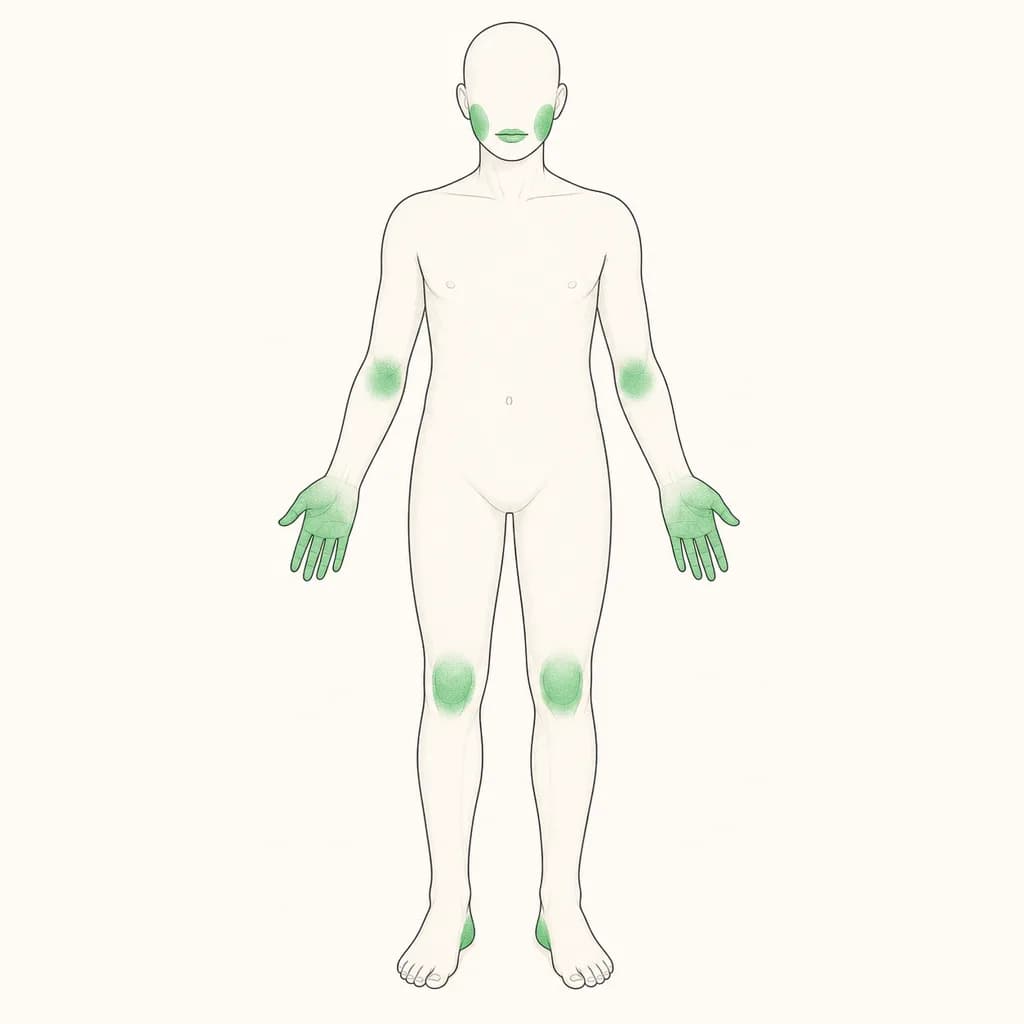
Hand eczema can weaken the protective outer skin barrier. Repeated wet work, soap, sanitiser, cleaning products, friction, and cold dry air can make hands drier and more reactive. Fissures are often seen around knuckles, fingertips, finger webs, and the sides of fingers.
Splitting may occur alongside itch, burning, redness, scaling, or small blisters. Cracks can make everyday tasks uncomfortable because bending a finger pulls on the damaged skin. Cracked skin has several possible causes, so the symptom alone does not establish hand eczema.
Protect the skin barrier
Apply a fragrance-free emollient after handwashing and whenever the skin feels dry. Use lukewarm water, a mild cleanser, and pat hands dry rather than rubbing. For wet or cleaning tasks, wear suitable protective gloves and remove them if sweat builds up inside.
Avoid peeling loose skin or using harsh scrubs on fissures. A clinician may recommend a medicated topical treatment when inflammation is active; use it exactly as directed and continue bland moisturising around it. Keep a note of products or tasks that reliably trigger a flare.
When to arrange assessment
See a clinician if hand cracks are deep, bleeding, limiting work or sleep, or returning despite careful protection. Get prompt advice for increasing tenderness, warmth, swelling, discharge, or spreading redness. Assessment is also helpful when a contact allergy, workplace exposure, fungal infection, or another condition may be contributing.
Questions to bring
Ask which exposures are most relevant to your hands, whether patch testing is appropriate, and how to use gloves without worsening irritation. Bring photos of flares and a list of soaps, sanitisers, gloves, creams, and work tasks that contact your skin.
Find care
General Clinics & Polyclinics in Abu Dhabi
That answer is general. If you want it applied to your own case, these are licensed general clinics & polyclinics listed in Abu Dhabi.
27 Ar Ruwwad St - Shakhbout City - MSH4 - Abu Dhabi - United Arab Emirates
Accepts: Daman, Thiqa, Cigna, MetLife +20 more
Al Ruwais, Al Dhafrah
Accepts: Daman, Thiqa, AXA, Cigna +16 more
Al Bahyah - Al Bahyah Old - Abu Dhabi - United Arab Emirates
Accepts: Daman, Thiqa, Cigna, Allianz Care +18 more
Abu Dhabi
Accepts: Daman, Thiqa, AXA, Cigna +27 more
Ordered by verification status and how complete each clinic's public record is, then alphabetically. This is a directory listing, not a ranking — Zavis does not rate or recommend providers.
A factual listing drawn from the DHA, DOH and MOHAP licence registers. It is not a referral, an endorsement, or advice that any of these providers is right for you.
Questions people ask
Is hand sanitiser a possible trigger?
Frequent use can dry or irritate already sensitive skin. A moisturiser after cleansing may help protect the skin barrier.
Do gloves always help?
Gloves can reduce exposure during wet tasks, but prolonged occlusion or an unsuitable material can irritate some people.
Related
Related reading
Keep reading
Medical disclaimer. This page is general health information, not medical advice, and it cannot diagnose you. Always consult a licensed healthcare provider about your own symptoms and treatment. In an emergency in the UAE, call 998 for an ambulance.