
How common is cracked skin in cracked heels?
Short answer
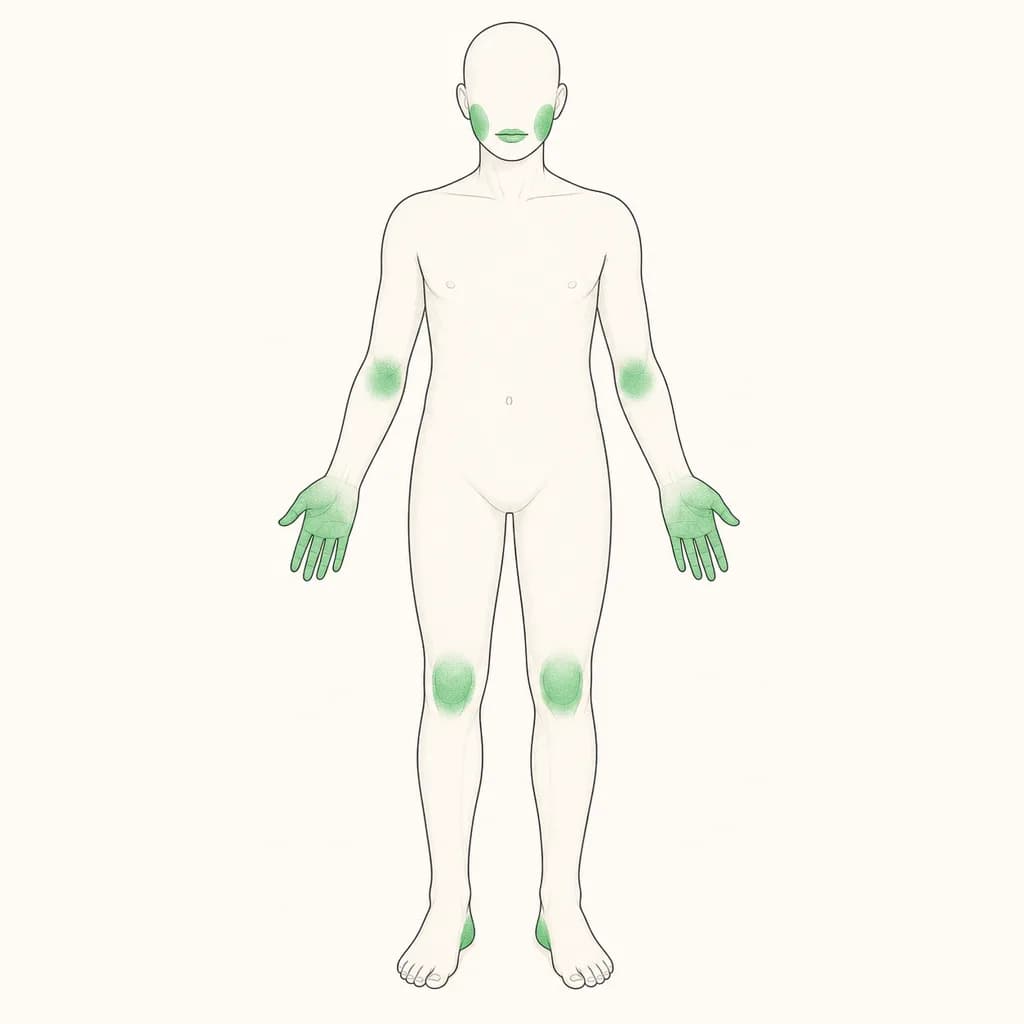
Cracked Skin is a very common presentation of Cracked Heels, especially when heel skin becomes dry and thickened.
This answers one question. It is not a diagnosis and does not replace an assessment by a licensed doctor.
At a glance
- Frequency in cracked heels
- Very common
- Also called
- Fissures or splitting skin
- Common location
- Heel edge
Why heels split
Pressure from standing and walking acts on the edge of a dry, callused heel. When that outer layer cannot flex well, shallow lines can deepen into fissures. They may feel rough, catch on socks, sting after bathing, or hurt when weight is placed on the heel.
Cracks can occur on other dry areas too, so their presence does not identify the cause on its own. The pattern, surrounding scale, itch, redness, footwear, and skin history help a clinician distinguish cracked heels from eczema, psoriasis, infection, or simple dryness.
Care that may help
Use a rich moisturiser on clean, dry heels regularly, concentrating on the thickened rim rather than only the centre of the heel. After a brief soak, gently smooth loose hardened skin with a foot file if it is comfortable; do not cut or pick at it.
Choose shoes that support the heel and avoid open-backed footwear while splits are painful. A dressing or heel sleeve can reduce friction. If you have diabetes, reduced feeling in your feet, or circulation concerns, seek individual advice before filing skin or using strong keratolytic products.
When to get medical help
Arrange clinical assessment when a fissure is deep, bleeding, increasingly painful, or not settling with gentle care. Seek prompt care for spreading redness, warmth, swelling, pus, fever, or difficulty walking, as these can signal infection. Foot wounds need particular attention for people with diabetes or impaired circulation.
Useful questions
Ask whether the heel changes fit simple dryness or another skin condition, which moisturiser or treatment is suitable for your skin, and whether your footwear is adding pressure. Mention medicines, allergies, diabetes, loss of sensation, and any previous foot ulcer.
Find care
General Clinics & Polyclinics in Abu Dhabi
That answer is general. If you want it applied to your own case, these are licensed general clinics & polyclinics listed in Abu Dhabi.
27 Ar Ruwwad St - Shakhbout City - MSH4 - Abu Dhabi - United Arab Emirates
Accepts: Daman, Thiqa, Cigna, MetLife +20 more
Al Ruwais, Al Dhafrah
Accepts: Daman, Thiqa, AXA, Cigna +16 more
Al Bahyah - Al Bahyah Old - Abu Dhabi - United Arab Emirates
Accepts: Daman, Thiqa, Cigna, Allianz Care +18 more
Abu Dhabi
Accepts: Daman, Thiqa, AXA, Cigna +27 more
Ordered by verification status and how complete each clinic's public record is, then alphabetically. This is a directory listing, not a ranking — Zavis does not rate or recommend providers.
A factual listing drawn from the DHA, DOH and MOHAP licence registers. It is not a referral, an endorsement, or advice that any of these providers is right for you.
Questions people ask
Can a heel crack become painful?
Yes. A deeper fissure can expose sensitive skin and hurt when you stand, walk, or when water reaches it.
Should I cut away hard heel skin?
No. Cutting it can create a wound. Gentle smoothing and moisturising are safer approaches for many people.
Related
Related reading
Keep reading
Medical disclaimer. This page is general health information, not medical advice, and it cannot diagnose you. Always consult a licensed healthcare provider about your own symptoms and treatment. In an emergency in the UAE, call 998 for an ambulance.