
What should you know about homozygous sickle cell disease?
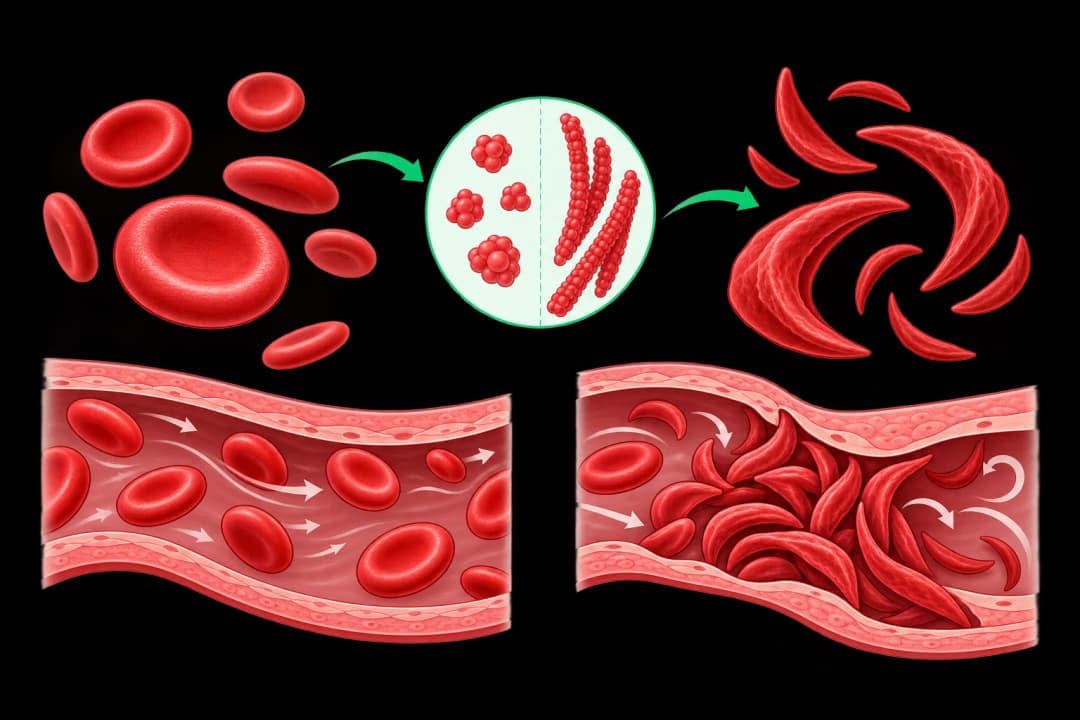
Short answer
Homozygous sickle cell disease is an inherited blood condition in which red blood cells can become rigid and sickle-shaped, causing anaemia, pain episodes and other health problems.
This answers one question. It is not a diagnosis and does not replace an assessment by a licensed doctor.
At a glance
- Cause
- Inheritance of a sickle cell gene from each parent
- Main effect
- Rigid red blood cells can reduce blood flow and cause anaemia
- Urgent concern
- Fever, breathing difficulty, chest pain or neurological symptoms
The short answer
It happens when a person inherits a sickle cell gene from each parent. The altered cells can break down sooner than usual and may block small blood vessels, reducing oxygen delivery to tissues.
How it can affect health
Symptoms and their pattern differ between people. Pain can occur when blood flow is obstructed, including in bones or joints. Tiredness, breathlessness with activity, headaches, yellowing of the eyes or skin, and pale skin can occur when anaemia is present.
A pain episode can be severe even when there is no visible injury. Fever needs prompt attention because infections may become serious quickly in people with sickle cell disease.
Building an everyday care plan
Regular follow-up with a clinician familiar with sickle cell care helps you plan for pain, infection prevention, medicines, vaccinations, travel and pregnancy. Blood tests may be used to monitor anaemia and other changes over time.
Keep well hydrated, avoid becoming very cold or overheated, and seek individual advice before demanding exercise or high-altitude travel. Tell healthcare professionals about the condition before any procedure or new medicine.
When to get urgent medical help
Seek urgent assessment for fever, chest pain, trouble breathing, a new severe headache, weakness on one side of the body, confusion, fainting, or pain that is severe or not responding to your agreed care plan.
Urgent care is also needed for a painful prolonged erection, sudden abdominal swelling, marked drowsiness, or a rapid change from your usual health. Do not wait for a routine appointment if these symptoms develop.
Questions to bring to your appointment
Ask which symptoms mean you should contact the clinic or attend urgent care, what your personal pain plan should include, and which vaccines or preventive medicines are appropriate for you.
You can also ask whether genetic counselling, family testing, or premarital screening would be useful, and how to prepare safely for travel, surgery, pregnancy or dental treatment.
Find care
General Clinics & Polyclinics in Abu Dhabi
That answer is general. If you want it applied to your own case, these are licensed general clinics & polyclinics listed in Abu Dhabi.
27 Ar Ruwwad St - Shakhbout City - MSH4 - Abu Dhabi - United Arab Emirates
Accepts: Daman, Thiqa, Cigna, MetLife +20 more
Al Ruwais, Al Dhafrah
Accepts: Daman, Thiqa, AXA, Cigna +16 more
Al Bahyah - Al Bahyah Old - Abu Dhabi - United Arab Emirates
Accepts: Daman, Thiqa, Cigna, Allianz Care +18 more
Abu Dhabi
Accepts: Daman, Thiqa, AXA, Cigna +27 more
Ordered by verification status and how complete each clinic's public record is, then alphabetically. This is a directory listing, not a ranking — Zavis does not rate or recommend providers.
A factual listing drawn from the DHA, DOH and MOHAP licence registers. It is not a referral, an endorsement, or advice that any of these providers is right for you.
Questions people ask
Is homozygous sickle cell disease contagious?
No. It is inherited through genes and cannot be passed from person to person through contact.
How is homozygous sickle cell disease diagnosed?
A blood test can identify the type of haemoglobin present and help confirm the diagnosis. Your clinician may also monitor blood counts and organ health.
Can a person with this condition have a normal daily routine?
Many people continue work, study and family life with an individual care plan. Planning for triggers, medicines, follow-up and urgent symptoms can make day-to-day management more predictable.
Related
Related reading
Keep reading
Medical disclaimer. This page is general health information, not medical advice, and it cannot diagnose you. Always consult a licensed healthcare provider about your own symptoms and treatment. In an emergency in the UAE, call 998 for an ambulance.