
What should you know about hives on feet?
Short answer
Hives on the feet are itchy or burning welts that may worsen with pressure, while breathing or mouth swelling needs urgent help.
This answers one question. It is not a diagnosis and does not replace an assessment by a licensed doctor.
At a glance
- Local aggravators
- Pressure, friction, heat and sweating
- Comfort measure
- Cool skin and loose footwear
- Emergency concern
- Breathing or tongue swelling
What it can mean
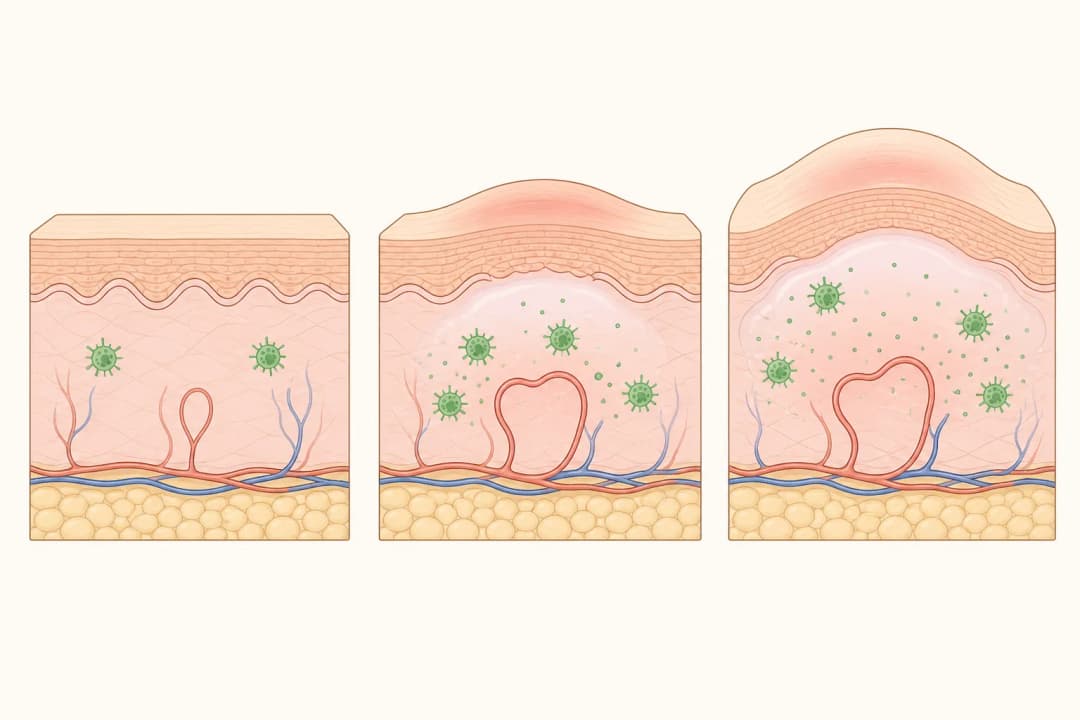
Foot hives are raised areas produced by a temporary skin reaction. Socks, tight shoes, friction, heat, sweating, cold exposure or exercise can aggravate them. Foods, medicines, infections and insect stings can also precede an episode. The welts may change shape or appear on other body areas rather than staying in one spot.
Swelling may extend into the feet or ankles and can make shoes uncomfortable. Itchy skin with shifting welts fits hives more closely than a fixed scaly patch, blister, painful red area or rash between the toes. Those patterns may have other causes and should be examined if they persist.
What to do now
Loosen or remove tight footwear and socks, cool the skin, and avoid scratching or rubbing. Wash off a suspected irritant and keep feet dry and comfortably cool. Note recent exercise, illness, medicines, foods, stings and any new fabric or detergent; a photograph can capture welts that disappear before review.
Ask a pharmacist or clinician whether an oral antihistamine is appropriate for you. Do not use someone else’s medicine, and check for drowsiness if you need to drive. Seek advice before taking oral corticosteroid treatment, because it is prescription treatment for selected situations rather than routine self-care.
When to seek care
Get emergency help for difficulty breathing, throat tightness, trouble swallowing, voice change, dizziness, faintness, or sudden swelling of the lips, tongue or face. These symptoms can accompany a severe allergic reaction.
Arrange prompt assessment if foot swelling is severe, one-sided and painful, the skin is hot with fever, blisters or drainage appear, walking becomes difficult, or the rash stays fixed. Medical review is also sensible when episodes recur or do not settle as expected.
Questions for your doctor
Could footwear pressure, temperature, exercise, a medicine or an infection be involved? Is the swelling ordinary hives or angioedema? Which antihistamine is safe for me? What should I do if the welts spread or breathing symptoms begin?
Find care
General Clinics & Polyclinics in Abu Dhabi
That answer is general. If you want it applied to your own case, these are licensed general clinics & polyclinics listed in Abu Dhabi.
27 Ar Ruwwad St - Shakhbout City - MSH4 - Abu Dhabi - United Arab Emirates
Accepts: Daman, Thiqa, Cigna, MetLife +20 more
Al Ruwais, Al Dhafrah
Accepts: Daman, Thiqa, AXA, Cigna +16 more
Al Bahyah - Al Bahyah Old - Abu Dhabi - United Arab Emirates
Accepts: Daman, Thiqa, Cigna, Allianz Care +18 more
Abu Dhabi
Accepts: Daman, Thiqa, AXA, Cigna +27 more
Ordered by verification status and how complete each clinic's public record is, then alphabetically. This is a directory listing, not a ranking — Zavis does not rate or recommend providers.
A factual listing drawn from the DHA, DOH and MOHAP licence registers. It is not a referral, an endorsement, or advice that any of these providers is right for you.
Questions people ask
Can shoes trigger hives on the feet?
Pressure, friction, heat or a material in footwear may aggravate hives or cause another contact reaction; timing helps clarify the pattern.
How can I tell foot hives from another rash?
Hives tend to be raised and itchy and may shift or fade, while fixed, scaly, blistered or painful changes need assessment.
Related
Related reading
Keep reading
Medical disclaimer. This page is general health information, not medical advice, and it cannot diagnose you. Always consult a licensed healthcare provider about your own symptoms and treatment. In an emergency in the UAE, call 998 for an ambulance.