
Hives on the back: what they mean and what to do
Short answer
Hives on the back are raised, itchy welts that can appear suddenly, change shape, and fade as individual marks within a day; check for triggers and watch for swelling or breathing symptoms.
This answers one question. It is not a diagnosis and does not replace an assessment by a licensed doctor.
At a glance
- Typical appearance
- Raised, itchy welts that may join together or shift position
- Helpful first steps
- Cool the skin, avoid rubbing, and record possible triggers
- Emergency signs
- Breathing difficulty or swelling of the tongue or throat
What hives on the back can mean
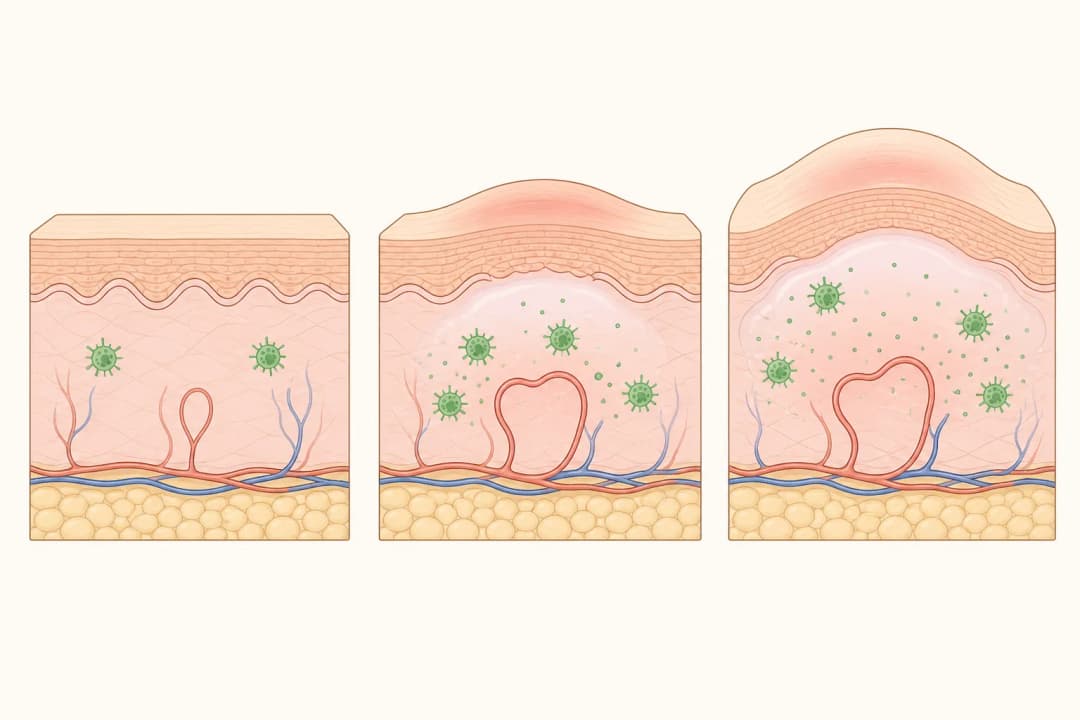
Hives, also called urticaria, result from skin cells releasing chemical signals that widen nearby blood vessels and cause temporary fluid leakage. On the back, they may look like separate pink or skin-coloured bumps, broad patches, or rings with a paler centre. The pattern can move or merge rather than staying fixed.
A new medicine, infection, heat, sweating, pressure from clothing or a bag strap, scratching, or a food exposure can act as a trigger. Sometimes no clear trigger is found. Hives are different from a rash that remains in the same place and develops scaling, crusting, or blisters. Deeper swelling around the lips, eyelids, tongue, hands, or feet can occur with hives and is called angioedema.
What you can do now
Use a cool compress for short periods, wear loose breathable clothing, and avoid hot showers, vigorous rubbing, and scratching. Keep the back cool and note what happened before each flare, including new products, medicines, meals, exercise, illness, and pressure on the skin.
A pharmacist or clinician can advise whether an oral antihistamine is suitable for you and how to take it safely. Do not combine products or use a sedating medicine before driving without checking the label or getting advice. If symptoms keep returning, last beyond a short episode, or interfere with sleep, arrange a clinical assessment; treatment may need to address an ongoing trigger or another diagnosis.
When to seek medical care
Call emergency services immediately if hives occur with trouble breathing, wheezing, throat or tongue swelling, faintness, confusion, or difficulty swallowing. These symptoms can signal a serious allergic reaction and should not be managed by waiting for the skin changes to settle.
Seek prompt medical advice for swelling of the face or mouth, repeated vomiting, rapidly worsening symptoms, or a flare that follows a newly started medicine. Arrange a non-urgent review when individual marks do not fade within a day, the eruption leaves bruising or pain, or episodes continue to recur. A clinician can distinguish hives from other causes of itchy skin or a persistent skin rash.
Questions for your doctor
Bring photographs taken during a flare and ask: Could pressure, heat, infection, a medicine, or another exposure be contributing? Does the timing fit hives rather than another skin condition? Which treatment is appropriate with my other medicines, pregnancy status, allergies, or health conditions? What symptoms should prompt urgent help if the swelling returns?
Find care
General Clinics & Polyclinics in Abu Dhabi
That answer is general. If you want it applied to your own case, these are licensed general clinics & polyclinics listed in Abu Dhabi.
27 Ar Ruwwad St - Shakhbout City - MSH4 - Abu Dhabi - United Arab Emirates
Accepts: Daman, Thiqa, Cigna, MetLife +20 more
Al Ruwais, Al Dhafrah
Accepts: Daman, Thiqa, AXA, Cigna +16 more
Al Bahyah - Al Bahyah Old - Abu Dhabi - United Arab Emirates
Accepts: Daman, Thiqa, Cigna, Allianz Care +18 more
Abu Dhabi
Accepts: Daman, Thiqa, AXA, Cigna +27 more
Ordered by verification status and how complete each clinic's public record is, then alphabetically. This is a directory listing, not a ranking — Zavis does not rate or recommend providers.
A factual listing drawn from the DHA, DOH and MOHAP licence registers. It is not a referral, an endorsement, or advice that any of these providers is right for you.
Questions people ask
Can pressure cause hives on the back?
Yes. Tight clothing, friction, scratching, or pressure from a strap can trigger welts in the affected area, although other triggers or no identifiable trigger are also possible.
Should I scratch hives on my back?
Try not to scratch because friction can intensify irritation and make the skin harder to assess. A cool compress and suitable antihistamine advice from a pharmacist may help.
When are hives on the back an emergency?
Get emergency help for hives with breathing trouble, throat or tongue swelling, faintness, confusion, or difficulty swallowing.
Related
Related reading
Keep reading
Medical disclaimer. This page is general health information, not medical advice, and it cannot diagnose you. Always consult a licensed healthcare provider about your own symptoms and treatment. In an emergency in the UAE, call 998 for an ambulance.