
What should you know about hives in horses?
Short answer
Hives in horses are raised, often itchy skin swellings; remove possible triggers and contact a veterinarian promptly for widespread or severe signs.
This answers one question. It is not a diagnosis and does not replace an assessment by a licensed doctor.
At a glance
- Record
- Onset, locations, feed, medicines, and exposures
- Emergency clue
- Breathing trouble or facial swelling
How equine hives may appear
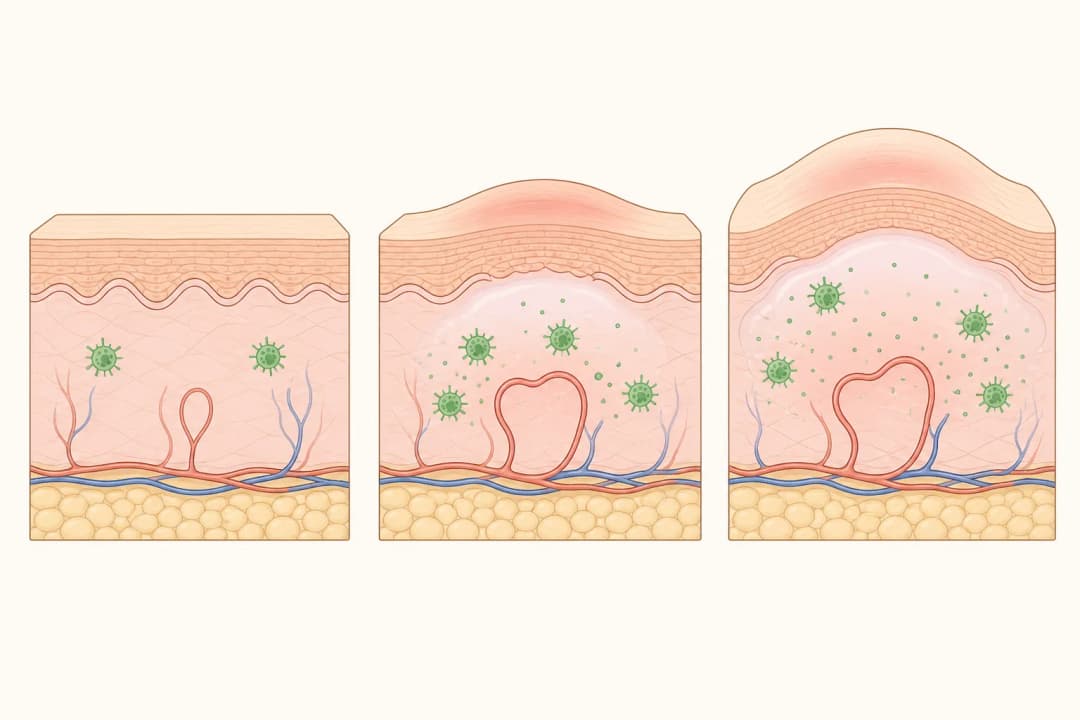
A horse with hives may develop multiple round or irregular welts on the neck, trunk, or legs. They can appear after a new feed, medicine, insect exposure, plant contact, grooming product, or environmental change. The horse may rub or seem uncomfortable, but some hives are noticed before behaviour changes.
Swelling around the muzzle, eyes, or throat is more concerning than a few stable welts. A veterinarian can distinguish hives from other causes of lumps, skin infection, parasites, or injury.
What to do while arranging advice
Move the horse away from a suspected new feed, product, or pasture only if this can be done safely. Keep the horse calm, provide access to water, and photograph the skin. Record when the welts began and any recent medicines, vaccinations, feed changes, insect exposure, or exercise.
Do not give human medicines or repeat a previous veterinary prescription without speaking with the veterinarian. Avoid applying creams that could obscure the skin or cause further irritation. A veterinarian may recommend an antihistamine or another treatment after assessing the horse.
When veterinary help is urgent
Contact an emergency veterinarian immediately if the horse has difficulty breathing, noisy breathing, collapse, weakness, severe facial swelling, or trouble swallowing. Keep people clear of a distressed horse while help is on the way.
Arrange prompt veterinary assessment if hives spread, recur, follow an injection or medicine, or occur with fever, colic, poor appetite, or marked lethargy. Do not rely on the appearance alone to judge severity.
Questions for the veterinarian
Ask what exposures should be removed, whether the horse needs examination or observation, which treatment is appropriate for its size and health, and what changes require an emergency call.
Find care
General Clinics & Polyclinics in Abu Dhabi
That answer is general. If you want it applied to your own case, these are licensed general clinics & polyclinics listed in Abu Dhabi.
27 Ar Ruwwad St - Shakhbout City - MSH4 - Abu Dhabi - United Arab Emirates
Accepts: Daman, Thiqa, Cigna, MetLife +20 more
Al Ruwais, Al Dhafrah
Accepts: Daman, Thiqa, AXA, Cigna +16 more
Al Bahyah - Al Bahyah Old - Abu Dhabi - United Arab Emirates
Accepts: Daman, Thiqa, Cigna, Allianz Care +18 more
Abu Dhabi
Accepts: Daman, Thiqa, AXA, Cigna +27 more
Ordered by verification status and how complete each clinic's public record is, then alphabetically. This is a directory listing, not a ranking — Zavis does not rate or recommend providers.
A factual listing drawn from the DHA, DOH and MOHAP licence registers. It is not a referral, an endorsement, or advice that any of these providers is right for you.
Questions people ask
Can a new feed cause hives in a horse?
A new feed can be associated with hives, but other exposures are possible; the veterinarian can help investigate the timing and pattern.
Can I use a human antihistamine?
Only give medicine when a veterinarian has advised the product and amount for that horse.
Related
Related reading
Keep reading
Medical disclaimer. This page is general health information, not medical advice, and it cannot diagnose you. Always consult a licensed healthcare provider about your own symptoms and treatment. In an emergency in the UAE, call 998 for an ambulance.