
What should you know about hip fracture from running?
Short answer
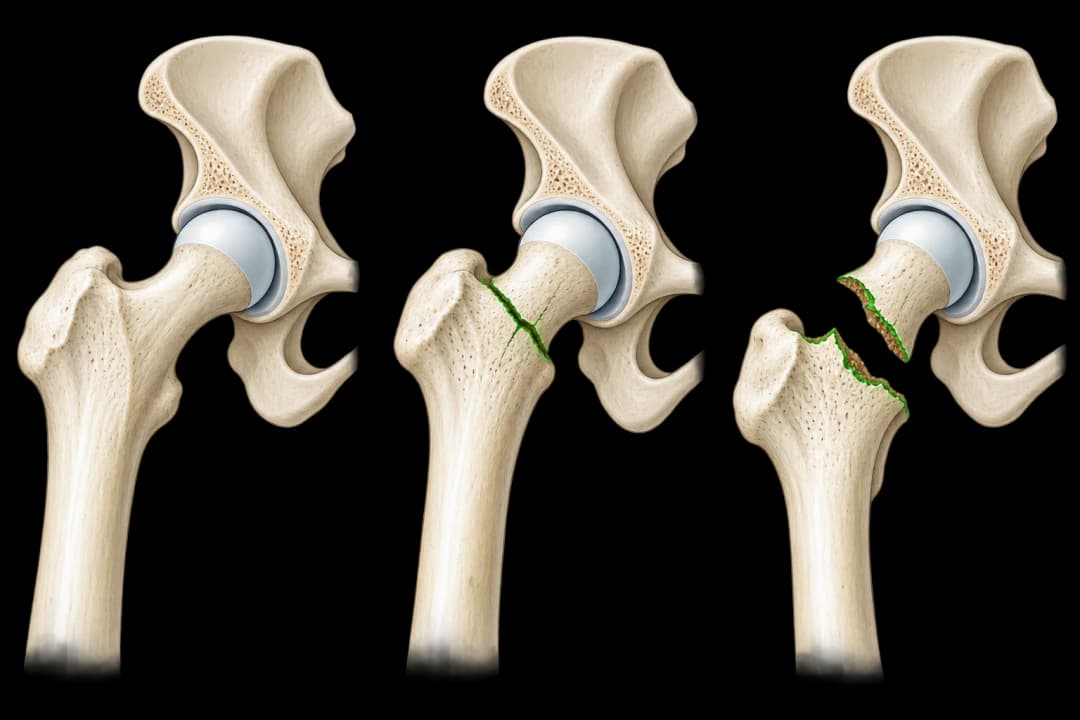
A hip fracture from running may follow repeated bone stress or an injury, and persistent weight-bearing pain needs prompt medical assessment.
This answers one question. It is not a diagnosis and does not replace an assessment by a licensed doctor.
At a glance
- First step
- Stop impact exercise and arrange assessment
- Possible pattern
- Pain with running that progresses to walking or rest
- Return to running
- Only after clinical healing milestones are met
How running can affect the hip
Running repeatedly loads the bones of the pelvis and upper thigh. If recovery does not match the training load, a bone stress injury can progress, sometimes without one memorable accident. Pain may begin during a run, appear with walking, or become noticeable at rest. A fracture can also occur after a fall or collision.
Hip pain and limping are warning symptoms, but they do not identify the exact cause by themselves. A clinician may examine your gait and hip movement and choose imaging based on the history and examination. Do not test the hip with another run while waiting for an assessment.
What to do next
Stop running and reduce weight through the painful leg until a clinician gives you a clear plan. Use support if advised, avoid hopping, and do not return to impact activity because pain briefly improves. Tell the clinician about recent training changes, nutrition concerns, menstrual changes, medicines, and previous stress injuries.
Treatment depends on the fracture location, stability, and bone health. Some injuries need protected weight bearing and monitoring; others require surgery. Rehabilitation rebuilds strength, balance, and running tolerance only after healing criteria are met. Bone-health treatment may be discussed when appropriate.
When to seek urgent care
Seek emergency care for severe hip pain after a fall, inability to stand or walk, a leg that looks shortened or rotated, or new numbness or weakness. Arrange prompt review for pain that persists with walking, causes a limp, occurs at night, or returns sooner with each run. Early assessment can prevent a stress injury from becoming more unstable.
Questions to ask
Ask whether the pattern suggests a stress injury, what activity and weight-bearing limits apply, and whether further imaging is needed. Clarify the signs of healing, the milestones for returning to running, and whether bone-health or nutrition support should be part of the plan.
Find care
General Clinics & Polyclinics in Abu Dhabi
That answer is general. If you want it applied to your own case, these are licensed general clinics & polyclinics listed in Abu Dhabi.
27 Ar Ruwwad St - Shakhbout City - MSH4 - Abu Dhabi - United Arab Emirates
Accepts: Daman, Thiqa, Cigna, MetLife +20 more
Al Ruwais, Al Dhafrah
Accepts: Daman, Thiqa, AXA, Cigna +16 more
Al Bahyah - Al Bahyah Old - Abu Dhabi - United Arab Emirates
Accepts: Daman, Thiqa, Cigna, Allianz Care +18 more
Abu Dhabi
Accepts: Daman, Thiqa, AXA, Cigna +27 more
Ordered by verification status and how complete each clinic's public record is, then alphabetically. This is a directory listing, not a ranking — Zavis does not rate or recommend providers.
A factual listing drawn from the DHA, DOH and MOHAP licence registers. It is not a referral, an endorsement, or advice that any of these providers is right for you.
Questions people ask
Can running cause a hip fracture without a fall?
Yes. Repeated loading can create a bone stress injury that may worsen if impact continues.
Should I run through mild hip pain?
No. Pain that is activity-related or changing your gait deserves a pause and clinical advice before impact resumes.
Related
Related reading
Keep reading
Medical disclaimer. This page is general health information, not medical advice, and it cannot diagnose you. Always consult a licensed healthcare provider about your own symptoms and treatment. In an emergency in the UAE, call 998 for an ambulance.