
What should you know about hip adductor strain symptoms?
Short answer
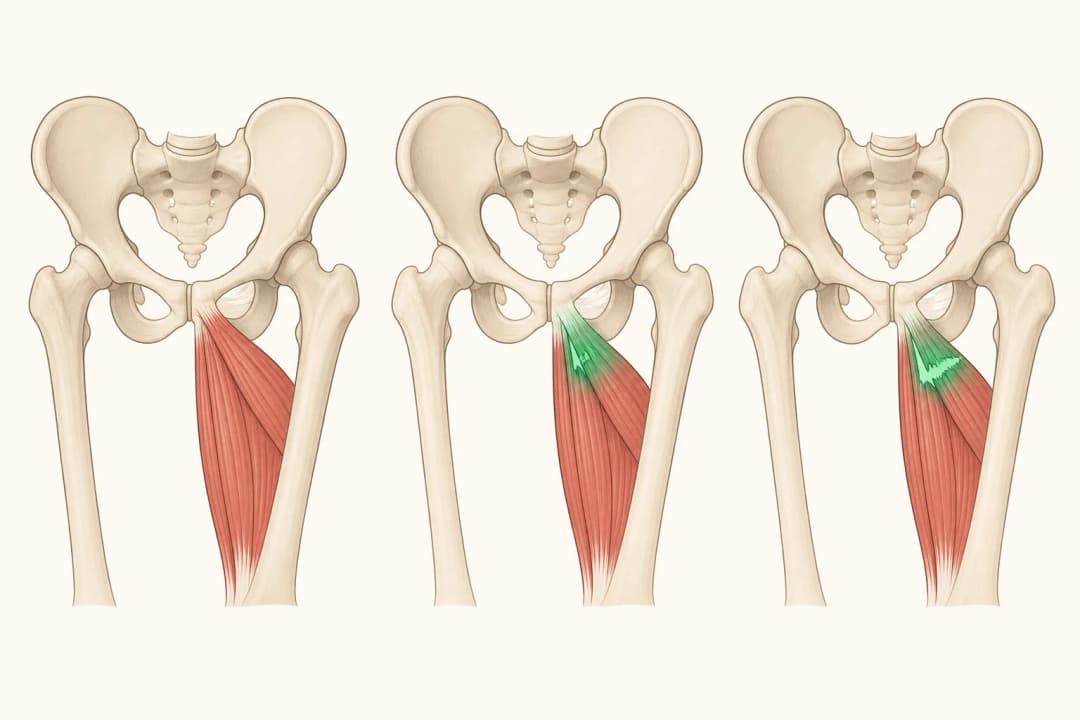
Hip adductor strain symptoms can include groin or inner-thigh pain, tenderness, weakness, and discomfort when the legs move together or change direction.
This answers one question. It is not a diagnosis and does not replace an assessment by a licensed doctor.
At a glance
- Pain sites
- Groin crease, inner thigh, or pubic attachment
- Common provocation
- Squeezing the legs, sprinting, or changing direction
- Assessment clue
- Pain pattern plus strength and movement findings
Recognising the symptom pattern
Symptoms often start during a sprint, kick, lunge, slide, or sudden change of direction, although some strains build during repeated training. Pain may be close to the groin crease, along the inner thigh, or near the pubic attachment. Squeezing the knees together, getting out of a car, climbing stairs, or turning quickly may reproduce it. Tenderness, protective muscle tightening, reduced stride, and weakness can accompany the pain. A symptom pattern can suggest adductor involvement but cannot confirm the exact structure by itself. Groin pain may also come from the hip joint, tendon, abdominal wall, or other causes, so a persistent problem needs assessment.
Managing symptoms
Stop the provoking sport movement and use comfortable walking as your guide. Avoid testing the injury repeatedly with hard kicks, wide stretches, or maximal sprints. Gentle movement within an easy range can prevent stiffness; a wrapped cold pack may reduce short-term discomfort. When symptoms are calmer, exercise therapy can rebuild adductor, hip, and trunk strength in stages. Sports physiotherapy can match drills to your sport, while a return-to-sport programme can check running, acceleration, cutting, and kicking before full participation. A flare that lasts into the next day means the load may have advanced too quickly.
Warning signs
Seek clinical assessment if symptoms follow a pop, produce substantial bruising, cause a limp, or make it difficult to bring the leg inward. Arrange review when pain is persistent, worsening, or present during ordinary activities despite reducing sport. Prompt care is needed after significant trauma, with inability to bear weight, marked swelling, numbness, or rapidly increasing pain. These features may indicate a more substantial injury or a different cause of groin symptoms.
Questions to bring
Ask which findings support an adductor strain, whether the tendon or muscle seems involved, what activities are safe today, and which strength or movement tests should be passed before returning to sport. Note the exact onset, painful movements, bruising, walking changes, and response to rest.
Find care
General Clinics & Polyclinics in Abu Dhabi
That answer is general. If you want it applied to your own case, these are licensed general clinics & polyclinics listed in Abu Dhabi.
27 Ar Ruwwad St - Shakhbout City - MSH4 - Abu Dhabi - United Arab Emirates
Accepts: Daman, Thiqa, Cigna, MetLife +20 more
Al Ruwais, Al Dhafrah
Accepts: Daman, Thiqa, AXA, Cigna +16 more
Al Bahyah - Al Bahyah Old - Abu Dhabi - United Arab Emirates
Accepts: Daman, Thiqa, Cigna, Allianz Care +18 more
Abu Dhabi
Accepts: Daman, Thiqa, AXA, Cigna +27 more
Ordered by verification status and how complete each clinic's public record is, then alphabetically. This is a directory listing, not a ranking — Zavis does not rate or recommend providers.
A factual listing drawn from the DHA, DOH and MOHAP licence registers. It is not a referral, an endorsement, or advice that any of these providers is right for you.
Questions people ask
Are all groin symptoms an adductor strain?
No. Adductor strain is one possible cause. Hip, tendon, abdominal, and other problems can produce similar groin symptoms.
What symptom means I should stop sport?
Stop when pain is sharp, changes your stride, causes weakness, or continues to rise during or after the activity.
Related
Related reading
Keep reading
Medical disclaimer. This page is general health information, not medical advice, and it cannot diagnose you. Always consult a licensed healthcare provider about your own symptoms and treatment. In an emergency in the UAE, call 998 for an ambulance.