
Healing Alopecia Areata Naturally: What to Know
Short answer
Natural care may support scalp comfort and general health, but alopecia areata is an immune-related condition and hair regrowth is not assured without appropriate assessment.
This answers one question. It is not a diagnosis and does not replace an assessment by a licensed doctor.
At a glance
- Pattern
- Smooth patches can affect scalp, brows, lashes, or other hair-bearing areas.
- Self-care
- Gentle handling and sun protection support comfort, not guaranteed regrowth.
- Review
- A dermatologist can check whether another cause is present.
What alopecia areata involves
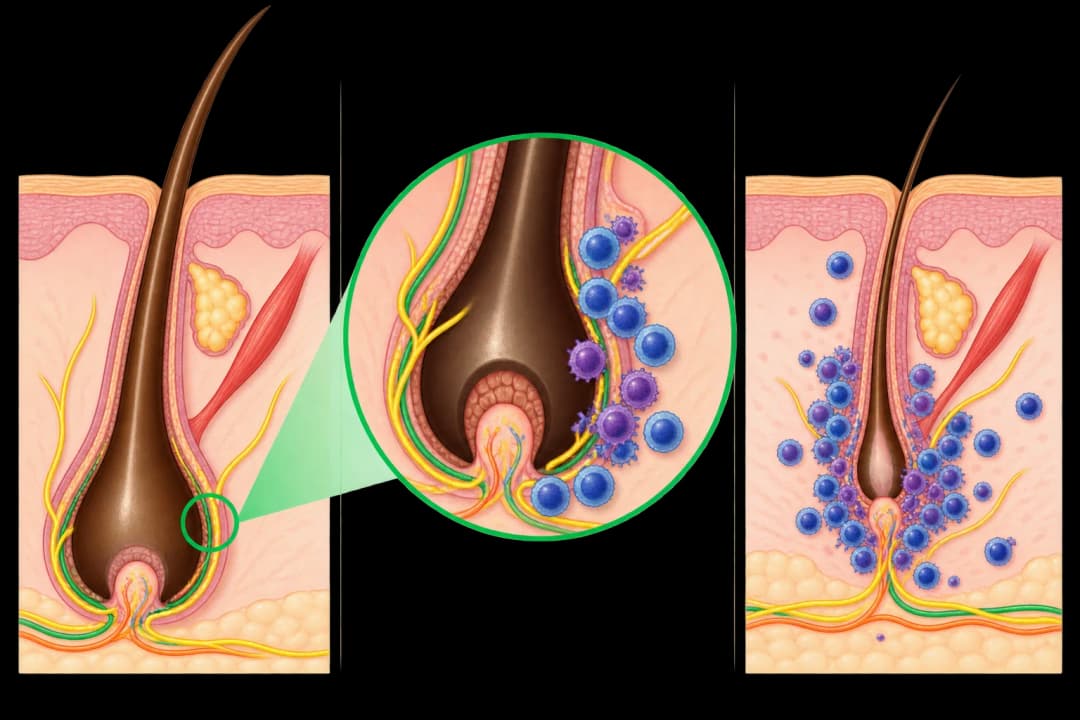
Alopecia areata causes the immune system to target hair follicles, often producing smooth round or oval patches. Most people with alopecia areata notice hair loss or bald patches, while the scalp skin may look normal. Hair can regrow, remain sparse, or be lost again, and the course differs between people. Hair loss can also have other causes, including scalp inflammation, infection, medication effects, or nutritional problems, so a new patch deserves a proper examination rather than a guess based on appearance.
Supportive steps
Handle the hair gently, avoid tight styles and harsh chemical processing, and protect exposed scalp from sun and cold. Eat regularly and seek help for restrictive diets or symptoms that suggest another health issue. Stress support, sleep, and counselling may help you cope, but supplements, oils, and herbal products have not been established as a reliable way to switch off the immune reaction. A dermatologist can discuss observation or options such as topical corticosteroids, steroid injection into the skin, oral corticosteroid treatment, or JAK inhibitor treatment when suitable.
When assessment matters
Arrange a dermatology review if hair loss is sudden, spreading, painful, scaly, scarred, or accompanied by broken hairs or eyebrow and eyelash loss. Seek prompt care for scalp redness, pus, marked tenderness, or fever. Early assessment can distinguish alopecia areata from conditions that damage follicles or need different treatment. Emotional distress, bullying, or difficulty functioning is also a valid reason to ask for support.
Questions for your doctor
Ask whether the pattern fits alopecia areata, whether the scalp or nails need examination, and whether testing is useful. Discuss the chance of spontaneous regrowth in your particular pattern, treatment benefits and drawbacks, and how long to try an option before reviewing it.
Find care
General Clinics & Polyclinics in Abu Dhabi
That answer is general. If you want it applied to your own case, these are licensed general clinics & polyclinics listed in Abu Dhabi.
27 Ar Ruwwad St - Shakhbout City - MSH4 - Abu Dhabi - United Arab Emirates
Accepts: Daman, Thiqa, Cigna, MetLife +20 more
Al Ruwais, Al Dhafrah
Accepts: Daman, Thiqa, AXA, Cigna +16 more
Al Bahyah - Al Bahyah Old - Abu Dhabi - United Arab Emirates
Accepts: Daman, Thiqa, Cigna, Allianz Care +18 more
Abu Dhabi
Accepts: Daman, Thiqa, AXA, Cigna +27 more
Ordered by verification status and how complete each clinic's public record is, then alphabetically. This is a directory listing, not a ranking — Zavis does not rate or recommend providers.
A factual listing drawn from the DHA, DOH and MOHAP licence registers. It is not a referral, an endorsement, or advice that any of these providers is right for you.
Questions people ask
Can alopecia areata heal on its own?
Hair may regrow without treatment for some people, but recurrence or ongoing loss can occur and cannot be predicted from self-care alone.
Do vitamins or oils cure alopecia areata?
No home product has been shown to reliably stop the immune process; discuss supplements before using them.
Related
Related reading
Keep reading
Medical disclaimer. This page is general health information, not medical advice, and it cannot diagnose you. Always consult a licensed healthcare provider about your own symptoms and treatment. In an emergency in the UAE, call 998 for an ambulance.