
What should you know about hard cracked skin on feet?
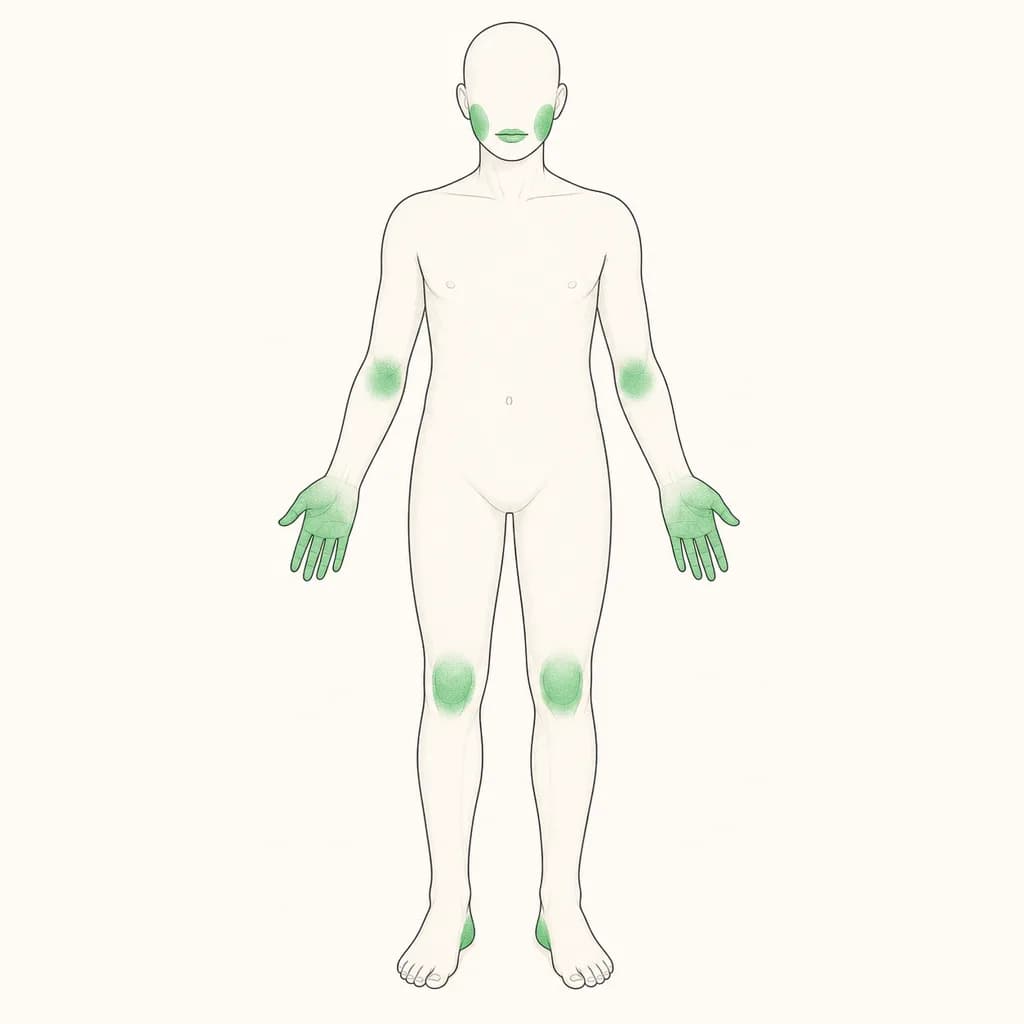
Short answer
Hard cracked skin on the feet forms when thick or dry skin loses flexibility, although atopic dermatitis, psoriasis, friction, and infection can also create or worsen fissures.
This answers one question. It is not a diagnosis and does not replace an assessment by a licensed doctor.
At a glance
- Common site
- Heels and other pressure points
- Protect
- Moisturise after washing and reduce rubbing
- Assess
- Persistent, inflamed, or recurrent cracks
Possible reasons
Fissures often develop at heels or pressure points where the outer layer is thick. Repeated walking, dry air, harsh cleansers, and open-backed shoes can increase pulling across the skin. Atopic Dermatitis may bring itch and irritation, while Psoriasis can produce sharply defined, scaly plaques. Burning or peeling between the toes raises the possibility of a fungal infection. Location, itch, scale, redness, and recurrence help a clinician separate these patterns.
Protect the skin barrier
Clean gently, pat dry, and apply a rich emollient to the cracked areas soon afterward. Emollient Therapy can be adjusted for the thickness and location of the affected skin. Use supportive shoes and socks that reduce rubbing, and avoid barefoot walking on rough surfaces. Do not shave, cut, or aggressively scrub hard edges, especially if a fissure is open. Keep tools and towels personal if scaling suggests infection, and do not use a steroid or antifungal product without guidance when the diagnosis is unclear.
When professional care matters
Arrange prompt review for spreading redness, warmth, swelling, pus, fever, severe tenderness, or difficulty bearing weight. A foot crack that repeatedly bleeds or stays open needs assessment. Seek earlier care with diabetes, poor circulation, reduced sensation, or immune suppression. If moisturising does not settle the problem or plaques appear elsewhere, ask about an inflammatory condition rather than continuing home treatment indefinitely.
Questions for your doctor
Ask whether the distribution suggests dermatitis, psoriasis, fungus, or pressure; whether a skin sample is needed; and which products are safe on open fissures. Ask how to prevent recurrence during work, exercise, or hot weather.
Find care
General Clinics & Polyclinics in Abu Dhabi
That answer is general. If you want it applied to your own case, these are licensed general clinics & polyclinics listed in Abu Dhabi.
27 Ar Ruwwad St - Shakhbout City - MSH4 - Abu Dhabi - United Arab Emirates
Accepts: Daman, Thiqa, Cigna, MetLife +20 more
Al Ruwais, Al Dhafrah
Accepts: Daman, Thiqa, AXA, Cigna +16 more
Al Bahyah - Al Bahyah Old - Abu Dhabi - United Arab Emirates
Accepts: Daman, Thiqa, Cigna, Allianz Care +18 more
Abu Dhabi
Accepts: Daman, Thiqa, AXA, Cigna +27 more
Ordered by verification status and how complete each clinic's public record is, then alphabetically. This is a directory listing, not a ranking — Zavis does not rate or recommend providers.
A factual listing drawn from the DHA, DOH and MOHAP licence registers. It is not a referral, an endorsement, or advice that any of these providers is right for you.
Questions people ask
Can eczema cause cracks on the feet?
Yes. Atopic Dermatitis can weaken the skin barrier and contribute to itch, dryness, and fissures.
Why do my foot cracks keep returning?
Ongoing pressure, dryness, infection, or an inflammatory condition may be maintaining them and should be reviewed.
Related
Related reading
Keep reading
Medical disclaimer. This page is general health information, not medical advice, and it cannot diagnose you. Always consult a licensed healthcare provider about your own symptoms and treatment. In an emergency in the UAE, call 998 for an ambulance.