
Hair transplant and alopecia areata: before and after
Short answer
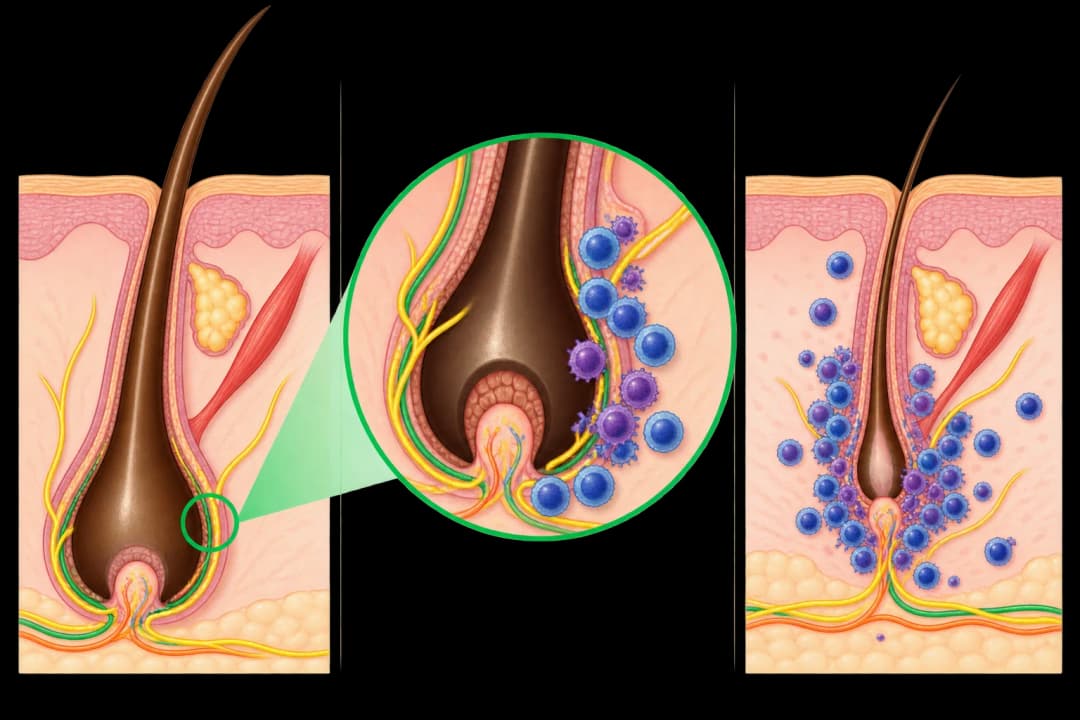
A hair transplant may be unsuitable when alopecia areata is active because transplanted follicles can be affected by the same immune process.
This answers one question. It is not a diagnosis and does not replace an assessment by a licensed doctor.
At a glance
- Main concern
- Active alopecia areata can affect transplanted follicles.
- Before surgery
- Confirm the diagnosis and disease activity.
- Seek help for
- Rapid spread, inflammation, drainage, or widespread loss.
Why the diagnosis matters
Alopecia areata often causes sharply defined areas of hair loss, but its activity can change. New bald patches, widening areas, eyebrow loss, or nail changes may suggest ongoing disease. Surgery can add inflammation and does not treat the immune trigger behind alopecia areata.
Before-and-after images from another person cannot predict your result. A dermatologist may examine the scalp, review the pattern over time, and discuss whether the condition is stable enough for any restorative procedure.
What to do before treatment
Have the diagnosis and disease activity reviewed before booking surgery. Bring older photographs and mention recent shedding, new Bald Patches, medicines, autoimmune conditions, and family history.
Depending on the findings, treatment may focus on controlling inflammation or supporting regrowth. Options can include Steroid Injection Into The Skin, Topical Corticosteroids, Oral Corticosteroid Treatment, or JAK Inhibitor Treatment; suitability depends on the individual assessment.
When to seek care
Arrange prompt medical review for rapidly expanding patches, scalp tenderness, redness, pus-like drainage, fever, or loss of eyelashes or eyebrows. Sudden widespread Hair Loss also needs assessment because causes other than alopecia areata can look similar.
Questions for your doctor
Ask whether the condition is active, what signs would show stability, how surgery could affect diagnosis or treatment, and which non-surgical plan should be tried before discussing transplantation.
Find care
General Clinics & Polyclinics in Abu Dhabi
That answer is general. If you want it applied to your own case, these are licensed general clinics & polyclinics listed in Abu Dhabi.
27 Ar Ruwwad St - Shakhbout City - MSH4 - Abu Dhabi - United Arab Emirates
Accepts: Daman, Thiqa, Cigna, MetLife +20 more
Al Ruwais, Al Dhafrah
Accepts: Daman, Thiqa, AXA, Cigna +16 more
Al Bahyah - Al Bahyah Old - Abu Dhabi - United Arab Emirates
Accepts: Daman, Thiqa, Cigna, Allianz Care +18 more
Abu Dhabi
Accepts: Daman, Thiqa, AXA, Cigna +27 more
Ordered by verification status and how complete each clinic's public record is, then alphabetically. This is a directory listing, not a ranking — Zavis does not rate or recommend providers.
A factual listing drawn from the DHA, DOH and MOHAP licence registers. It is not a referral, an endorsement, or advice that any of these providers is right for you.
Questions people ask
Can a transplant cure alopecia areata?
No. Transplantation does not treat the immune process that causes alopecia areata and may be unsuitable while it is active.
What should I bring to an appointment?
Bring photographs showing the pattern over time and a complete list of medicines and scalp treatments.
Related
Related reading
Keep reading
Medical disclaimer. This page is general health information, not medical advice, and it cannot diagnose you. Always consult a licensed healthcare provider about your own symptoms and treatment. In an emergency in the UAE, call 998 for an ambulance.