
What should you know about hair breakage all over head?
Short answer
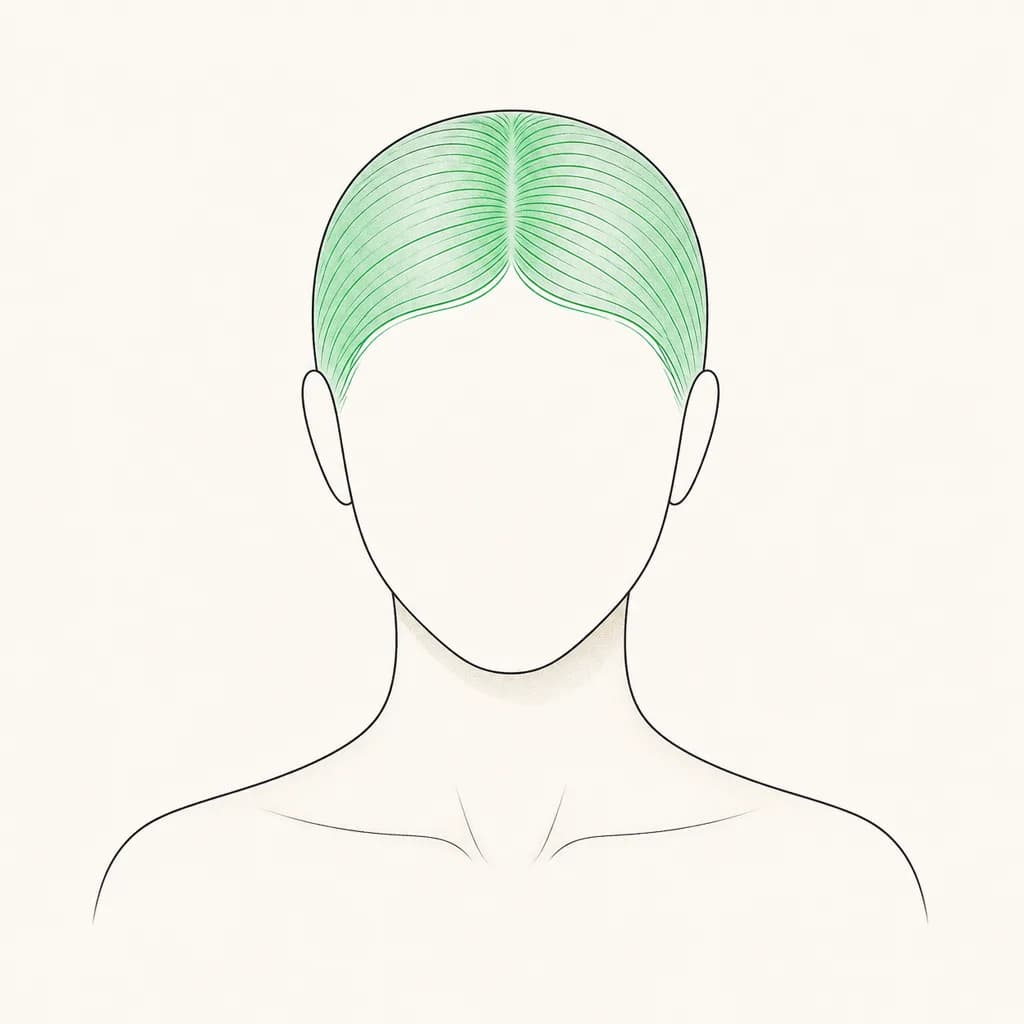
Hair breakage all over the head can come from widespread dryness, heat, chemical treatment, friction, or a scalp disorder; protect the fibre and arrange assessment if the pattern persists or includes inflammation.
This answers one question. It is not a diagnosis and does not replace an assessment by a licensed doctor.
At a glance
- Inspect both
- Look at strand length and scalp condition; breakage and root shedding can occur together.
- Reduce triggers
- Pause chemicals, high heat, friction, and tight styles while monitoring the pattern.
Reading the pattern
Widespread snapping often reflects a shared stressor: a recent chemical service, frequent hot tools, harsh detangling, tight coverings, or rough friction. Compare the ends with the roots: broken strands are shorter and may have split, frayed tips, while hairs shed from the root are usually full length. Widespread breakage with itch, scale, tenderness, or inflamed spots deserves a scalp examination. Scalp Ringworm may produce broken hairs and scaling; persistent pulling from styles can contribute to Traction Alopecia, which often begins where tension is greatest.
Steps that reduce snapping
Simplify the routine for now. Wash the scalp gently, condition the lengths, and detangle in small sections from the ends upward. Avoid bleaching, relaxing, repeated straightening, hot tools, tight braids, and hairstyles that pull at the same area. Use clean, smooth accessories and avoid rough towel rubbing. Review recent changes such as a new product, illness, restrictive diet, or salon service. Take clear photographs of the parting, sides, and hairline so a clinician can compare the distribution over time.
Reasons to arrange an examination
See a dermatologist when breakage affects the whole scalp, continues after gentler care, or occurs with root shedding, reduced density, or patchy areas. Seek prompt attention for severe itch, pain, swelling, crusting, pus, or sudden sharply defined loss. A scalp and hair-shaft examination can clarify whether one cause or several are involved.
Questions for your doctor
Does the distribution suggest shaft damage, shedding, traction, or a scalp condition? Which recent products or habits should I stop? Do my scalp findings call for testing, and how should I care for the hair while the cause is being assessed?
Find care
General Clinics & Polyclinics in Abu Dhabi
That answer is general. If you want it applied to your own case, these are licensed general clinics & polyclinics listed in Abu Dhabi.
27 Ar Ruwwad St - Shakhbout City - MSH4 - Abu Dhabi - United Arab Emirates
Accepts: Daman, Thiqa, Cigna, MetLife +20 more
Al Ruwais, Al Dhafrah
Accepts: Daman, Thiqa, AXA, Cigna +16 more
Al Bahyah - Al Bahyah Old - Abu Dhabi - United Arab Emirates
Accepts: Daman, Thiqa, Cigna, Allianz Care +18 more
Abu Dhabi
Accepts: Daman, Thiqa, AXA, Cigna +27 more
Ordered by verification status and how complete each clinic's public record is, then alphabetically. This is a directory listing, not a ranking — Zavis does not rate or recommend providers.
A factual listing drawn from the DHA, DOH and MOHAP licence registers. It is not a referral, an endorsement, or advice that any of these providers is right for you.
Questions people ask
Why is my hair breaking everywhere instead of in one place?
A shared exposure such as dryness, heat, chemical processing, or rough handling can affect many lengths at once; scalp disorders can also be widespread.
Can widespread breakage be treated at home?
Gentle care can limit further shaft damage, but persistent or inflamed widespread changes need a clinician to identify the cause.
Related
Related reading
Keep reading
Medical disclaimer. This page is general health information, not medical advice, and it cannot diagnose you. Always consult a licensed healthcare provider about your own symptoms and treatment. In an emergency in the UAE, call 998 for an ambulance.