
What should you know about foot growth plate pain?
Short answer
Foot growth plate pain in a child needs activity adjustment and assessment if it persists, worsens, or affects walking.
This answers one question. It is not a diagnosis and does not replace an assessment by a licensed doctor.
At a glance
- Common setting
- Running, jumping, or a recent foot injury
- Key clue
- Pain that increases with loading or causes a limp
What the pain may mean
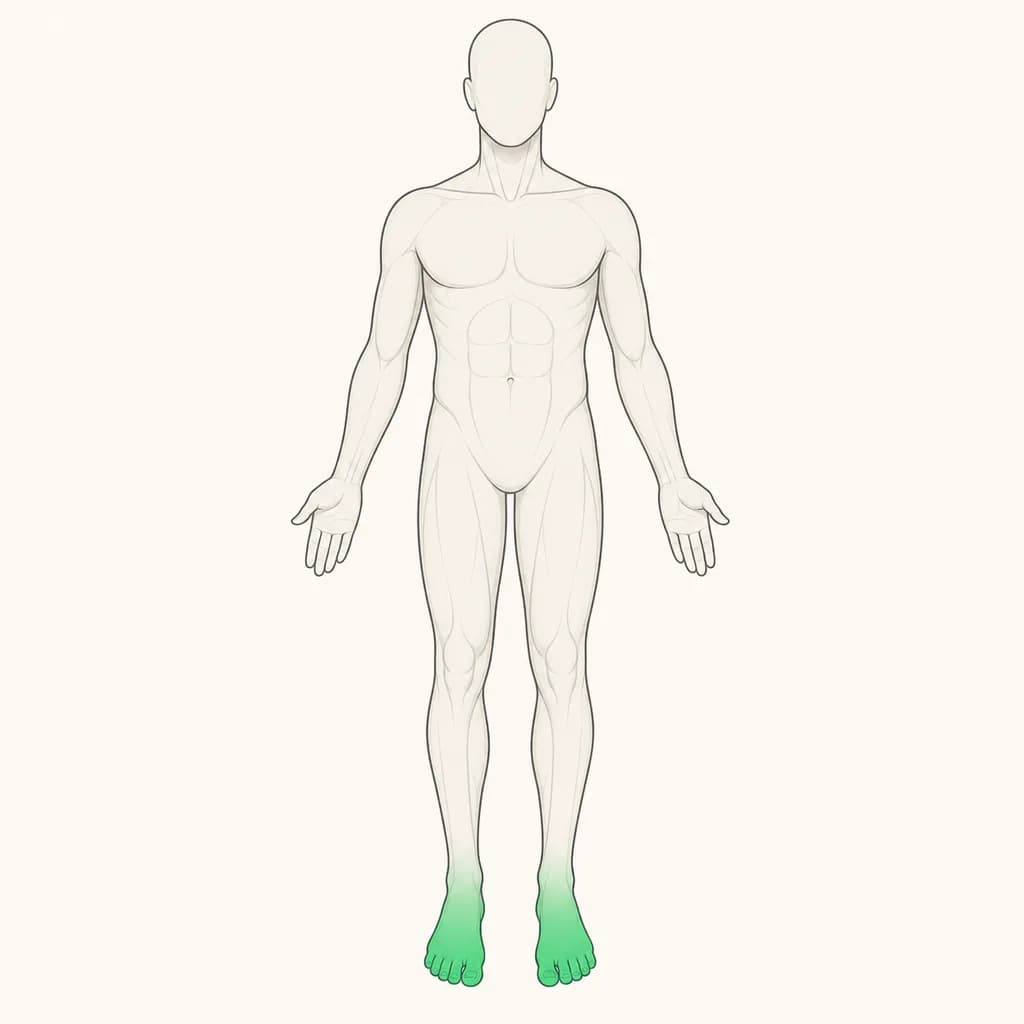
Growth plates are softer areas near the ends of developing bones. Repeated running, jumping, tight footwear, or a single twist can irritate tissues around them. Pain may be focused at the heel, ankle, midfoot, or toes and can increase during sport. A clinician considers the exact tender spot, swelling, movement, gait, and the child's growth stage. A [Stress Fracture](/conditions/stress-fracture/) can also cause activity-related foot pain, while [Flat Feet](/conditions/flat-feet/) may change how force travels through the foot. Pain alone does not identify one diagnosis.
Practical steps
Pause the activity that triggers pain and switch temporarily to comfortable, low-impact movement. Use supportive shoes with enough room for the toes; do not push through limping. Cold wrapped in cloth for short periods may ease soreness after activity. Avoid forceful stretching or massage directly over a swollen, very tender area. Arrange an examination if symptoms do not settle with rest, or if the child repeatedly develops pain after returning to sport. [Custom Orthotics](/treatments/non-surgical-orthopedics/custom-orthotics/) may be considered only after the foot mechanics and diagnosis are assessed.
When to seek care
Seek prompt medical care for inability to bear weight, marked swelling, deformity, numbness, a cold or pale foot, fever, or pain after a significant injury. Contact a clinician soon when pain wakes the child, occurs at rest, or keeps returning. For general context, see [Foot Pain](/symptoms/foot-pain/).
Questions for your doctor
Which structure is tender, and does the growth plate appear involved? Should activity stop completely or be modified? Is imaging needed now or only if symptoms continue? How should a gradual return to sport be planned?
Find care
General Clinics & Polyclinics in Abu Dhabi
That answer is general. If you want it applied to your own case, these are licensed general clinics & polyclinics listed in Abu Dhabi.
27 Ar Ruwwad St - Shakhbout City - MSH4 - Abu Dhabi - United Arab Emirates
Accepts: Daman, Thiqa, Cigna, MetLife +20 more
Al Ruwais, Al Dhafrah
Accepts: Daman, Thiqa, AXA, Cigna +16 more
Al Bahyah - Al Bahyah Old - Abu Dhabi - United Arab Emirates
Accepts: Daman, Thiqa, Cigna, Allianz Care +18 more
Abu Dhabi
Accepts: Daman, Thiqa, AXA, Cigna +27 more
Ordered by verification status and how complete each clinic's public record is, then alphabetically. This is a directory listing, not a ranking — Zavis does not rate or recommend providers.
A factual listing drawn from the DHA, DOH and MOHAP licence registers. It is not a referral, an endorsement, or advice that any of these providers is right for you.
Questions people ask
Can a child keep playing through growth plate pain?
Continuing the activity that causes pain can prolong irritation, so pause that activity and obtain advice if symptoms persist.
Does growth plate pain always require an X-ray?
Not always. The need for imaging depends on the examination, injury history, and how symptoms change over time.
Related
Related reading
Keep reading
Medical disclaimer. This page is general health information, not medical advice, and it cannot diagnose you. Always consult a licensed healthcare provider about your own symptoms and treatment. In an emergency in the UAE, call 998 for an ambulance.