
Facial hypertrichosis: what to know
Short answer
Facial hypertrichosis is excess hair growth in a facial area, and evaluation helps distinguish a local hair pattern from a medicine or health-related change.
This answers one question. It is not a diagnosis and does not replace an assessment by a licensed doctor.
At a glance
- Pattern to note
- Record whether growth is fine or coarse, localised or widespread, and gradual or sudden.
- Main options
- Laser targets suitable pigment; electrolysis treats follicles individually.
Understanding the pattern
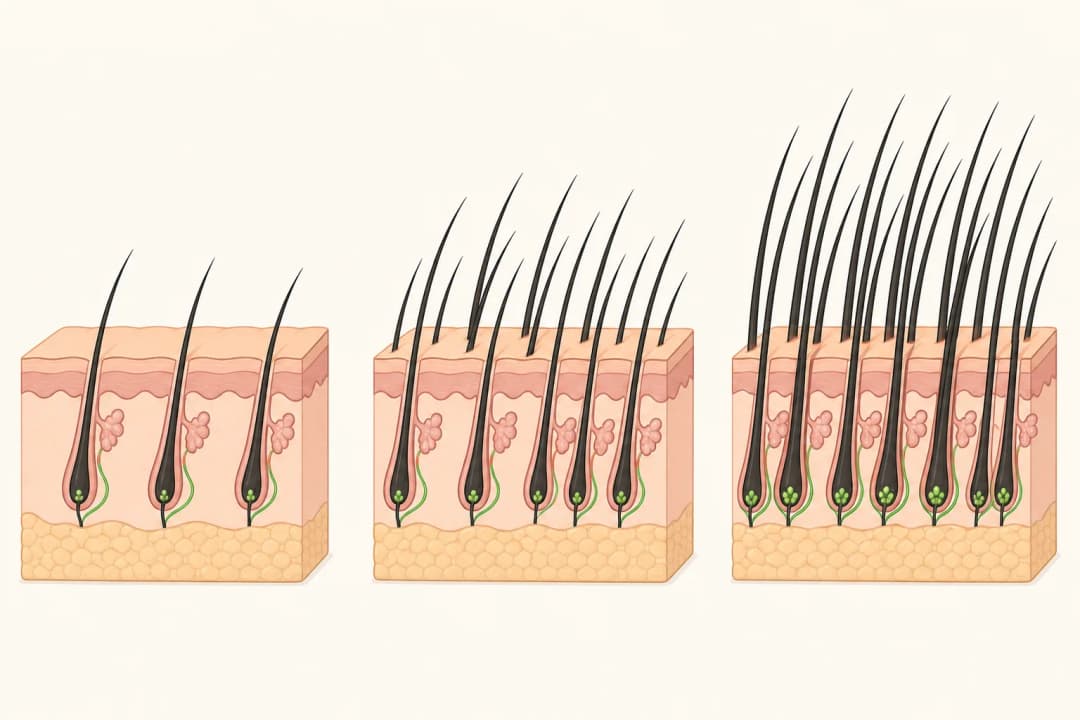
Hypertrichosis can involve fine or coarse hair and may be present from early life or develop later. It can be limited to one area or affect broader body regions. A clinician will ask when the change began, whether it followed a medicine or skin condition, and whether other changes appeared. Hair growth that is sudden, widespread, or accompanied by voice change, irregular periods, severe acne, or scalp hair loss needs a broader assessment rather than hair removal alone.
Choosing a practical approach
Record the timing and location of growth and bring a list of medicines and supplements to an appointment. Temporary methods such as trimming or shaving change the hair shaft, not the follicle. Laser treatment can reduce suitable pigmented hair by targeting the follicle, while electrolysis treats follicles individually with an electrical current. Skin tone, hair colour, thickness, treatment area, and the risk of irritation or pigment change affect which option is appropriate.
When to seek assessment
Arrange medical review when facial hair increases quickly, appears with other body changes, or begins after a new medicine. Seek care for painful bumps, infection, severe irritation, or a rapidly changing skin lesion in the treatment area. Stop a hair-removal treatment and contact the provider if blistering, marked swelling, or persistent colour change develops.
Questions for your doctor
Does the pattern suggest a local hair-growth condition or another cause? Is my skin suitable for laser treatment? Would electrolysis be better for my hair colour? How should I manage irritation and sun exposure?
Find care
General Clinics & Polyclinics in Abu Dhabi
That answer is general. If you want it applied to your own case, these are licensed general clinics & polyclinics listed in Abu Dhabi.
27 Ar Ruwwad St - Shakhbout City - MSH4 - Abu Dhabi - United Arab Emirates
Accepts: Daman, Thiqa, Cigna, MetLife +20 more
Al Ruwais, Al Dhafrah
Accepts: Daman, Thiqa, AXA, Cigna +16 more
Al Bahyah - Al Bahyah Old - Abu Dhabi - United Arab Emirates
Accepts: Daman, Thiqa, Cigna, Allianz Care +18 more
Abu Dhabi
Accepts: Daman, Thiqa, AXA, Cigna +27 more
Ordered by verification status and how complete each clinic's public record is, then alphabetically. This is a directory listing, not a ranking — Zavis does not rate or recommend providers.
A factual listing drawn from the DHA, DOH and MOHAP licence registers. It is not a referral, an endorsement, or advice that any of these providers is right for you.
Questions people ask
Does shaving make facial hair grow back thicker?
Shaving cuts the shaft at the surface and does not change the follicle or the rate of growth.
Can all facial hair be treated with laser?
Laser suitability varies with hair pigment, skin tone, area, and device; a trained provider should assess you first.
Related
Related reading
Keep reading
Medical disclaimer. This page is general health information, not medical advice, and it cannot diagnose you. Always consult a licensed healthcare provider about your own symptoms and treatment. In an emergency in the UAE, call 998 for an ambulance.