
What should you know about excessive facial hair female?
Short answer
Excessive facial hair in women can reflect normal variation, inherited growth patterns, or hormonal change, so new or rapid growth deserves assessment.
This answers one question. It is not a diagnosis and does not replace an assessment by a licensed doctor.
At a glance
- Assess first
- New or rapidly increasing coarse facial hair.
- Removal choices
- Temporary methods, laser hair removal, or electrolysis may be considered.
What it can mean
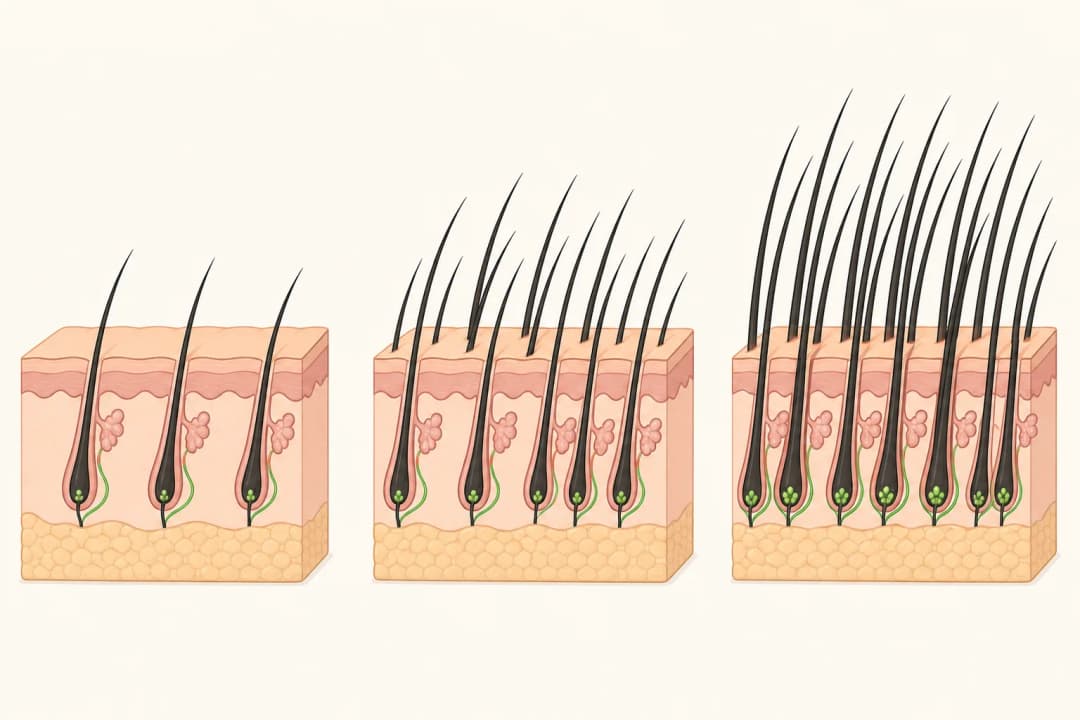
Fine facial hair is common and may become more noticeable with age or changing hormones. Dark, coarse hair on the chin, upper lip, jaw, or cheeks can be called hirsutism when it follows a male-pattern distribution. Polycystic ovary syndrome is one possible contributor, but it is not the only explanation. Medicines, ovarian or adrenal hormone changes, and family traits may also play a part. A clinician may ask about periods, acne, scalp hair thinning, weight change, and the timing of growth.
What you can do
Temporary options include trimming, shaving, threading, waxing, or depilatory products; patch-test products and avoid waxing irritated skin. If growth is persistent, a clinician can discuss hormonal evaluation and prescription treatment where appropriate. Laser hair removal can reduce growth by targeting pigment in the follicle, while electrolysis uses a probe to treat individual follicles. Hair colour, skin tone, the treatment area, and the cause of growth affect which option is suitable.
When to seek care
Book an assessment if coarse hair appears quickly, periods become irregular, acne or scalp hair loss develops, or you notice voice deepening or increased muscle bulk. These changes can signal a hormone-related problem that needs evaluation. Seek prompt care for sudden, marked changes or other severe symptoms rather than treating the hair alone.
Questions for your doctor
Does the distribution of hair suggest a hormonal cause? Would blood tests or a medication review help? Which removal method fits my skin tone, hair colour, and treatment goals?
Find care
General Clinics & Polyclinics in Abu Dhabi
That answer is general. If you want it applied to your own case, these are licensed general clinics & polyclinics listed in Abu Dhabi.
27 Ar Ruwwad St - Shakhbout City - MSH4 - Abu Dhabi - United Arab Emirates
Accepts: Daman, Thiqa, Cigna, MetLife +20 more
Al Ruwais, Al Dhafrah
Accepts: Daman, Thiqa, AXA, Cigna +16 more
Al Bahyah - Al Bahyah Old - Abu Dhabi - United Arab Emirates
Accepts: Daman, Thiqa, Cigna, Allianz Care +18 more
Abu Dhabi
Accepts: Daman, Thiqa, AXA, Cigna +27 more
Ordered by verification status and how complete each clinic's public record is, then alphabetically. This is a directory listing, not a ranking — Zavis does not rate or recommend providers.
A factual listing drawn from the DHA, DOH and MOHAP licence registers. It is not a referral, an endorsement, or advice that any of these providers is right for you.
Questions people ask
Does shaving make facial hair grow back thicker?
No. Shaving cuts the hair at the surface, which can make regrowth feel blunt without changing the follicle.
Can facial hair be treated without finding the cause?
Removal can manage appearance, but new or changing growth still merits assessment for a treatable trigger.
Related
Related reading
Keep reading
Medical disclaimer. This page is general health information, not medical advice, and it cannot diagnose you. Always consult a licensed healthcare provider about your own symptoms and treatment. In an emergency in the UAE, call 998 for an ambulance.