
What should you know about etiology of retinoblastoma?
Short answer
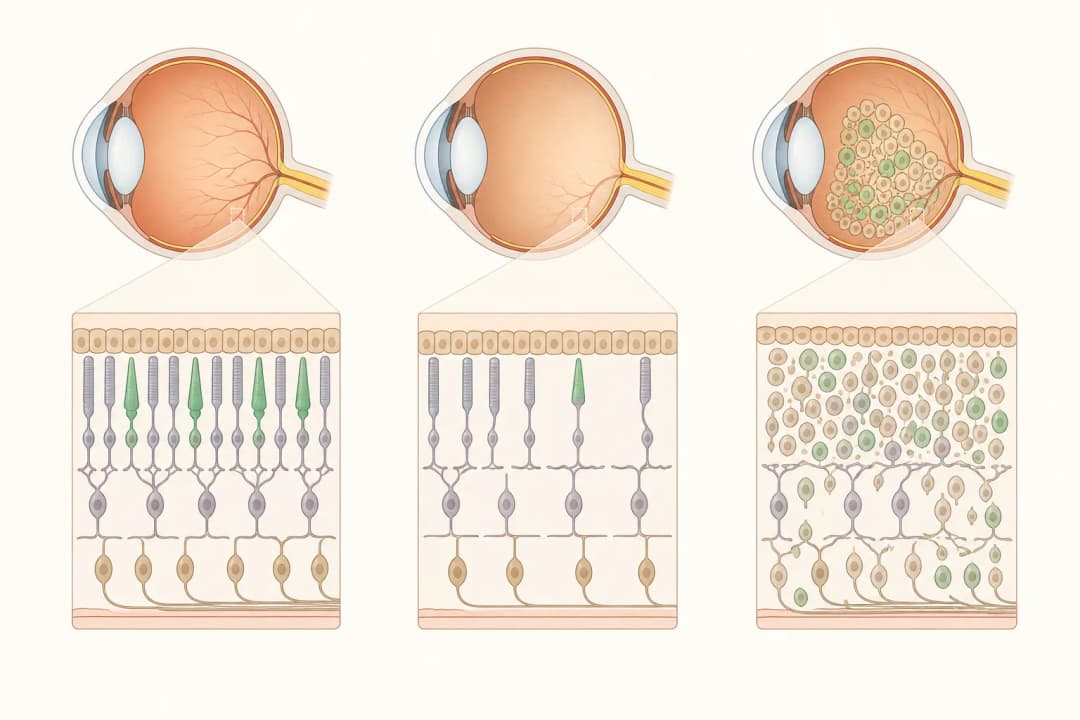
Retinoblastoma develops when changes affecting the RB1 tumour-suppressor gene allow immature retinal cells to grow abnormally.
This answers one question. It is not a diagnosis and does not replace an assessment by a licensed doctor.
At a glance
- Main gene discussed
- RB1
- Specialist assessment
- Both eyes and the wider clinical picture may be reviewed
What the cause can mean
The gene change may be present only in the affected eye cells, or it may be present throughout the body from birth. A change present throughout the body can affect both eyes and may have implications for relatives, so a specialist may discuss genetic counselling and testing. A change limited to tumour cells is not usually something a child has inherited from a parent.
Retinoblastoma is not caused by a parenting choice, a minor eye injury, or something a child did. The genetic change disrupts a normal growth-control signal in retinal cells. The medical team uses the eye examination and imaging findings to understand the extent of disease; the cause alone does not determine the treatment plan.
What families can do next
If retinoblastoma is suspected or confirmed, arrange care with an ophthalmologist and an oncology team experienced in childhood eye tumours. Ask whether both eyes need assessment, whether genetic counselling is appropriate, and what information should be shared with close relatives. Keep records of eye examinations and bring details of any family history of childhood eye tumours.
Treatment is selected to protect life first and preserve vision where possible. Depending on the findings, the team may discuss local treatment such as brachytherapy or medicines such as chemotherapy. These options are considered after examining the eyes and assessing whether disease has extended beyond them.
When to seek care promptly
Arrange prompt medical assessment for a child with a white reflection in the pupil, a new eye misalignment, persistent redness or swelling, or a noticeable change in vision. These signs have several possible causes, but an eye specialist should assess them without delay because early evaluation can affect the available options.
Questions for your doctor
Could the RB1 change be inherited or limited to the tumour? Should our child have genetic counselling or testing? Do close relatives need an eye assessment? What examinations will show whether one or both eyes are involved? How will treatment protect vision and monitor the other eye?
Questions people ask
Is retinoblastoma always inherited?
No. Some cases involve a change limited to tumour cells, while others involve a change present throughout the body.
Can a parent cause retinoblastoma?
No. Retinoblastoma results from changes in growth-control genes, not from a parenting decision or ordinary childhood activity.
Related
Related reading
Keep reading
Cancer care in the UAE
Hospitals & Medical Centers in Abu Dhabi
Most UAE cancer care is delivered inside hospital services rather than by standalone oncology clinics, so these are licensed hospitals & medical centers listed in Abu Dhabi. Confirm the specific cancer service exists before you travel, and know that asking for a second opinion is routine.
Ahalia Hospital Musaffah Building - Musaffah - Musaffah Industrial - Abu Dhabi - United Arab Emirates
Accepts: Daman, Thiqa, AXA, Cigna +26 more
Al Ruwais Industrial City - Abu Dhabi - United Arab Emirates
Accepts: Daman, Thiqa, AXA, Cigna +30 more
Abu Dhabi, Abu Dhabi
Accepts: Daman, Thiqa, AXA, Cigna +30 more
Second opinions are routine in cancer care and asking for one does not affect your treatment. How to arrange a second opinion in the UAE.
Ordered by verification status and how complete each clinic's public record is, then alphabetically. This is a directory listing, not a ranking — Zavis does not rate or recommend providers.
A factual listing drawn from the DHA, DOH and MOHAP licence registers. It is not a referral, an endorsement, or advice that any of these providers is right for you.
Medical disclaimer. This page is general health information, not medical advice, and it cannot diagnose you. Always consult a licensed healthcare provider about your own symptoms and treatment. In an emergency in the UAE, call 998 for an ambulance.