
What should you know about etiology of hyperthyroidism?
Short answer
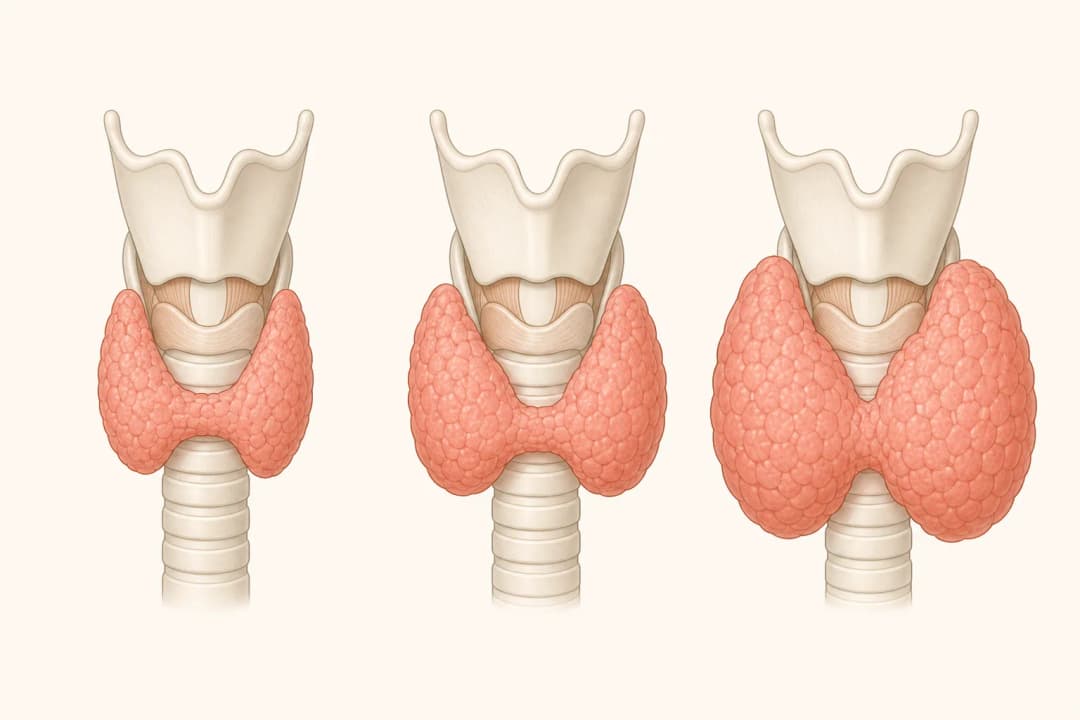
Hyperthyroidism occurs when the thyroid releases too much hormone, commonly because of autoimmune stimulation, thyroid inflammation, or hormone-producing nodules.
This answers one question. It is not a diagnosis and does not replace an assessment by a licensed doctor.
At a glance
- Main problem
- Too much thyroid hormone
- Possible causes
- Autoimmune stimulation, inflammation, or nodules
- Common body effects
- Faster heartbeat, heat production, and bowel activity
How an overactive thyroid starts
In autoimmune hyperthyroidism, the immune system stimulates the thyroid to keep making hormone. Inflammation can release stored hormone temporarily, while one or more nodules may produce hormone independently of the body’s usual control signals. Excess thyroid hormone speeds many body processes. Palpitations, excessive sweating, heat intolerance, feeling anxious, difficulty sleeping, diarrhoea, and night sweats may occur, although symptoms vary and other conditions can cause them.
How doctors investigate it
A clinician will usually review symptoms, examine the neck and pulse, and request thyroid blood tests. Further tests may help distinguish autoimmune stimulation, inflammation, and nodules. Tell the clinician about thyroid products, supplements, recent illness, and medicines because these can affect results or hormone levels. Treatment is chosen according to the cause and may involve medicines, radioiodine, or an operation; specialist advice helps match the option to your situation.
When to seek care
Seek urgent help for a very fast or irregular heartbeat with chest pain, severe breathlessness, fainting, marked agitation, confusion, or high fever. Contact a clinician soon for new palpitations, worsening tremor, persistent diarrhoea, or symptoms during pregnancy. Do not change thyroid medicine without medical guidance.
Questions for your doctor
Which cause is most likely from my examination and blood tests? Do I need imaging or antibody testing? How quickly should treatment work, and which symptoms should prompt urgent review?
Find care
General Clinics & Polyclinics in Abu Dhabi
That answer is general. If you want it applied to your own case, these are licensed general clinics & polyclinics listed in Abu Dhabi.
27 Ar Ruwwad St - Shakhbout City - MSH4 - Abu Dhabi - United Arab Emirates
Accepts: Daman, Thiqa, Cigna, MetLife +20 more
Al Ruwais, Al Dhafrah
Accepts: Daman, Thiqa, AXA, Cigna +16 more
Al Bahyah - Al Bahyah Old - Abu Dhabi - United Arab Emirates
Accepts: Daman, Thiqa, Cigna, Allianz Care +18 more
Abu Dhabi
Accepts: Daman, Thiqa, AXA, Cigna +27 more
Ordered by verification status and how complete each clinic's public record is, then alphabetically. This is a directory listing, not a ranking — Zavis does not rate or recommend providers.
A factual listing drawn from the DHA, DOH and MOHAP licence registers. It is not a referral, an endorsement, or advice that any of these providers is right for you.
Questions people ask
Is every overactive thyroid caused by an autoimmune condition?
No. Autoimmune stimulation is one cause; inflammation and hormone-producing nodules are other possibilities.
Can symptoms alone diagnose hyperthyroidism?
No. Symptoms overlap with other problems, so thyroid blood tests are needed to confirm the diagnosis and guide the next step.
Related
Related reading
Keep reading
Medical disclaimer. This page is general health information, not medical advice, and it cannot diagnose you. Always consult a licensed healthcare provider about your own symptoms and treatment. In an emergency in the UAE, call 998 for an ambulance.