
What should you know about end-stage melanoma?
Short answer
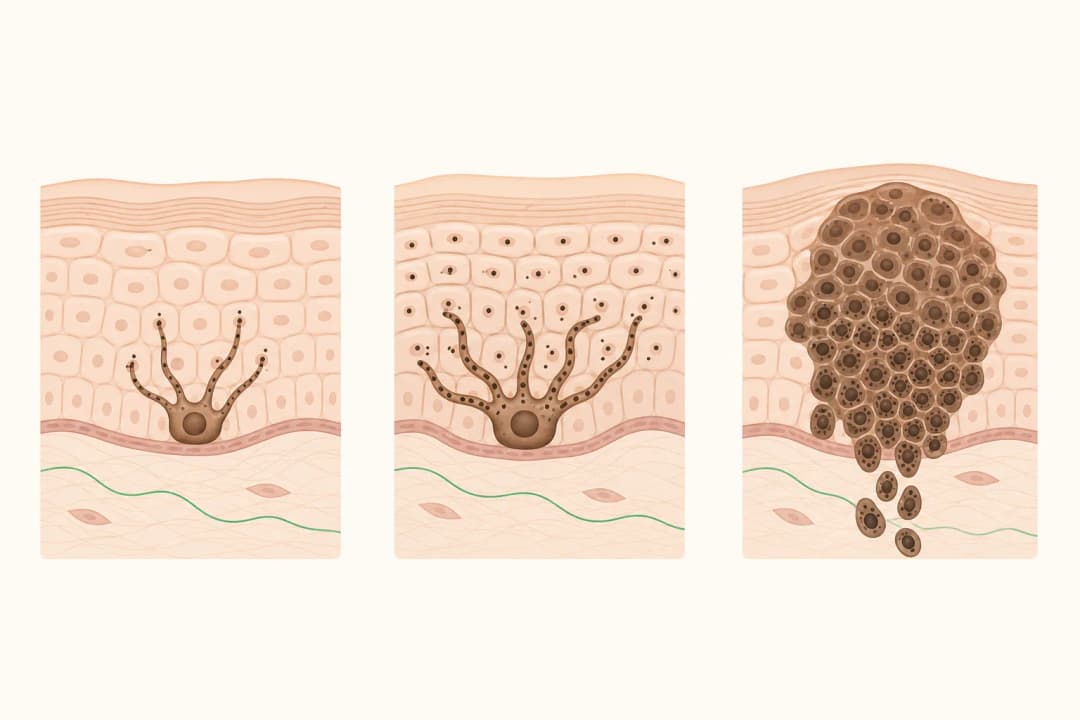
End-stage melanoma means melanoma has advanced extensively, and care focuses on controlling disease, relieving symptoms, and aligning treatment with the person's goals.
This answers one question. It is not a diagnosis and does not replace an assessment by a licensed doctor.
At a glance
- Care priorities
- Disease control, comfort, function, and the patient's wishes
- Urgent concern
- New neurological symptoms require prompt medical contact
Understanding advanced disease
The phrase may refer to melanoma that has spread to distant organs or no longer responds adequately to available treatment. The exact outlook depends on where disease is located, its biology, previous therapies, general health, and response over time; one label cannot predict an individual course. The oncology team may use scans, pathology, or other assessments to guide decisions. Brain Metastases can cause specific neurological symptoms and need prompt attention.
Planning care
Ask the oncology team to explain the current goals: slowing melanoma, reducing a troublesome tumour, preserving function, or prioritising comfort. Options may include Immunotherapy, surgery for selected disease, radiation, symptom medicines, rehabilitation, and supportive or palliative care. Previous procedures such as Skin Cancer Surgery, Tumour Removal Surgery, or Sentinel Lymph Node Biopsy provide context but do not determine the next step alone. Keep a written list of symptoms and medicines, and involve the people the patient wants present.
Urgent symptoms
Contact the cancer team promptly for new confusion, seizure, severe headache, sudden weakness, repeated vomiting, worsening breathlessness, uncontrolled pain, inability to drink, or marked drowsiness. Emergency services are appropriate for a seizure, severe breathing difficulty, sudden paralysis, or loss of consciousness. Do not wait for a routine Follow-Up After Cancer Treatment visit when a serious symptom is new or rapidly worsening.
Questions for the oncology team
What has changed on the latest scan or examination? What is the goal and likely burden of each option? How will symptoms be treated at home? Who should we call overnight? Would palliative care, hospice support, or another specialist service help now?
Find care
General Clinics & Polyclinics in Abu Dhabi
That answer is general. If you want it applied to your own case, these are licensed general clinics & polyclinics listed in Abu Dhabi.
27 Ar Ruwwad St - Shakhbout City - MSH4 - Abu Dhabi - United Arab Emirates
Accepts: Daman, Thiqa, Cigna, MetLife +20 more
Al Ruwais, Al Dhafrah
Accepts: Daman, Thiqa, AXA, Cigna +16 more
Al Bahyah - Al Bahyah Old - Abu Dhabi - United Arab Emirates
Accepts: Daman, Thiqa, Cigna, Allianz Care +18 more
Abu Dhabi
Accepts: Daman, Thiqa, AXA, Cigna +27 more
Ordered by verification status and how complete each clinic's public record is, then alphabetically. This is a directory listing, not a ranking — Zavis does not rate or recommend providers.
A factual listing drawn from the DHA, DOH and MOHAP licence registers. It is not a referral, an endorsement, or advice that any of these providers is right for you.
Questions people ask
Does end-stage melanoma mean no treatment is possible?
Not necessarily. Treatment and supportive options depend on the disease pattern, prior care, health, and the person's goals.
Can palliative care be involved alongside cancer treatment?
Yes. Palliative care can help with symptoms, communication, and quality of life during active treatment or later care.
Related
Related reading
Keep reading
Medical disclaimer. This page is general health information, not medical advice, and it cannot diagnose you. Always consult a licensed healthcare provider about your own symptoms and treatment. In an emergency in the UAE, call 998 for an ambulance.