
End-stage chronic kidney disease: what to know
Short answer
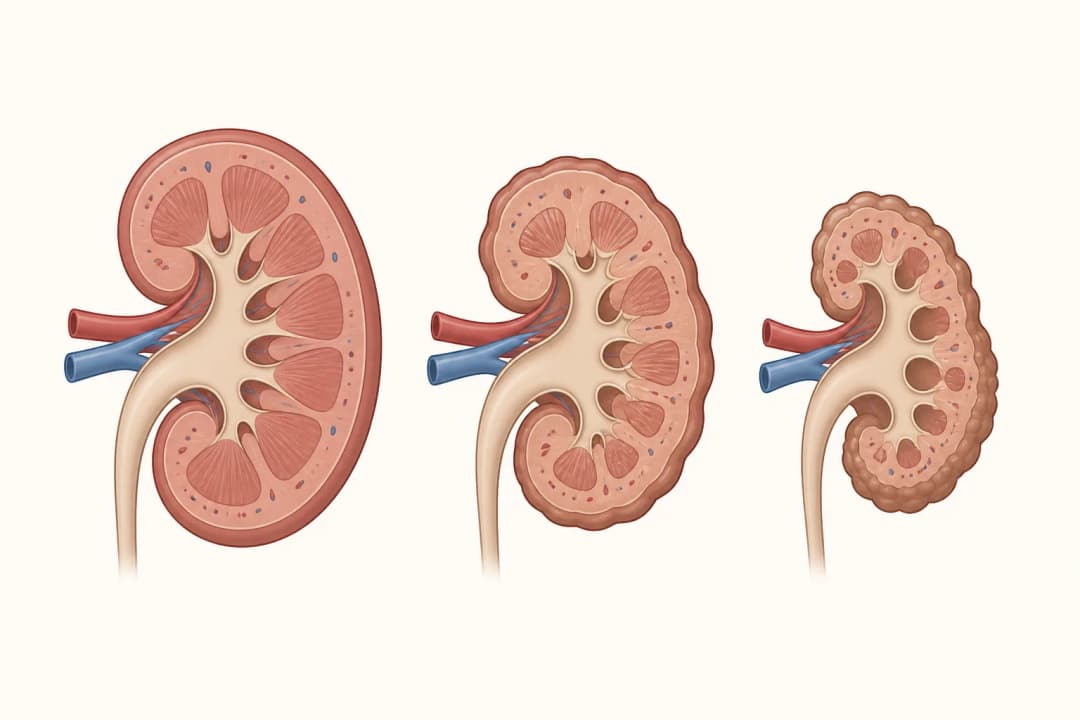
End-stage chronic kidney disease means the kidneys can no longer perform enough filtering for the body’s needs, so specialist care is needed to plan dialysis, transplant assessment, or supportive treatment.
This answers one question. It is not a diagnosis and does not replace an assessment by a licensed doctor.
At a glance
- Main issue
- Severely reduced filtering and buildup of waste or fluid
- Care planning
- Dialysis, transplant assessment, or supportive treatment may be discussed
What advanced kidney disease can do
When filtering is severely reduced, waste and extra fluid can build up, while minerals, acid balance, blood pressure, and red blood cell production become harder to regulate. People may notice fatigue, nausea, itching, poor appetite, swelling, breathlessness, muscle cramps, sleep disturbance, or changes in urination, although symptoms vary. Anaemia, hypertension, gout, and restless legs can occur alongside kidney disease and need their own assessment.
A kidney team uses symptoms, blood and urine tests, blood pressure, medication review, and overall health to guide decisions. The phrase describes kidney function and care needs; it does not by itself determine which treatment suits one person.
Planning care
Keep regular nephrology appointments and take medicines exactly as prescribed. Ask before using anti-inflammatory painkillers, herbal products, or supplements because some can worsen kidney function or alter mineral levels. Follow the personalised advice you receive about fluids, salt, potassium, phosphate, and protein rather than adopting a generic diet. Discuss dialysis access, transplant assessment, symptom control, work, transport, and the support available to caregivers.
When urgent help is needed
Contact your kidney team urgently for rapidly increasing swelling, much less urine, repeated vomiting, new confusion, severe weakness, or breathlessness. Call emergency services for severe breathing difficulty, chest pain, fainting, seizure, or sudden confusion. If you have an established dialysis plan, follow the unit’s instructions for a missed or shortened session and do not wait for the next routine visit when symptoms are severe.
Questions for your kidney team
Ask what your latest results mean, which treatment pathway is being considered, and how preparation would work. Clarify medicines to avoid, fluid and food targets, vaccination advice, what symptoms need urgent contact, and who to call outside clinic hours. Ask how fatigue, itching, pain, sleep problems, or mood changes can be treated.
Find care
General Clinics & Polyclinics in Abu Dhabi
That answer is general. If you want it applied to your own case, these are licensed general clinics & polyclinics listed in Abu Dhabi.
27 Ar Ruwwad St - Shakhbout City - MSH4 - Abu Dhabi - United Arab Emirates
Accepts: Daman, Thiqa, Cigna, MetLife +20 more
Al Ruwais, Al Dhafrah
Accepts: Daman, Thiqa, AXA, Cigna +16 more
Al Bahyah - Al Bahyah Old - Abu Dhabi - United Arab Emirates
Accepts: Daman, Thiqa, Cigna, Allianz Care +18 more
Abu Dhabi
Accepts: Daman, Thiqa, AXA, Cigna +27 more
Ordered by verification status and how complete each clinic's public record is, then alphabetically. This is a directory listing, not a ranking — Zavis does not rate or recommend providers.
A factual listing drawn from the DHA, DOH and MOHAP licence registers. It is not a referral, an endorsement, or advice that any of these providers is right for you.
Questions people ask
Does end-stage kidney disease always mean dialysis starts immediately?
Not necessarily. The kidney team considers symptoms, test results, health, preferences, and available treatment pathways when planning care.
Can symptoms be treated even when kidney function is very low?
Yes. Clinicians can address problems such as anaemia, fluid symptoms, itching, nausea, pain, and sleep disturbance alongside kidney-focused care.
Related
Related reading
Keep reading
Medical disclaimer. This page is general health information, not medical advice, and it cannot diagnose you. Always consult a licensed healthcare provider about your own symptoms and treatment. In an emergency in the UAE, call 998 for an ambulance.