
What should you know about an electrocardiogram monitor?
Short answer
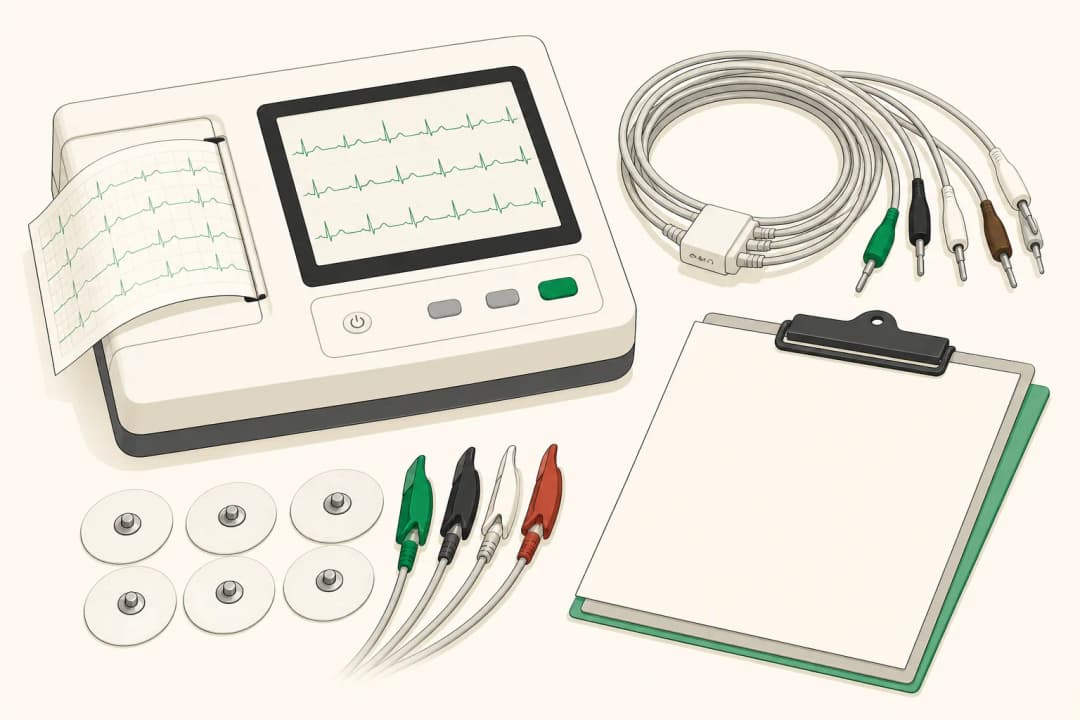
An electrocardiogram monitor records the heart’s electrical activity to assess rhythm, rate and changes over time.
This answers one question. It is not a diagnosis and does not replace an assessment by a licensed doctor.
At a glance
- Records
- Electrical activity of the heart
- May be useful for
- Rhythms that come and go
- Tell the clinician
- About skin reactions and implanted devices
What the monitor shows
A standard ECG captures a brief snapshot through electrodes placed on the skin. A portable or ambulatory monitor can record for longer, which may help match an intermittent flutter, racing sensation or skipped beat with the heart rhythm at that moment. The tracing is interpreted alongside your symptoms, medical history and medicines; a monitor alone does not name every possible cause.
The equipment may be a small recorder worn on the body or a bedside device. Keep the electrodes attached as instructed and write down symptoms, activity and their timing if you are asked to do so.
Preparing and using it
Wear comfortable clothing that allows access to the chest. Tell the clinician about skin sensitivity, implanted heart devices and medicines. Follow instructions about bathing, exercise and returning the recorder. Do not remove leads simply because the tracing looks unusual to you; contact the service if an electrode loosens or the device alarms.
When symptoms need urgent attention
Seek emergency help for chest pressure or pain that is severe, new or persistent, especially with breathlessness, fainting, cold sweat or marked weakness. A monitor should not delay urgent assessment. Arrange medical review for repeated palpitations, dizziness or fainting, even if a recording later appears normal.
Questions for your doctor
Ask which type of monitor you will use, how long to wear it, which activities are allowed, and when and how the result will be explained.
Find care
General Clinics & Polyclinics in Abu Dhabi
That answer is general. If you want it applied to your own case, these are licensed general clinics & polyclinics listed in Abu Dhabi.
27 Ar Ruwwad St - Shakhbout City - MSH4 - Abu Dhabi - United Arab Emirates
Accepts: Daman, Thiqa, Cigna, MetLife +20 more
Al Ruwais, Al Dhafrah
Accepts: Daman, Thiqa, AXA, Cigna +16 more
Al Bahyah - Al Bahyah Old - Abu Dhabi - United Arab Emirates
Accepts: Daman, Thiqa, Cigna, Allianz Care +18 more
Abu Dhabi
Accepts: Daman, Thiqa, AXA, Cigna +27 more
Ordered by verification status and how complete each clinic's public record is, then alphabetically. This is a directory listing, not a ranking — Zavis does not rate or recommend providers.
A factual listing drawn from the DHA, DOH and MOHAP licence registers. It is not a referral, an endorsement, or advice that any of these providers is right for you.
Questions people ask
Can an ECG monitor feel painful?
The recording itself should not cause pain, although removing adhesive electrodes may irritate sensitive skin.
Can I exercise while wearing one?
Only follow the activity instructions for your particular monitor, because some devices must stay dry or protected during exercise.
Related
Related reading
Keep reading
Medical disclaimer. This page is general health information, not medical advice, and it cannot diagnose you. Always consult a licensed healthcare provider about your own symptoms and treatment. In an emergency in the UAE, call 998 for an ambulance.