
What should you know about elective cervical cerclage?
Short answer
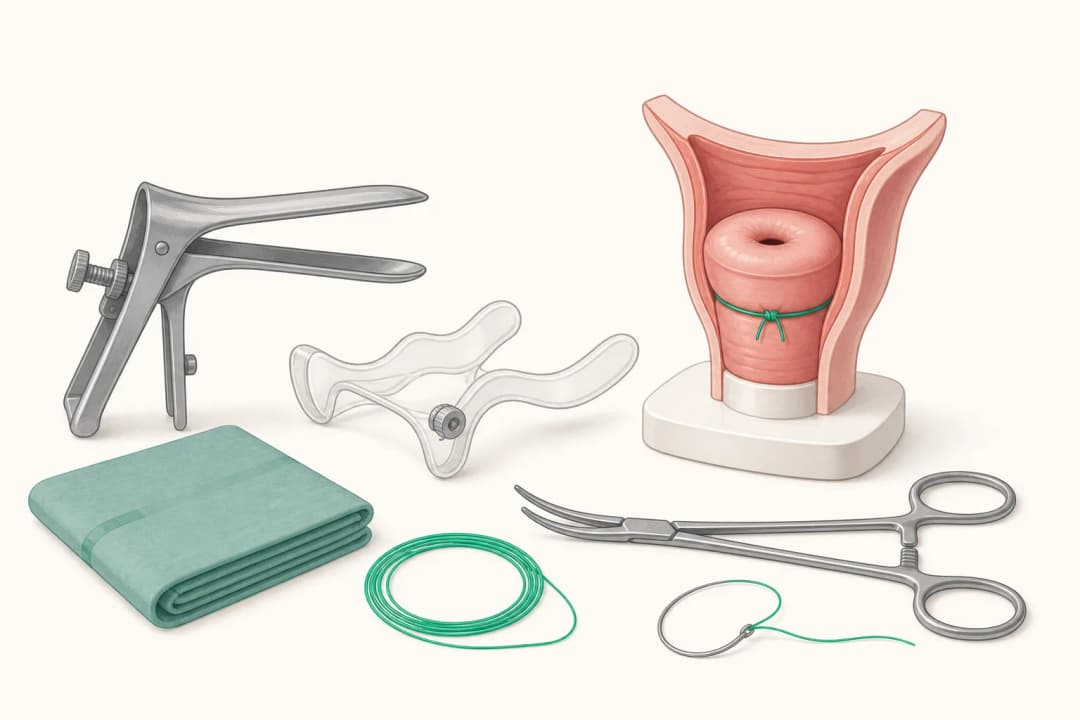
Elective cervical cerclage is a planned stitch around the cervix that may help support a pregnancy at risk of early cervical opening.
This answers one question. It is not a diagnosis and does not replace an assessment by a licensed doctor.
At a glance
- Purpose
- Support the cervix when early opening is a concern.
- Placement
- Usually placed through the vagina under anaesthesia.
- Follow-up
- Regular maternity monitoring remains necessary.
What the procedure does
The cervix is the lower, narrow part of the womb. During an elective cerclage, an obstetric team places a strong stitch around it through the vagina, usually early in pregnancy and before signs of cervical change. The stitch is intended to provide mechanical support while the pregnancy continues. It does not treat every cause of early labour and cannot prevent all pregnancy complications.
The procedure is usually performed with regional or general anaesthesia. Cramping, pelvic pressure or light spotting can occur afterwards. Your maternity team will explain whether the stitch is expected to remain until near the end of pregnancy or needs removal earlier in a particular situation.
Preparing and living with a cerclage
Tell the team about bleeding, fluid leakage, contractions, allergies and medicines before the procedure. Follow instructions about fasting, activity, intercourse and follow-up appointments. Keep antenatal visits because the stitch does not replace monitoring of the cervix, baby or placenta. A plan for removal and for contacting maternity triage should be written down.
Most daily decisions depend on your symptoms, pregnancy history and the type of stitch. Do not insert anything into the vagina or change activity restrictions without clear advice from your obstetric team.
When to contact maternity services
Contact maternity services urgently for regular painful contractions, heavy bleeding, gush or continued leakage of fluid, fever, foul-smelling discharge, severe pelvic pain, or reduced fetal movement when you are at a stage of pregnancy where movements are established. These signs can indicate labour, infection or ruptured membranes, and the stitch may need prompt review.
Questions for your obstetric team
Ask why a planned cerclage is being recommended, what alternatives exist, how the procedure is performed, which activities are restricted, when removal is planned, and what symptoms require same-day assessment.
Find care
General Clinics & Polyclinics in Abu Dhabi
That answer is general. If you want it applied to your own case, these are licensed general clinics & polyclinics listed in Abu Dhabi.
27 Ar Ruwwad St - Shakhbout City - MSH4 - Abu Dhabi - United Arab Emirates
Accepts: Daman, Thiqa, Cigna, MetLife +20 more
Al Ruwais, Al Dhafrah
Accepts: Daman, Thiqa, AXA, Cigna +16 more
Al Bahyah - Al Bahyah Old - Abu Dhabi - United Arab Emirates
Accepts: Daman, Thiqa, Cigna, Allianz Care +18 more
Abu Dhabi
Accepts: Daman, Thiqa, AXA, Cigna +27 more
Ordered by verification status and how complete each clinic's public record is, then alphabetically. This is a directory listing, not a ranking — Zavis does not rate or recommend providers.
A factual listing drawn from the DHA, DOH and MOHAP licence registers. It is not a referral, an endorsement, or advice that any of these providers is right for you.
Questions people ask
Can a cerclage guarantee that labour will not start early?
No. It may provide support in selected pregnancies, but early labour and other complications can still occur.
What happens if contractions or fluid leakage begin?
Contact maternity services urgently so the cervix, membranes and pregnancy can be assessed.
Related
Related reading
Keep reading
Medical disclaimer. This page is general health information, not medical advice, and it cannot diagnose you. Always consult a licensed healthcare provider about your own symptoms and treatment. In an emergency in the UAE, call 998 for an ambulance.