
Early vulvar melanoma: what to know
Short answer
Early vulvar melanoma is melanoma arising in vulvar skin before distant spread is established, and any new or changing pigmented vulvar lesion needs specialist assessment.
This answers one question. It is not a diagnosis and does not replace an assessment by a licensed doctor.
At a glance
- Area involved
- Skin or mucosal tissue of the vulva
- Diagnostic step
- Biopsy and pathology review
- Possible treatment focus
- Planned local removal with specialist follow-up
Understanding the diagnosis
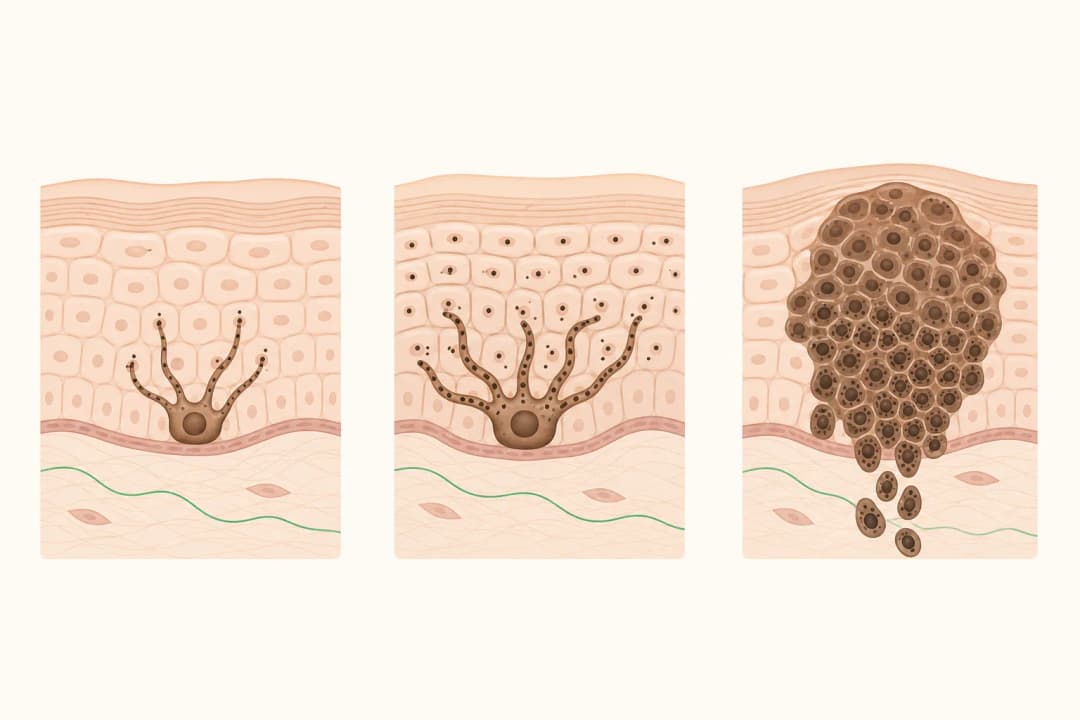
Vulvar melanoma is a form of melanoma arising in the skin or mucosal tissue of the vulva. It may appear as a new dark patch, an uneven mole, a lesion with several colours, or a spot that changes in size or surface. It can also cause itching, bleeding, soreness, or a non-healing area. These symptoms have many possible causes, so they do not by themselves establish melanoma; a biopsy is needed for diagnosis.
Early stage describes the findings from examination, biopsy, and staging. The pathology report may describe depth, margins, and other features that influence whether more local surgery or lymph-node assessment is advised.
Next steps
Book a prompt appointment with a gynaecologist, dermatologist, or specialist skin-cancer team. Avoid picking, shaving over, or applying irritant products to the lesion. Record changes in colour, border, thickness, bleeding, or discomfort, and bring medication details to the visit. Management often involves planned removal of the lesion with surrounding tissue; surgical excision, skin cancer surgery, or tumour removal surgery may be discussed. A sentinel lymph node biopsy may be considered according to the pathology and clinical findings.
After treatment, attend follow-up visits and report changes at the scar, vulva, groin, or elsewhere on the skin. Follow-up after cancer treatment helps the team monitor healing and check for new concerns.
When to seek care promptly
Seek prompt assessment for a vulvar mark that is changing, bleeding, ulcerated, painful, persistently itchy, or not healing. Get urgent help for heavy bleeding, rapidly increasing swelling, severe pain, fever, or difficulty passing urine. New weakness, confusion, seizure, or a severe unusual headache also needs emergency assessment. The urgency comes from the warning sign and its progression, not from assuming that a symptom means cancer.
Questions for your doctor
Ask: Do I need a biopsy, and where will it be taken? What do the pathology findings mean? Is further excision needed? Would sentinel lymph node biopsy help with staging? How will surgery affect vulvar function and healing? What follow-up schedule and symptoms should I expect?
Find care
General Clinics & Polyclinics in Abu Dhabi
That answer is general. If you want it applied to your own case, these are licensed general clinics & polyclinics listed in Abu Dhabi.
27 Ar Ruwwad St - Shakhbout City - MSH4 - Abu Dhabi - United Arab Emirates
Accepts: Daman, Thiqa, Cigna, MetLife +20 more
Al Ruwais, Al Dhafrah
Accepts: Daman, Thiqa, AXA, Cigna +16 more
Al Bahyah - Al Bahyah Old - Abu Dhabi - United Arab Emirates
Accepts: Daman, Thiqa, Cigna, Allianz Care +18 more
Abu Dhabi
Accepts: Daman, Thiqa, AXA, Cigna +27 more
Ordered by verification status and how complete each clinic's public record is, then alphabetically. This is a directory listing, not a ranking — Zavis does not rate or recommend providers.
A factual listing drawn from the DHA, DOH and MOHAP licence registers. It is not a referral, an endorsement, or advice that any of these providers is right for you.
Questions people ask
Does every dark vulvar spot represent melanoma?
No. Vulvar pigmentation has several possible causes, but a new or changing spot should be examined rather than self-diagnosed.
Why might lymph-node testing be discussed?
The pathology and clinical examination may show whether sentinel lymph node biopsy could add staging information.
Related
Related reading
Keep reading
Medical disclaimer. This page is general health information, not medical advice, and it cannot diagnose you. Always consult a licensed healthcare provider about your own symptoms and treatment. In an emergency in the UAE, call 998 for an ambulance.