
Early signs of type 2 diabetes
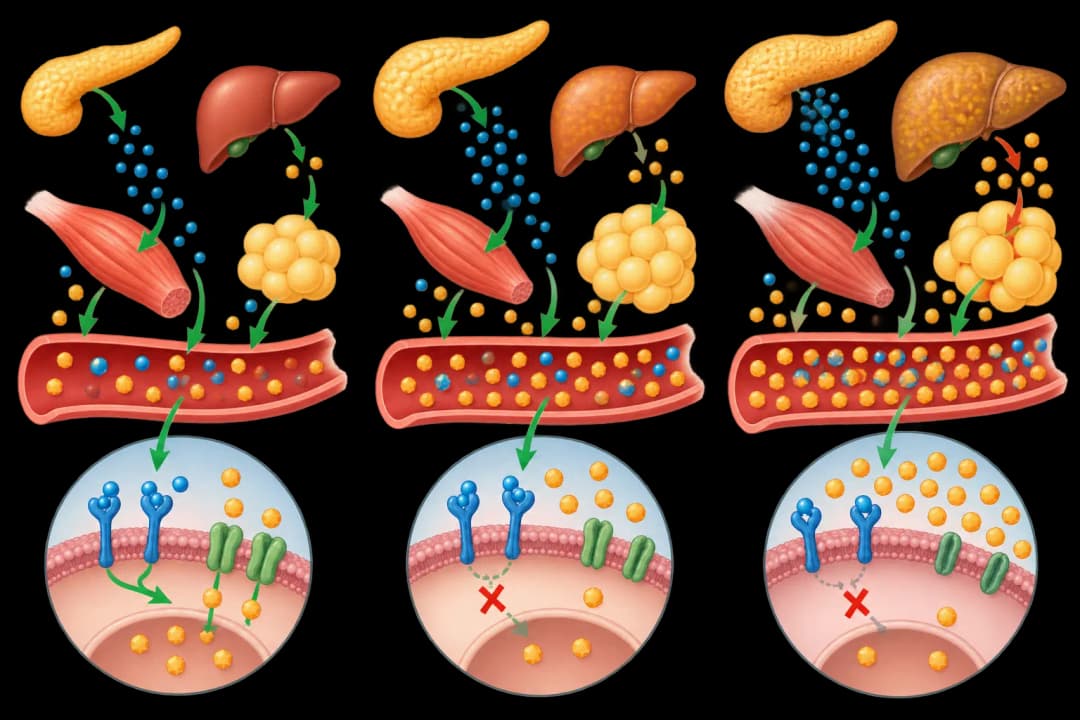
Short answer
Early type 2 diabetes may cause increased thirst, frequent urination, tiredness, blurred vision, slow-healing cuts, or repeated infections, although some people have no noticeable symptoms.
This answers one question. It is not a diagnosis and does not replace an assessment by a licensed doctor.
At a glance
- Possible early changes
- Thirst, frequent urination, tiredness, blurred vision, slow-healing cuts, or repeated infections
- How it is confirmed
- Blood glucose testing arranged by a clinician
- Symptoms
- Some people have no noticeable symptoms
What these changes can mean
Type 2 diabetes develops when the body does not use insulin effectively and blood glucose remains too high. Extra thirst and passing urine often can occur as the kidneys remove excess glucose. Low energy or blurred vision may also appear. High glucose can make skin injuries slower to heal and can make infections, including cellulitis, more likely to need attention.
These symptoms have other possible causes, so they cannot confirm diabetes by themselves. A blood glucose test, arranged by a clinician, is needed for diagnosis. Prediabetes may have no clear symptoms and is identified through testing before diabetes develops.
What to do if you notice signs
Arrange an appointment with a general practitioner if these changes persist, recur, or occur together. Write down when they began, how often you urinate, changes in thirst or vision, any weight change, and medicines you take. The clinician may check your blood glucose and discuss further tests, blood pressure, and other health factors.
Do not stop prescribed medicines or make a major diet change without advice. If you have diabetes already, follow your agreed glucose-monitoring and sick-day plan. Foot or skin wounds deserve prompt attention, particularly if redness, warmth, swelling, or discharge develops.
When to seek urgent care
Seek urgent medical help for severe weakness, confusion, fainting, repeated vomiting, difficulty breathing, or inability to keep fluids down. Sudden facial drooping, arm weakness, speech difficulty, or a sudden loss of vision can signal a stroke and needs emergency help. A painful, rapidly spreading, hot or swollen area of skin with fever also needs prompt assessment.
Questions for your doctor
Ask which blood glucose tests are suitable, whether your symptoms could have another cause, and when results will be available. You can also ask how to prepare for testing, what changes are reasonable while waiting, and which symptoms should prompt faster review.
Find care
General Clinics & Polyclinics in Abu Dhabi
That answer is general. If you want it applied to your own case, these are licensed general clinics & polyclinics listed in Abu Dhabi.
27 Ar Ruwwad St - Shakhbout City - MSH4 - Abu Dhabi - United Arab Emirates
Accepts: Daman, Thiqa, Cigna, MetLife +20 more
Al Ruwais, Al Dhafrah
Accepts: Daman, Thiqa, AXA, Cigna +16 more
Al Bahyah - Al Bahyah Old - Abu Dhabi - United Arab Emirates
Accepts: Daman, Thiqa, Cigna, Allianz Care +18 more
Abu Dhabi
Accepts: Daman, Thiqa, AXA, Cigna +27 more
Ordered by verification status and how complete each clinic's public record is, then alphabetically. This is a directory listing, not a ranking — Zavis does not rate or recommend providers.
A factual listing drawn from the DHA, DOH and MOHAP licence registers. It is not a referral, an endorsement, or advice that any of these providers is right for you.
Questions people ask
Can type 2 diabetes start without symptoms?
Yes. Some people notice no clear change, which is why a clinician may recommend testing based on personal health factors or examination findings.
Do these symptoms prove that I have diabetes?
No. Thirst, tiredness, vision changes, and frequent urination can have several causes; blood glucose testing is needed to assess diabetes.
What should I do about a slow-healing cut?
Keep it clean and arrange medical advice, especially if redness, warmth, swelling, discharge, increasing pain, or fever appears.
Related
Related reading
Keep reading
Medical disclaimer. This page is general health information, not medical advice, and it cannot diagnose you. Always consult a licensed healthcare provider about your own symptoms and treatment. In an emergency in the UAE, call 998 for an ambulance.