
Early onset type 2 diabetes: what to know
Short answer
Early onset type 2 diabetes means high blood glucose developing earlier in adult life and needing active management.
This answers one question. It is not a diagnosis and does not replace an assessment by a licensed doctor.
At a glance
- Core issue
- Insulin is not controlling glucose effectively
- Monitor
- Glucose, feet, eyes and kidney health
- Urgent warning
- Confusion, vomiting or breathing changes
The short answer
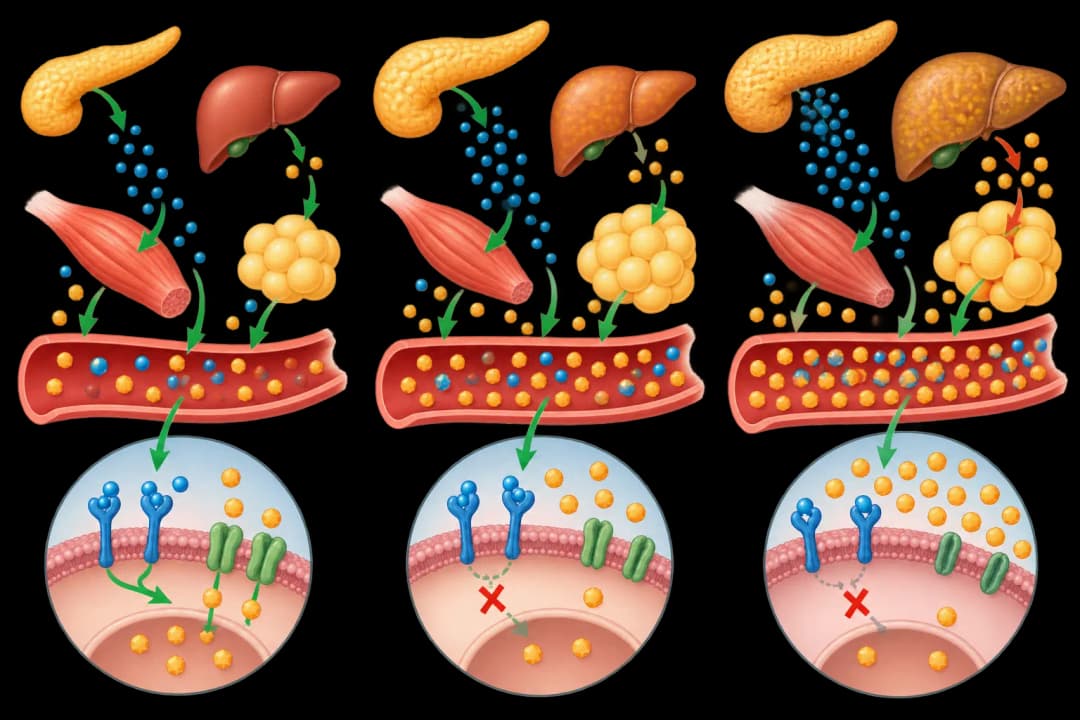
Early onset type 2 diabetes means high blood glucose developing earlier in adult life and needing active management. It happens when insulin does not work effectively and the body cannot keep glucose within a healthy range. Some people have few symptoms, so testing can matter even when they feel well.
What it can affect
Possible signs include increased thirst, passing urine often, tiredness, blurred vision, slow-healing cuts or repeated infections. Prediabetes can precede diabetes, but not everyone notices it. Over time, high glucose can affect nerves, kidneys, blood vessels, eyes and the skin. Peripheral Neuropathy may cause tingling or reduced sensation; Chronic Kidney Disease and Peripheral Arterial Disease are among complications clinicians monitor. These problems are risks to manage, not predictions about one person.
What to do next
Arrange a GP review for symptoms or a concerning screening result. Testing may include blood glucose measures and a longer-term glucose marker. Follow the agreed plan for food, activity, medicines and home checks. Look after feet daily, attend recommended eye and kidney checks, and treat cuts promptly. Ask for support that fits your routine rather than making abrupt changes you cannot maintain.
When to seek care
Seek urgent help for vomiting with severe thirst, deep or rapid breathing, marked drowsiness, confusion, fainting, or inability to keep fluids down. Get prompt advice for a foot wound, spreading redness, warmth or swelling, or sudden weakness, facial drooping or speech difficulty. Hypoglycaemia can cause sweating, shaking, hunger, confusion or unusual behaviour, especially with glucose-lowering treatment.
Questions for your doctor
Ask what your results mean, which glucose targets apply to you, how to recognise and treat Hypoglycaemia, and when kidney, eye, foot and cardiovascular checks are due. Discuss whether weight, blood pressure or cholesterol needs attention and how to adjust treatment during illness.
Find care
General Clinics & Polyclinics in Abu Dhabi
That answer is general. If you want it applied to your own case, these are licensed general clinics & polyclinics listed in Abu Dhabi.
27 Ar Ruwwad St - Shakhbout City - MSH4 - Abu Dhabi - United Arab Emirates
Accepts: Daman, Thiqa, Cigna, MetLife +20 more
Al Ruwais, Al Dhafrah
Accepts: Daman, Thiqa, AXA, Cigna +16 more
Al Bahyah - Al Bahyah Old - Abu Dhabi - United Arab Emirates
Accepts: Daman, Thiqa, Cigna, Allianz Care +18 more
Abu Dhabi
Accepts: Daman, Thiqa, AXA, Cigna +27 more
Ordered by verification status and how complete each clinic's public record is, then alphabetically. This is a directory listing, not a ranking — Zavis does not rate or recommend providers.
A factual listing drawn from the DHA, DOH and MOHAP licence registers. It is not a referral, an endorsement, or advice that any of these providers is right for you.
Questions people ask
Can type 2 diabetes start at a younger age?
Yes. It can develop earlier in adult life, and symptoms may be subtle or absent.
Is prediabetes the same as diabetes?
No. Prediabetes means glucose is above the usual range but below the diagnostic range for diabetes.
Related
Related reading
Keep reading
Medical disclaimer. This page is general health information, not medical advice, and it cannot diagnose you. Always consult a licensed healthcare provider about your own symptoms and treatment. In an emergency in the UAE, call 998 for an ambulance.