
Dry, Cracked Skin
Short answer
Dry, cracked skin often reflects a weakened protective barrier, so gentle cleansing, frequent moisturising, and attention to the cause can help it repair.
This answers one question. It is not a diagnosis and does not replace an assessment by a licensed doctor.
At a glance
- First step
- Moisturise soon after washing
- Common triggers
- Hot water, detergents, dry air, and friction
- Watch for
- Warmth, pus, spreading redness, or fever
Why skin cracks
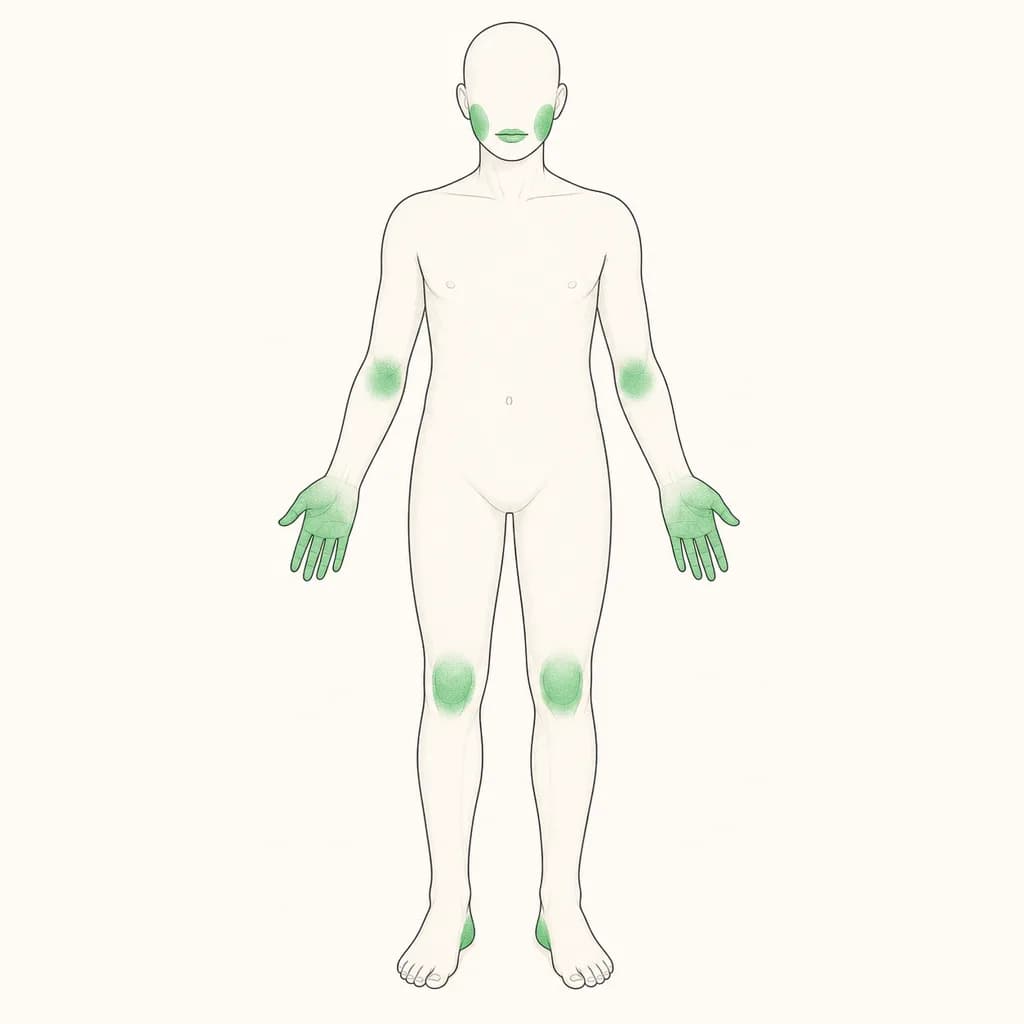
Skin loses water more easily when cold air, dry indoor air, hot showers, frequent handwashing, detergents, or friction disturb its outer barrier. Cracks commonly form where skin bends or bears pressure, and they can sting, bleed, or become an entry point for infection. Atopic dermatitis may bring itch, dryness, and inflamed patches; psoriasis may produce well-defined thick, scaly areas. The site, duration, itch, scale, and other affected areas help guide the assessment.
Dryness can be temporary, but repeated fissures may signal an ongoing irritant exposure or an inflammatory condition. The associated symptom of cracked skin does not identify one single cause.
Protect the skin barrier
Use lukewarm water and a gentle fragrance-free cleanser. Pat dry, leaving the skin slightly damp, then apply a thick fragrance-free cream or ointment. Reapply after handwashing and whenever the skin feels tight. Wear protective gloves for wet work, with a soft layer underneath if sweating is a problem, and cover painful fissures with a clean dressing. Avoid picking scale, harsh scrubs, and fragranced products. Emollient Therapy can be tailored to the body site and severity.
When to seek care
Book a clinical review if cracks keep returning, cover large areas, disturb sleep, or do not improve with careful barrier protection. Seek prompt care for spreading redness, warmth, swelling, pus, fever, severe pain, or red streaking. Get advice sooner if fissures affect the eyes, mouth, genitals, or feet, or if you have diabetes or reduced sensation.
Questions to bring
Ask whether the pattern fits irritation, Atopic Dermatitis, Psoriasis, or another cause; which emollient texture suits the area; and whether a prescribed treatment is needed. Bring a list of soaps, detergents, gloves, cosmetics, and medicines that touch the skin.
Find care
General Clinics & Polyclinics in Abu Dhabi
That answer is general. If you want it applied to your own case, these are licensed general clinics & polyclinics listed in Abu Dhabi.
27 Ar Ruwwad St - Shakhbout City - MSH4 - Abu Dhabi - United Arab Emirates
Accepts: Daman, Thiqa, Cigna, MetLife +20 more
Al Ruwais, Al Dhafrah
Accepts: Daman, Thiqa, AXA, Cigna +16 more
Al Bahyah - Al Bahyah Old - Abu Dhabi - United Arab Emirates
Accepts: Daman, Thiqa, Cigna, Allianz Care +18 more
Abu Dhabi
Accepts: Daman, Thiqa, AXA, Cigna +27 more
Ordered by verification status and how complete each clinic's public record is, then alphabetically. This is a directory listing, not a ranking — Zavis does not rate or recommend providers.
A factual listing drawn from the DHA, DOH and MOHAP licence registers. It is not a referral, an endorsement, or advice that any of these providers is right for you.
Questions people ask
Can dry skin cause bleeding cracks?
Yes. A fissure can extend through the outer skin and bleed, particularly where the skin is under tension or repeated friction.
When should I use an emollient?
Apply it after washing while the skin is slightly damp, and repeat whenever dryness or tightness returns.
Related
Related reading
Keep reading
Medical disclaimer. This page is general health information, not medical advice, and it cannot diagnose you. Always consult a licensed healthcare provider about your own symptoms and treatment. In an emergency in the UAE, call 998 for an ambulance.