
Does strength training rehabilitation treat osteopenia?
Short answer
Strength training rehabilitation can support bone and muscle health in osteopenia, but it is one part of a personalised plan and does not reverse low bone density on its own.
This answers one question. It is not a diagnosis and does not replace an assessment by a licensed doctor.
At a glance
- Condition
- Osteopenia
- Approach
- Progressive, supervised strengthening matched to your symptoms and function
What it means
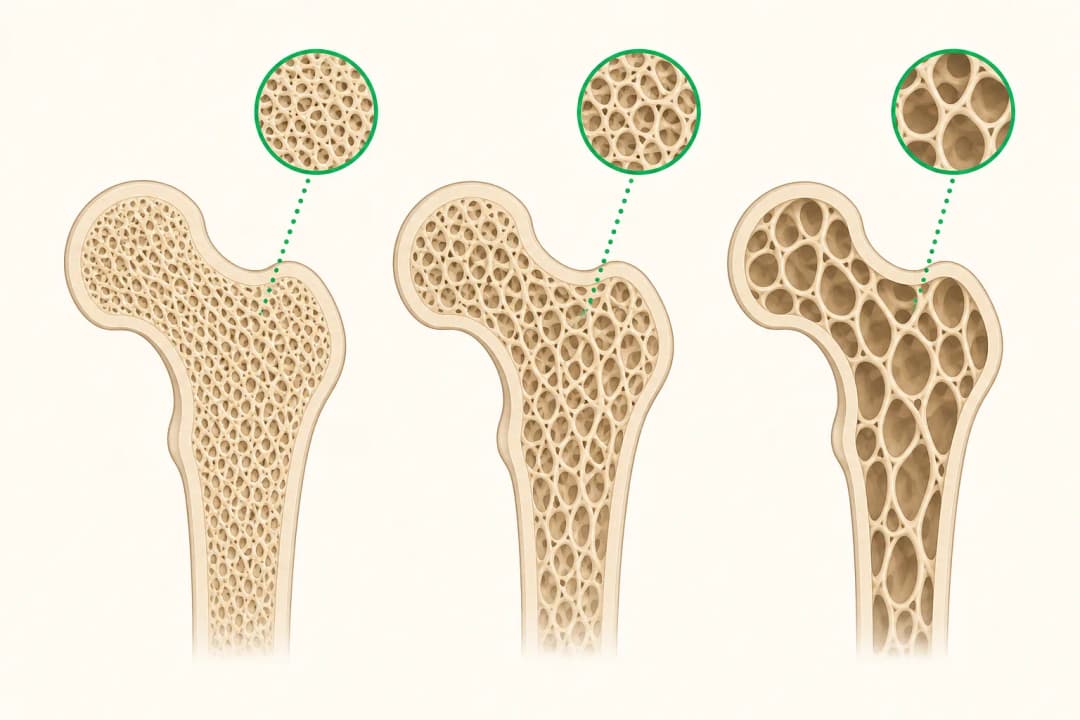
Osteopenia means bone density is lower than the expected healthy range, without automatically meaning that a fracture is present. Appropriate loading gives muscles and bones a reason to adapt, while stronger muscles and better balance can support safer daily movement. A rehabilitation clinician considers your fracture history, posture, balance, medications, pain and any restrictions from your medical team. The exercises may focus on major muscle groups, upright posture, stair practice, sit-to-stand movements and balance. High-impact or heavily loaded activities are not suitable for everyone.
What to do
Ask for an assessment before starting resistance work, especially if you have had a fragility fracture, sudden back pain or a condition affecting balance. Training may begin with body weight, bands, machines or carefully selected free weights. Use steady breathing and controlled technique; avoid twisting under load and abrupt increases in resistance. Combine the programme with walking or other weight-bearing activity only when it is appropriate for your joints and fracture risk. Keep follow-up appointments so the plan can change with symptoms, strength and bone-health advice.
When to seek care
Get urgent medical assessment for sudden severe back or hip pain after a minor movement, inability to bear weight, a new deformity or pain following a fall. Tell your clinician about new pain that persists during exercise or a noticeable loss of height or function. Rehabilitation should be paused for review when an exercise produces sharp, focal bone pain rather than ordinary muscle effort.
Questions for your doctor
Which resistance exercises are suitable for my fracture risk?
Should I avoid bending, twisting or impact in my current programme?
How should strength, balance and bone-health treatment fit together?
Find care
General Clinics & Polyclinics in Abu Dhabi
That answer is general. If you want it applied to your own case, these are licensed general clinics & polyclinics listed in Abu Dhabi.
27 Ar Ruwwad St - Shakhbout City - MSH4 - Abu Dhabi - United Arab Emirates
Accepts: Daman, Thiqa, Cigna, MetLife +20 more
Al Ruwais, Al Dhafrah
Accepts: Daman, Thiqa, AXA, Cigna +16 more
Al Bahyah - Al Bahyah Old - Abu Dhabi - United Arab Emirates
Accepts: Daman, Thiqa, Cigna, Allianz Care +18 more
Abu Dhabi
Accepts: Daman, Thiqa, AXA, Cigna +27 more
Ordered by verification status and how complete each clinic's public record is, then alphabetically. This is a directory listing, not a ranking — Zavis does not rate or recommend providers.
A factual listing drawn from the DHA, DOH and MOHAP licence registers. It is not a referral, an endorsement, or advice that any of these providers is right for you.
Questions people ask
Can exercise alone treat osteopenia?
Exercise can improve strength, balance and tolerance of safe loading, but bone health also depends on the wider medical assessment. Your clinician may discuss nutrition, medicines, hormone factors and repeat monitoring when relevant.
Is strength training safe after a fracture?
It can be introduced in stages when the fracture and surrounding tissues are ready. The starting load, range and timing should be set by the treating team rather than copied from a general workout.
Related
Related reading
Keep reading
Medical disclaimer. This page is general health information, not medical advice, and it cannot diagnose you. Always consult a licensed healthcare provider about your own symptoms and treatment. In an emergency in the UAE, call 998 for an ambulance.