
Does genomic tumour profiling treat cancer of unknown primary?
Short answer
Genomic tumour profiling does not treat cancer of unknown primary directly; it may provide clues that support diagnosis or treatment planning.
This answers one question. It is not a diagnosis and does not replace an assessment by a licensed doctor.
At a glance
- Main role
- Adds molecular information to the diagnostic picture
- Direct treatment
- No; treatment decisions remain clinical
What profiling may add
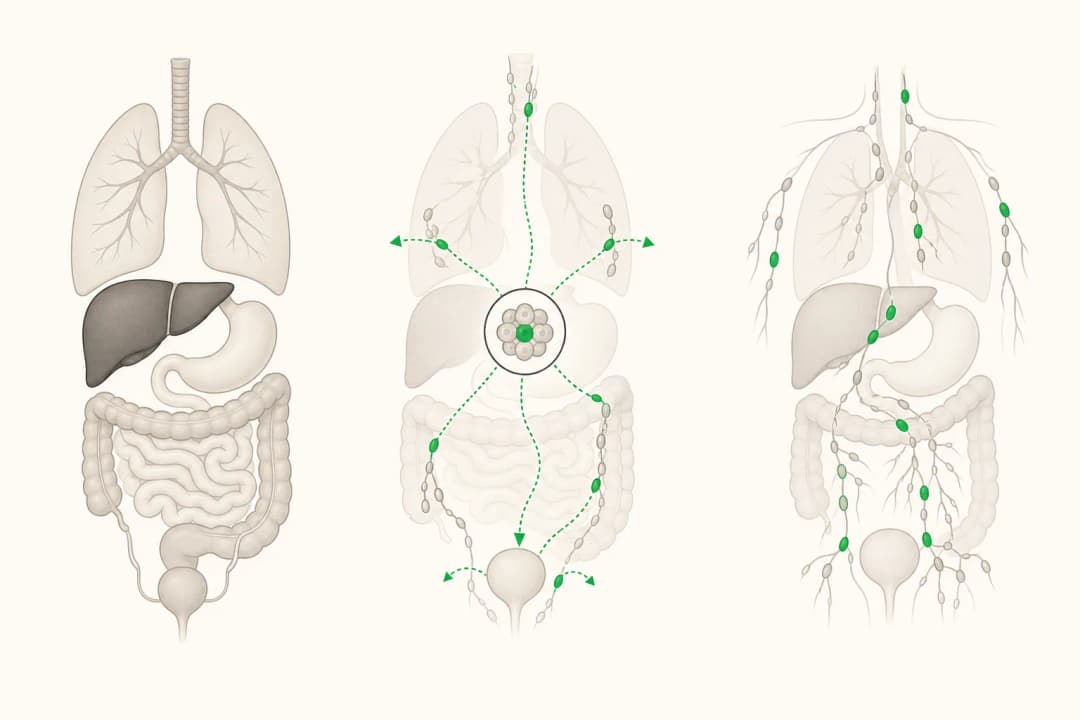
Cancer of unknown primary means cancer has been found, but the original site has not been identified after clinical assessment and testing. Profiling examines molecular features in a tumour sample. The pattern may suggest a tissue of origin or identify a feature that makes a particular treatment worth discussing, although it may not provide a definite answer.
Results need to be interpreted with scans, pathology, symptoms and examination. A molecular finding is not itself a treatment, and a result without a useful target does not mean that care stops. Your team can still use the overall clinical picture to plan treatment and follow-up.
What to do next
Ask your oncology team what question the test is intended to answer and whether the available tumour sample is suitable. Discuss how a possible tissue-of-origin suggestion would be checked against the rest of your results. Ask which treatment decisions could change, when the report is expected, and what the plan is if profiling remains inconclusive.
When to seek care
Tell your care team promptly about new pain, increasing breathlessness, persistent vomiting, confusion, weakness, fever or difficulty eating and drinking. Seek urgent help for severe breathing difficulty, heavy bleeding, collapse or sudden neurological changes. These warning signs require clinical assessment and should not be attributed to an outstanding profiling result.
Questions for your doctor
Ask what tissue is being analysed, whether the test looks for tumour mutations, tissue origin or both, and how reliable each type of finding may be in your situation. Ask who will review the report, whether a specialist pathology discussion is planned, and how the result fits with your current treatment options.
Questions people ask
Can profiling find where the cancer started?
It may suggest a possible origin, but the result must be compared with pathology, scans and the rest of your assessment.
What if no useful finding is reported?
Your oncology team can still plan care using the cancer’s location, pathology, spread and your overall health.
Related
Related reading
Keep reading
Cancer care in the UAE
Hospitals & Medical Centers in Abu Dhabi
Most UAE cancer care is delivered inside hospital services rather than by standalone oncology clinics, so these are licensed hospitals & medical centers listed in Abu Dhabi. Confirm the specific cancer service exists before you travel, and know that asking for a second opinion is routine.
Ahalia Hospital Musaffah Building - Musaffah - Musaffah Industrial - Abu Dhabi - United Arab Emirates
Accepts: Daman, Thiqa, AXA, Cigna +26 more
Al Ruwais Industrial City - Abu Dhabi - United Arab Emirates
Accepts: Daman, Thiqa, AXA, Cigna +30 more
Abu Dhabi, Abu Dhabi
Accepts: Daman, Thiqa, AXA, Cigna +30 more
Second opinions are routine in cancer care and asking for one does not affect your treatment. How to arrange a second opinion in the UAE.
Ordered by verification status and how complete each clinic's public record is, then alphabetically. This is a directory listing, not a ranking — Zavis does not rate or recommend providers.
A factual listing drawn from the DHA, DOH and MOHAP licence registers. It is not a referral, an endorsement, or advice that any of these providers is right for you.
Medical disclaimer. This page is general health information, not medical advice, and it cannot diagnose you. Always consult a licensed healthcare provider about your own symptoms and treatment. In an emergency in the UAE, call 998 for an ambulance.