
Does exercise therapy treat rotator cuff tendinitis?
Short answer
Exercise therapy can treat rotator cuff tendinitis by gradually improving shoulder strength, movement, and tolerance for daily loads.
This answers one question. It is not a diagnosis and does not replace an assessment by a licensed doctor.
At a glance
- Main aim
- Build comfortable shoulder movement and load tolerance
- Typical approach
- Progressive, individually adjusted exercises
Does exercise therapy treat rotator cuff tendinitis?
Exercise therapy can treat rotator cuff tendinitis by gradually improving shoulder strength, movement, and tolerance for daily loads. A physiotherapist can adjust the plan if lifting, reaching, or sleeping on the affected side increases discomfort.
What this means
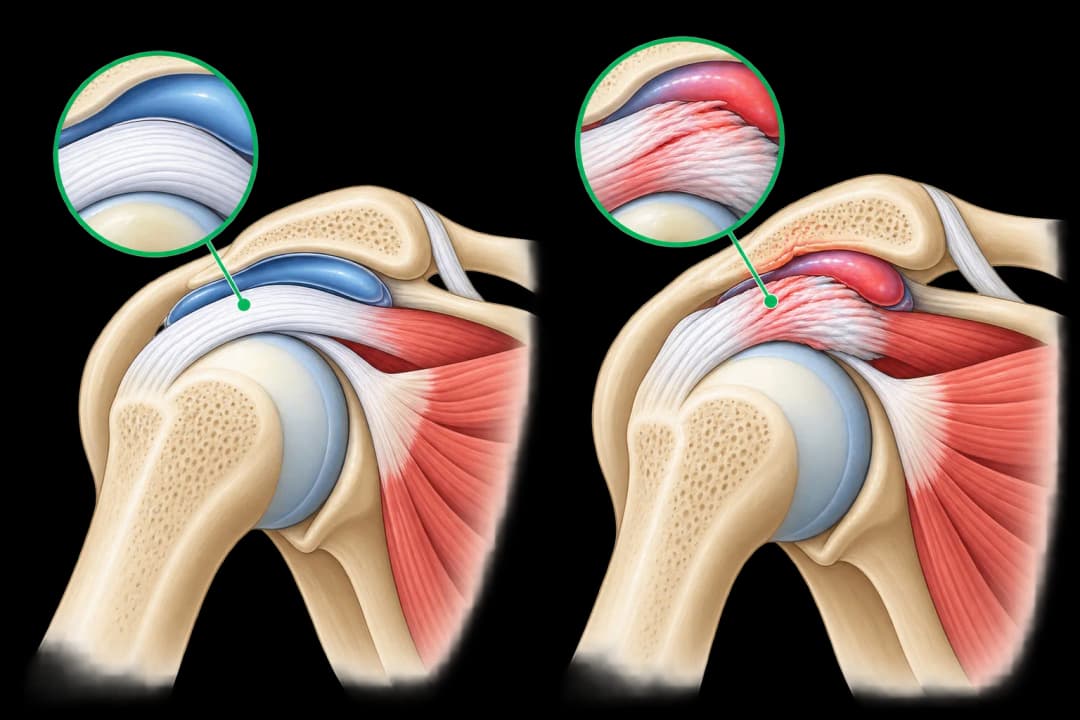
Rotator cuff tendinitis involves irritation or overload of the tendons that help centre and move the shoulder. Treatment usually focuses on restoring comfortable motion and building the shoulder muscles’ ability to handle work. Exercises may include gentle range-of-motion work, controlled resistance, and movements that coordinate the shoulder blade with the upper arm. Symptoms can respond gradually, and a flare after a new exercise may mean the load needs adjusting rather than that movement is harmful.
What you can do
Start with an assessment to identify painful movements, weakness, and contributing activities. Follow the prescribed repetitions and resistance, keeping movements controlled. Break up repeated overhead tasks and use comfortable positions for rest. Do not add heavier resistance or push through sharp pain without guidance. The [Exercise Therapy](/treatments/physiotherapy-and-rehabilitation/exercise-therapy/) page explains how a supervised programme is tailored, while [Rotator Cuff Tendinitis](/conditions/rotator-cuff-tendinitis/) provides condition-focused context.
When to seek care
Arrange clinical assessment if shoulder pain is worsening, limits ordinary activities, or does not begin settling with a suitable plan. Seek prompt care after a significant injury, or if you suddenly cannot lift the arm, develop marked weakness, or notice unusual swelling, redness, fever, or numbness. These features can need examination before exercise continues.
Questions for your doctor or physiotherapist
Which shoulder movements should I practise first? How should I change the exercises if pain lingers after training? Could another shoulder problem be contributing to my symptoms? When can I safely resume overhead work, sport, or lifting?
Find care
General Clinics & Polyclinics in Abu Dhabi
That answer is general. If you want it applied to your own case, these are licensed general clinics & polyclinics listed in Abu Dhabi.
27 Ar Ruwwad St - Shakhbout City - MSH4 - Abu Dhabi - United Arab Emirates
Accepts: Daman, Thiqa, Cigna, MetLife +20 more
Al Ruwais, Al Dhafrah
Accepts: Daman, Thiqa, AXA, Cigna +16 more
Al Bahyah - Al Bahyah Old - Abu Dhabi - United Arab Emirates
Accepts: Daman, Thiqa, Cigna, Allianz Care +18 more
Abu Dhabi
Accepts: Daman, Thiqa, AXA, Cigna +27 more
Ordered by verification status and how complete each clinic's public record is, then alphabetically. This is a directory listing, not a ranking — Zavis does not rate or recommend providers.
A factual listing drawn from the DHA, DOH and MOHAP licence registers. It is not a referral, an endorsement, or advice that any of these providers is right for you.
Questions people ask
Can exercise therapy make shoulder pain worse?
A temporary increase can occur when the load is too high or progresses too quickly. Tell your clinician so the movement, resistance, or volume can be adjusted.
Is rest alone enough for rotator cuff tendinitis?
Rest from aggravating loads may help, but a gradual strengthening plan often addresses the shoulder’s movement and capacity more directly.
Related
Related reading
Keep reading
Medical disclaimer. This page is general health information, not medical advice, and it cannot diagnose you. Always consult a licensed healthcare provider about your own symptoms and treatment. In an emergency in the UAE, call 998 for an ambulance.