
Does blood transfusion support treat myeloproliferative neoplasms?
Short answer
Blood transfusion support can manage low blood cell counts and related symptoms, but it does not treat the underlying myeloproliferative neoplasm.
This answers one question. It is not a diagnosis and does not replace an assessment by a licensed doctor.
At a glance
- Main role
- Supportive care for low blood cell counts and their symptoms
- Underlying condition
- A transfusion does not control the myeloproliferative neoplasm itself
- Monitoring
- Blood tests, symptoms and transfusion reactions guide care
Direct answer
A transfusion replaces specific blood components when the body is not making enough healthy cells. Other treatment may still be needed to control the condition itself.
What transfusion support means
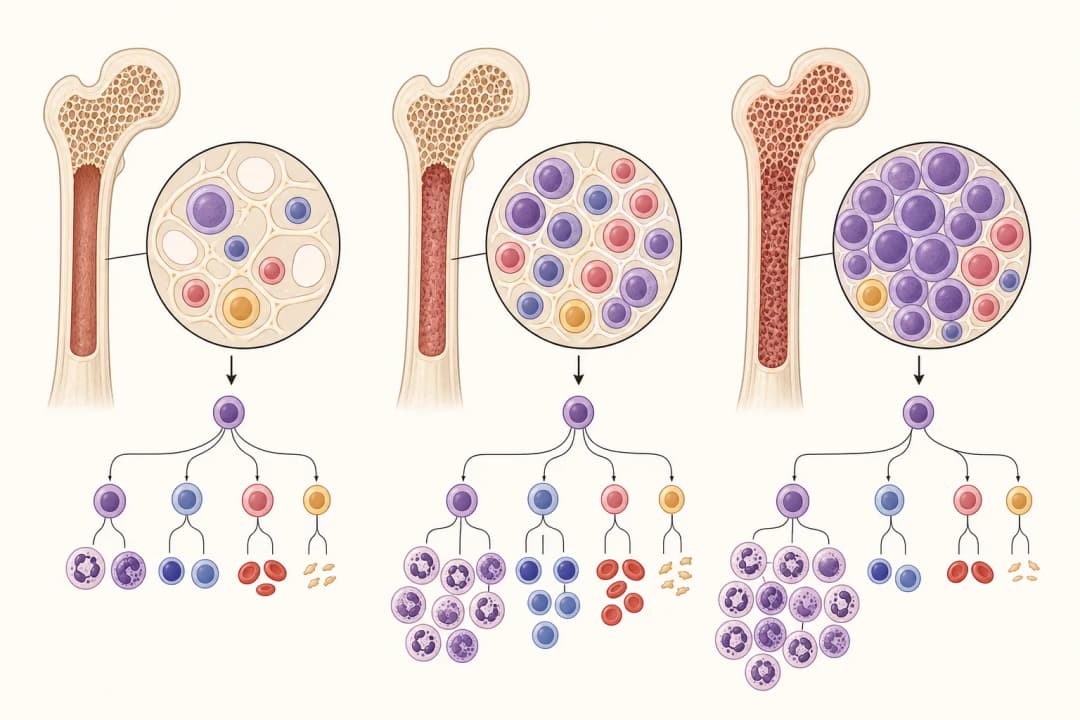
Myeloproliferative neoplasms and some of their treatments can disrupt normal blood-cell production. Red blood cell transfusions may ease tiredness, breathlessness or weakness related to anaemia. Platelet transfusions may be used when a low platelet count creates a bleeding concern.
The blood component and timing depend on symptoms, blood test results and the wider treatment plan. The clinical team checks compatibility and monitors for reactions during and after the transfusion.
What to do
Keep scheduled blood tests and report increasing fatigue, shortness of breath, dizziness, unusual bruising or bleeding. Before a planned transfusion, tell the care team about previous transfusion reactions, allergies, fever or new illness.
Follow the monitoring plan after leaving the treatment unit. Record when symptoms improve or return, because this helps the team judge whether further supportive care or a change in the main treatment plan is needed.
When to seek care
Seek urgent medical help for severe difficulty breathing, chest pain, fainting, uncontrolled bleeding or swelling of the face or throat. During a transfusion, immediately report chills, fever, itching, rash, back pain, breathing difficulty or feeling suddenly unwell.
After returning home, contact the treating team promptly if fever, dark urine, yellowing of the skin or eyes, worsening breathlessness, or a new rash develops.
Questions for your doctor
Ask which blood component is being recommended, which symptom or test result it is intended to address, and how improvement will be assessed. You can also ask what signs of a transfusion reaction require an immediate call and how transfusion support fits alongside treatment for the myeloproliferative neoplasm.
Questions people ask
Can a transfusion cure a myeloproliferative neoplasm?
No. A transfusion replaces needed blood components; it does not remove or cure the underlying myeloproliferative neoplasm.
How will my team decide whether I need a transfusion?
The decision is based on the type of low blood count, your symptoms, blood test findings, bleeding concerns and your overall treatment plan.
What should I report during a transfusion?
Tell the clinical team immediately about chills, fever, itching, rash, pain, breathing difficulty or any sudden change in how you feel.
Related
Related reading
Keep reading
Cancer care in the UAE
Hospitals & Medical Centers in Abu Dhabi
Most UAE cancer care is delivered inside hospital services rather than by standalone oncology clinics, so these are licensed hospitals & medical centers listed in Abu Dhabi. Confirm the specific cancer service exists before you travel, and know that asking for a second opinion is routine.
Ahalia Hospital Musaffah Building - Musaffah - Musaffah Industrial - Abu Dhabi - United Arab Emirates
Accepts: Daman, Thiqa, AXA, Cigna +26 more
Al Ruwais Industrial City - Abu Dhabi - United Arab Emirates
Accepts: Daman, Thiqa, AXA, Cigna +30 more
Abu Dhabi, Abu Dhabi
Accepts: Daman, Thiqa, AXA, Cigna +30 more
Second opinions are routine in cancer care and asking for one does not affect your treatment. How to arrange a second opinion in the UAE.
Ordered by verification status and how complete each clinic's public record is, then alphabetically. This is a directory listing, not a ranking — Zavis does not rate or recommend providers.
A factual listing drawn from the DHA, DOH and MOHAP licence registers. It is not a referral, an endorsement, or advice that any of these providers is right for you.
Medical disclaimer. This page is general health information, not medical advice, and it cannot diagnose you. Always consult a licensed healthcare provider about your own symptoms and treatment. In an emergency in the UAE, call 998 for an ambulance.