
Differential diagnosis of melanoma
Short answer
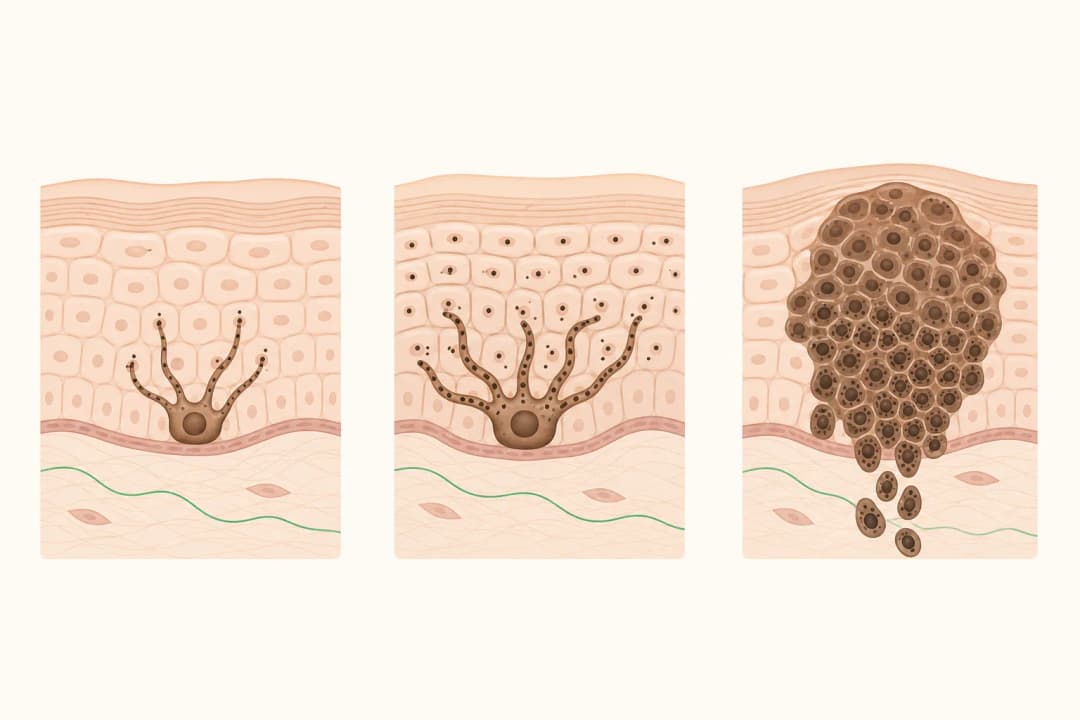
Differential diagnosis of melanoma compares a changing pigmented lesion with benign moles, sun spots and other skin cancers.
This answers one question. It is not a diagnosis and does not replace an assessment by a licensed doctor.
At a glance
- Key feature
- Evolution, or a clear change in a lesion, deserves review.
- Confirmation
- Pathology from sampled tissue confirms or excludes melanoma.
- Possible mimics
- Benign moles, sun spots and other skin cancers may look similar.
What clinicians look for
Assessment considers a lesion’s symmetry, border, colour pattern, size, evolution and whether it differs from a person’s other moles. It also considers bleeding, persistent itching, a sore that does not heal, a firm nodule and lesions under a nail or on less visible skin. These signs can raise concern, but none confirms melanoma by itself.
Benign moles, seborrhoeic keratoses, sun-related pigmentation and some non-melanoma skin cancers can mimic melanoma. A clinician may use dermoscopy to inspect structures beneath the surface. If the lesion remains concerning, surgical excision or another biopsy provides tissue for a pathologist to examine. The tissue result, rather than visual appearance alone, establishes the diagnosis.
What happens after concern is raised
Arrange review for a new or changing mark and bring a record of when you first noticed it. Avoid picking or attempting to remove it. A clinician may photograph or measure the lesion, examine nearby skin and lymph nodes, and recommend removal of the whole lesion when feasible. If melanoma is confirmed, further surgery or staging tests depend on its depth and other findings.
Treatment plans may include skin cancer surgery, sentinel lymph node biopsy or systemic treatment such as immunotherapy. These choices are individual and should follow the pathology and specialist assessment.
When to seek prompt care
Book a prompt dermatology appointment for a spot that changes in colour, outline, size or sensation, or for a dark mark that bleeds or remains open. Seek urgent help for sudden severe symptoms such as confusion, weakness, seizure or a severe new headache, especially in someone already diagnosed with melanoma. Do not wait for a lesion to become painful before arranging assessment.
Questions for your doctor
Ask what features make the lesion concerning, whether dermoscopy or biopsy is needed, how much skin may be removed, when pathology will be available, and whether lymph-node assessment or follow-up is appropriate. Ask which symptoms should prompt an earlier review.
Find care
General Clinics & Polyclinics in Abu Dhabi
That answer is general. If you want it applied to your own case, these are licensed general clinics & polyclinics listed in Abu Dhabi.
27 Ar Ruwwad St - Shakhbout City - MSH4 - Abu Dhabi - United Arab Emirates
Accepts: Daman, Thiqa, Cigna, MetLife +20 more
Al Ruwais, Al Dhafrah
Accepts: Daman, Thiqa, AXA, Cigna +16 more
Al Bahyah - Al Bahyah Old - Abu Dhabi - United Arab Emirates
Accepts: Daman, Thiqa, Cigna, Allianz Care +18 more
Abu Dhabi
Accepts: Daman, Thiqa, AXA, Cigna +27 more
Ordered by verification status and how complete each clinic's public record is, then alphabetically. This is a directory listing, not a ranking — Zavis does not rate or recommend providers.
A factual listing drawn from the DHA, DOH and MOHAP licence registers. It is not a referral, an endorsement, or advice that any of these providers is right for you.
Questions people ask
Can a harmless mole look like melanoma?
Yes. Several benign lesions resemble melanoma, which is why a changing or unusual mark needs professional assessment rather than self-diagnosis.
Does a melanoma diagnosis always require lymph-node surgery?
No. Lymph-node assessment depends on the pathology and clinical findings; a specialist explains whether it is relevant.
Related
Related reading
Keep reading
Medical disclaimer. This page is general health information, not medical advice, and it cannot diagnose you. Always consult a licensed healthcare provider about your own symptoms and treatment. In an emergency in the UAE, call 998 for an ambulance.