
How patients describe pain in sickle cell disease
Short answer
People with sickle cell disease may describe pain as sudden, deep, aching, sharp, or burning in the bones, joints, chest, back, or abdomen.
This answers one question. It is not a diagnosis and does not replace an assessment by a licensed doctor.
At a glance
- Pain quality
- Deep, aching, sharp, or burning
- Common sites
- Bones, joints, chest, back, or abdomen
- Useful record
- Location, onset, severity, and response to the pain plan
What this pain can mean
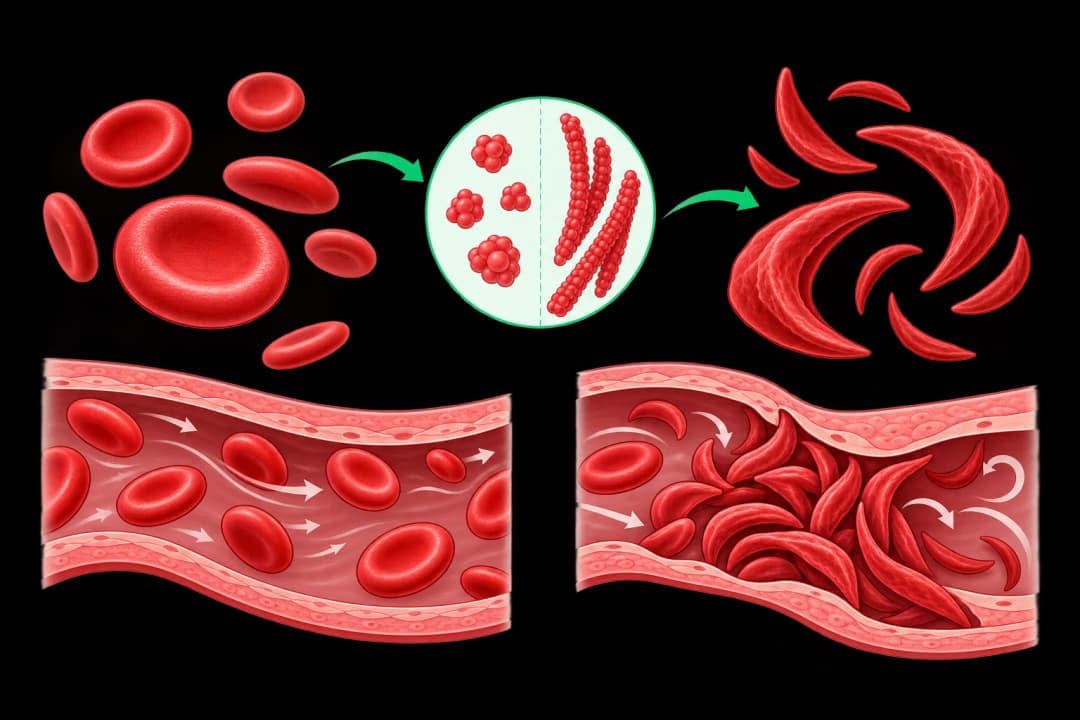
Sickle cell disease changes the shape and flexibility of red blood cells. These cells can obstruct small blood vessels, reducing oxygen delivery to tissues and causing a painful episode. Pain may come on quickly or build over time, and it can last for hours or longer. Some people feel pain in one area; others have pain in several places at once. Fatigue, joint pain, or pale skin may also occur with the underlying condition, but pain is not identical for every person.
Dehydration, illness, cold exposure, stress, and strenuous activity can contribute to an episode. A person who knows their usual pattern can still develop a new or unusually severe pain pattern that needs assessment.
What to do during an episode
Follow the individual pain plan provided by the treating team. Rest in a comfortable position, drink fluids if able, and keep the body at a comfortable temperature. Use prescribed medicines only as directed, including any instructions about timing or maximum doses. Keep a record of where the pain started, how it feels, and whether it is changing; this helps clinicians choose treatment. Blood tests may be used to assess anaemia, infection, or other causes when symptoms are new or severe.
When to seek urgent care
Seek urgent medical care for severe pain that is not settling with the prescribed plan, chest pain, trouble breathing, a high temperature, new weakness, confusion, fainting, severe headache, or pain after an injury. Urgent assessment is also appropriate when a person cannot drink, is passing very little urine, or has a new symptom that feels different from previous episodes. A child who becomes unusually sleepy, limp, or difficult to wake needs immediate help.
Questions for your doctor
Ask which symptoms mean you should go straight to an emergency department, which medicines belong in your home pain plan, and how much fluid is suitable for you. You can also ask how to distinguish your familiar pain pattern from infection or another complication, and whether screening is appropriate for family planning.
Find care
General Clinics & Polyclinics in Abu Dhabi
That answer is general. If you want it applied to your own case, these are licensed general clinics & polyclinics listed in Abu Dhabi.
27 Ar Ruwwad St - Shakhbout City - MSH4 - Abu Dhabi - United Arab Emirates
Accepts: Daman, Thiqa, Cigna, MetLife +20 more
Al Ruwais, Al Dhafrah
Accepts: Daman, Thiqa, AXA, Cigna +16 more
Al Bahyah - Al Bahyah Old - Abu Dhabi - United Arab Emirates
Accepts: Daman, Thiqa, Cigna, Allianz Care +18 more
Abu Dhabi
Accepts: Daman, Thiqa, AXA, Cigna +27 more
Ordered by verification status and how complete each clinic's public record is, then alphabetically. This is a directory listing, not a ranking — Zavis does not rate or recommend providers.
A factual listing drawn from the DHA, DOH and MOHAP licence registers. It is not a referral, an endorsement, or advice that any of these providers is right for you.
Questions people ask
Does every person with sickle cell disease feel pain in the same way?
No. Location, quality, intensity, and duration vary between people and between episodes.
Can sickle cell pain be treated at home?
Some familiar episodes may be managed with an individual prescribed plan, but severe, unusual, or rapidly worsening pain needs medical assessment.
Related
Related reading
Keep reading
Medical disclaimer. This page is general health information, not medical advice, and it cannot diagnose you. Always consult a licensed healthcare provider about your own symptoms and treatment. In an emergency in the UAE, call 998 for an ambulance.