
What should you know about cystoscopy procedure for kidney stones?
Short answer
A cystoscopy procedure for kidney stones lets a urology team inspect the bladder and sometimes access the ureter to improve drainage or remove a stone.
This answers one question. It is not a diagnosis and does not replace an assessment by a licensed doctor.
At a glance
- Access route
- Through the urethra into the bladder
- Possible addition
- A stent or fine instruments for ureter treatment
- Recovery focus
- Monitor urine flow, pain, bleeding, and temperature
What happens during the procedure
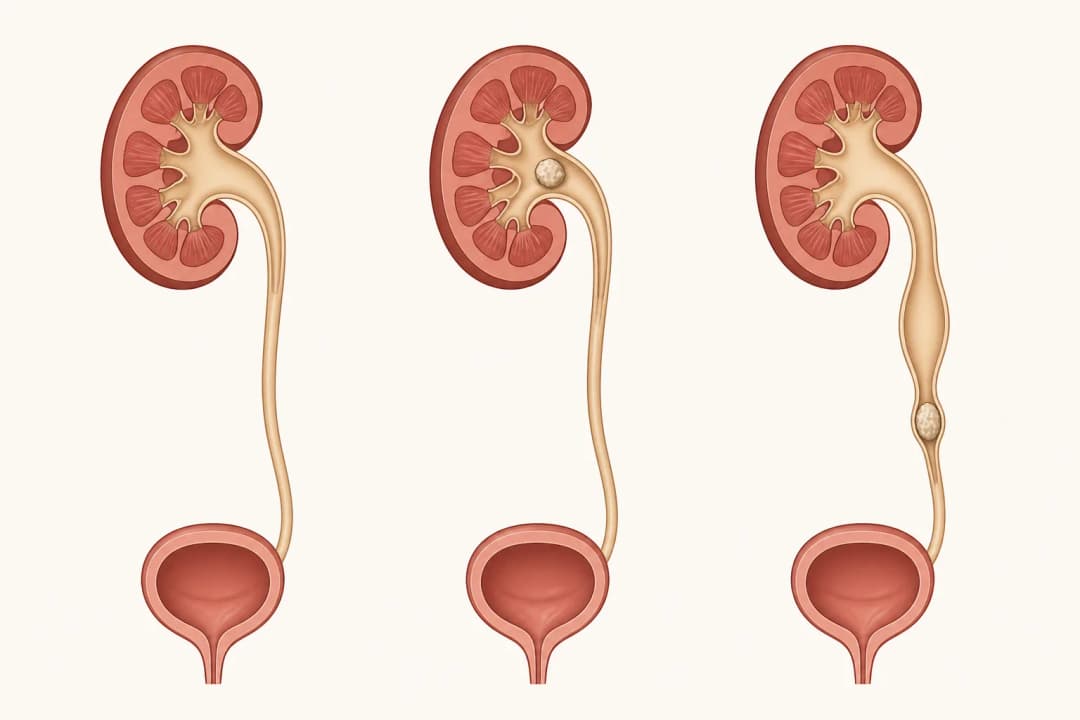
The clinician passes a cystoscope through the urethra into the bladder. The camera provides a view of the bladder and the ureter openings. If treatment is planned, fine instruments can be passed through the cystoscope; a stent may be inserted to keep urine moving past a narrowed or blocked area.
Cystoscopy alone is not the same as breaking up a stone in the kidney. Depending on its location, the wider treatment plan may include a ureteroscope, a device that fragments the stone, or a separate approach. Imaging and your symptoms guide that decision.
What to do before and after
Follow the clinic's instructions about fasting, transport, medicines, and bathing. Tell the team about blood thinners, allergies, pregnancy, urinary infections, and any difficulty passing urine.
Rest as advised after the procedure. Mild burning, urgency, or pink urine can happen briefly. If a stent is placed, urinary frequency or discomfort may continue until it is removed; confirm the removal or review plan before leaving.
Warning signs after cystoscopy
Contact urgent care for a high temperature, chills, increasing pain in the flank or abdomen, repeated vomiting, inability to pass urine, heavy bleeding, or marked weakness. Infection behind an obstruction can become serious and should not be managed by waiting at home.
Useful questions
Ask whether the aim is inspection, stent placement, stone removal, or a later procedure; how long any stent stays; which symptoms are expected; and whom to contact outside clinic hours.
Find care
General Clinics & Polyclinics in Abu Dhabi
That answer is general. If you want it applied to your own case, these are licensed general clinics & polyclinics listed in Abu Dhabi.
27 Ar Ruwwad St - Shakhbout City - MSH4 - Abu Dhabi - United Arab Emirates
Accepts: Daman, Thiqa, Cigna, MetLife +20 more
Al Ruwais, Al Dhafrah
Accepts: Daman, Thiqa, AXA, Cigna +16 more
Al Bahyah - Al Bahyah Old - Abu Dhabi - United Arab Emirates
Accepts: Daman, Thiqa, Cigna, Allianz Care +18 more
Abu Dhabi
Accepts: Daman, Thiqa, AXA, Cigna +27 more
Ordered by verification status and how complete each clinic's public record is, then alphabetically. This is a directory listing, not a ranking — Zavis does not rate or recommend providers.
A factual listing drawn from the DHA, DOH and MOHAP licence registers. It is not a referral, an endorsement, or advice that any of these providers is right for you.
Questions people ask
Will I be awake for a cystoscopy procedure?
The anaesthetic can vary from local anaesthetic to sedation or general anaesthesia, depending on the planned treatment and your circumstances.
Why might a stent be used?
A stent can help urine pass from the kidney to the bladder while swelling settles or after a stone-related procedure.
Related
Related reading
Keep reading
Medical disclaimer. This page is general health information, not medical advice, and it cannot diagnose you. Always consult a licensed healthcare provider about your own symptoms and treatment. In an emergency in the UAE, call 998 for an ambulance.