
Cystoscopy and papillary urothelial carcinoma
Short answer
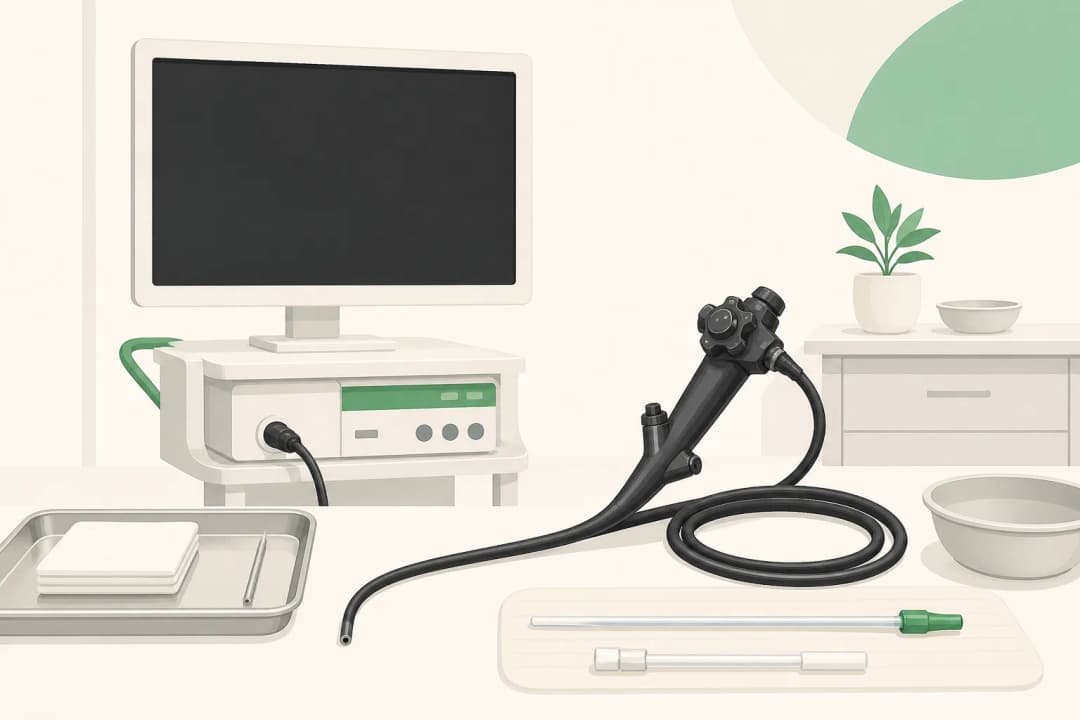
Cystoscopy can reveal a papillary bladder growth, but a tissue sample is needed to confirm urothelial carcinoma and describe its grade and depth.
This answers one question. It is not a diagnosis and does not replace an assessment by a licensed doctor.
At a glance
- Papillary
- A description of the growth pattern
- Confirmation
- Microscopic examination of tissue
- Planning details
- Grade, depth, and muscle involvement
The essential point
Papillary describes a finger-like growth pattern rather than the full behaviour of a tumour. The pathology report and information about involvement of deeper bladder layers guide the next discussion.
What a papillary finding means
Urothelial cells line the inside of the bladder and much of the urinary tract. A papillary lesion projects from this lining into the bladder cavity. Its appearance can raise concern during cystoscopy, yet the camera view cannot reliably determine the exact cell type, grade, or whether tumour has reached the bladder muscle.
A pathologist examines removed tissue. The report may describe tumour grade, invasion into the supporting tissue, whether muscle is present in the sample, and whether muscle is involved. Those details are more informative than appearance alone.
What happens next
The urology team may arrange removal or deeper sampling through the urethra, imaging, or another bladder examination, depending on what was already done. Keep the pathology appointment and bring a current medicine list. Ask for plain-language explanations of grade, depth, muscle sampling, and whether further treatment or bladder surveillance is proposed.
After an examination or tissue removal, follow the discharge instructions for fluids, activity, medicines, and any urinary catheter. Record changes in urine colour, pain, temperature, and ability to pass urine so you can describe them accurately.
Symptoms that need prompt help
Call the treating team for fever, chills, worsening lower abdominal pain, increasing blood in the urine, clots, unpleasant-smelling urine, or worsening pain with urination. Go to urgent care if urine stops flowing, bleeding is heavy, or you become faint or confused. Escalation is based on these symptoms, regardless of what the cystoscopy showed.
Questions about the report
Ask whether the lesion was completely removed, what the pathology says about grade and invasion, whether bladder muscle was included, and whether another procedure is needed. Confirm the follow-up schedule and the contact route for new urinary symptoms.
Questions people ask
Does a papillary appearance confirm cancer?
No. The appearance may be suspicious, but a pathologist must examine tissue to determine whether carcinoma is present and how the cells look.
Why does the report mention bladder muscle?
Muscle sampling helps the team assess how deeply a tumour extends. If the sample does not answer that question, the urologist may discuss further sampling.
Related
Related reading
Keep reading
Cancer care in the UAE
Hospitals & Medical Centers in Abu Dhabi
Most UAE cancer care is delivered inside hospital services rather than by standalone oncology clinics, so these are licensed hospitals & medical centers listed in Abu Dhabi. Confirm the specific cancer service exists before you travel, and know that asking for a second opinion is routine.
Ahalia Hospital Musaffah Building - Musaffah - Musaffah Industrial - Abu Dhabi - United Arab Emirates
Accepts: Daman, Thiqa, AXA, Cigna +26 more
Al Ruwais Industrial City - Abu Dhabi - United Arab Emirates
Accepts: Daman, Thiqa, AXA, Cigna +30 more
Abu Dhabi, Abu Dhabi
Accepts: Daman, Thiqa, AXA, Cigna +30 more
Second opinions are routine in cancer care and asking for one does not affect your treatment. How to arrange a second opinion in the UAE.
Ordered by verification status and how complete each clinic's public record is, then alphabetically. This is a directory listing, not a ranking — Zavis does not rate or recommend providers.
A factual listing drawn from the DHA, DOH and MOHAP licence registers. It is not a referral, an endorsement, or advice that any of these providers is right for you.
Medical disclaimer. This page is general health information, not medical advice, and it cannot diagnose you. Always consult a licensed healthcare provider about your own symptoms and treatment. In an emergency in the UAE, call 998 for an ambulance.