
What should you know about cutaneous melanoma in dogs?
Short answer
Cutaneous melanoma in a dog is a pigmented or non-pigmented skin tumour whose behaviour must be established by veterinary testing.
This answers one question. It is not a diagnosis and does not replace an assessment by a licensed doctor.
At a glance
- Appearance
- May be dark or skin-coloured, raised, irregular, or ulcerated
- Confirmation
- Veterinary examination with cytology or biopsy
- Planning
- Depends on location, tissue findings, and staging
What the diagnosis involves
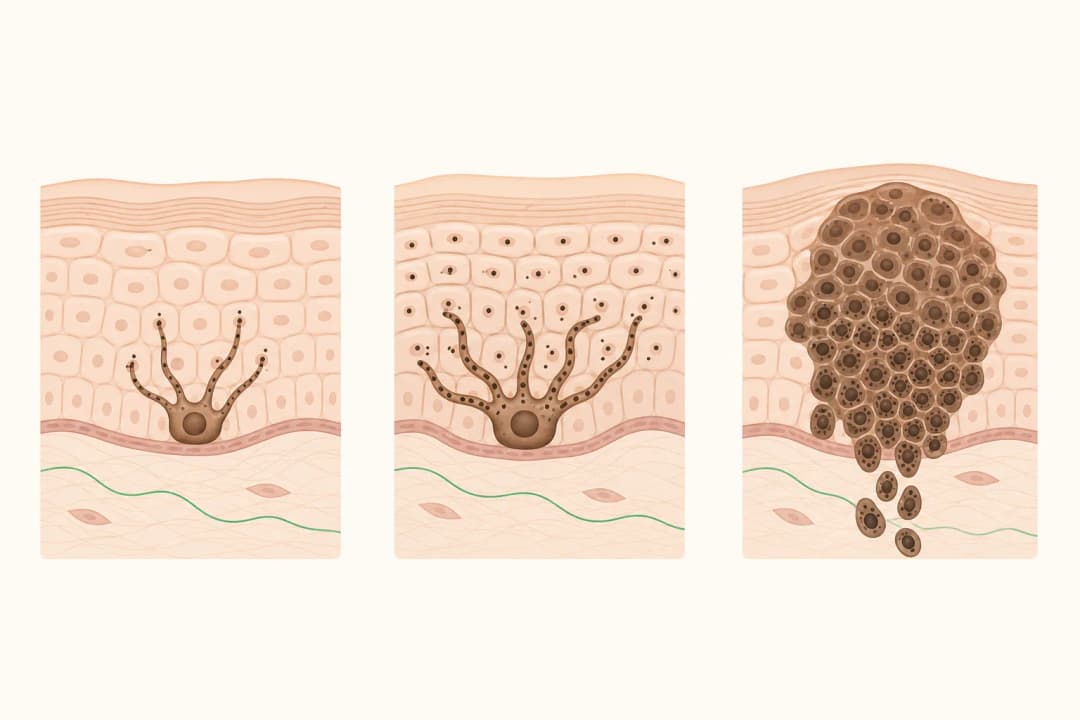
A melanoma may look like a dark, raised, irregular, or changing lump, although some are not visibly dark. Location matters: tumours on haired skin, the mouth, nail bed, or other sites can behave differently. A veterinarian cannot determine risk from colour alone. Examination may be followed by a needle sample or biopsy, laboratory review, and checks of nearby lymph nodes or other areas when spread is a concern. A skin lump is not automatically melanoma; testing is what separates it from benign growths and other tumours.
Planning the next step
Arrange veterinary assessment for a new, enlarging, bleeding, ulcerated, or repeatedly irritated growth. Photograph it beside a familiar object, prevent chewing if possible, and avoid cutting or treating it at home. Treatment may involve Surgical Excision or broader Tumour Removal Surgery, depending on the site and margins that can be achieved. A specialist may discuss sentinel lymph node evaluation, additional staging, or Immunotherapy when appropriate for the individual dog.
When to seek urgent veterinary help
Seek prompt care if a lesion bleeds, becomes infected-looking, causes pain, or interferes with walking, eating, swallowing, or vision. Urgent help is needed for breathing difficulty, collapse, severe weakness, or repeated vomiting. Possible spread to distant organs can cause different symptoms, but symptoms alone cannot identify where a tumour has travelled; the veterinary team decides which tests are useful.
Questions for the veterinary team
What sample will establish the diagnosis? Does the location change the treatment plan? Should lymph nodes or the chest be assessed? What margins are realistic for surgery? Could Sentinel Lymph Node Biopsy or Immunotherapy be relevant, and what follow-up schedule do you recommend?
Find care
General Clinics & Polyclinics in Abu Dhabi
That answer is general. If you want it applied to your own case, these are licensed general clinics & polyclinics listed in Abu Dhabi.
27 Ar Ruwwad St - Shakhbout City - MSH4 - Abu Dhabi - United Arab Emirates
Accepts: Daman, Thiqa, Cigna, MetLife +20 more
Al Ruwais, Al Dhafrah
Accepts: Daman, Thiqa, AXA, Cigna +16 more
Al Bahyah - Al Bahyah Old - Abu Dhabi - United Arab Emirates
Accepts: Daman, Thiqa, Cigna, Allianz Care +18 more
Abu Dhabi
Accepts: Daman, Thiqa, AXA, Cigna +27 more
Ordered by verification status and how complete each clinic's public record is, then alphabetically. This is a directory listing, not a ranking — Zavis does not rate or recommend providers.
A factual listing drawn from the DHA, DOH and MOHAP licence registers. It is not a referral, an endorsement, or advice that any of these providers is right for you.
Questions people ask
Are all dark lumps on a dog melanoma?
No. Pigmented growths have several possible causes, and tissue testing may be needed for a reliable diagnosis.
Can a dog have melanoma without a black lump?
Yes. Some melanomas have little visible pigment, so a changing or persistent growth still warrants veterinary review.
Related
Related reading
Keep reading
Medical disclaimer. This page is general health information, not medical advice, and it cannot diagnose you. Always consult a licensed healthcare provider about your own symptoms and treatment. In an emergency in the UAE, call 998 for an ambulance.