
What should you know about crown breakage in relaxed hair?
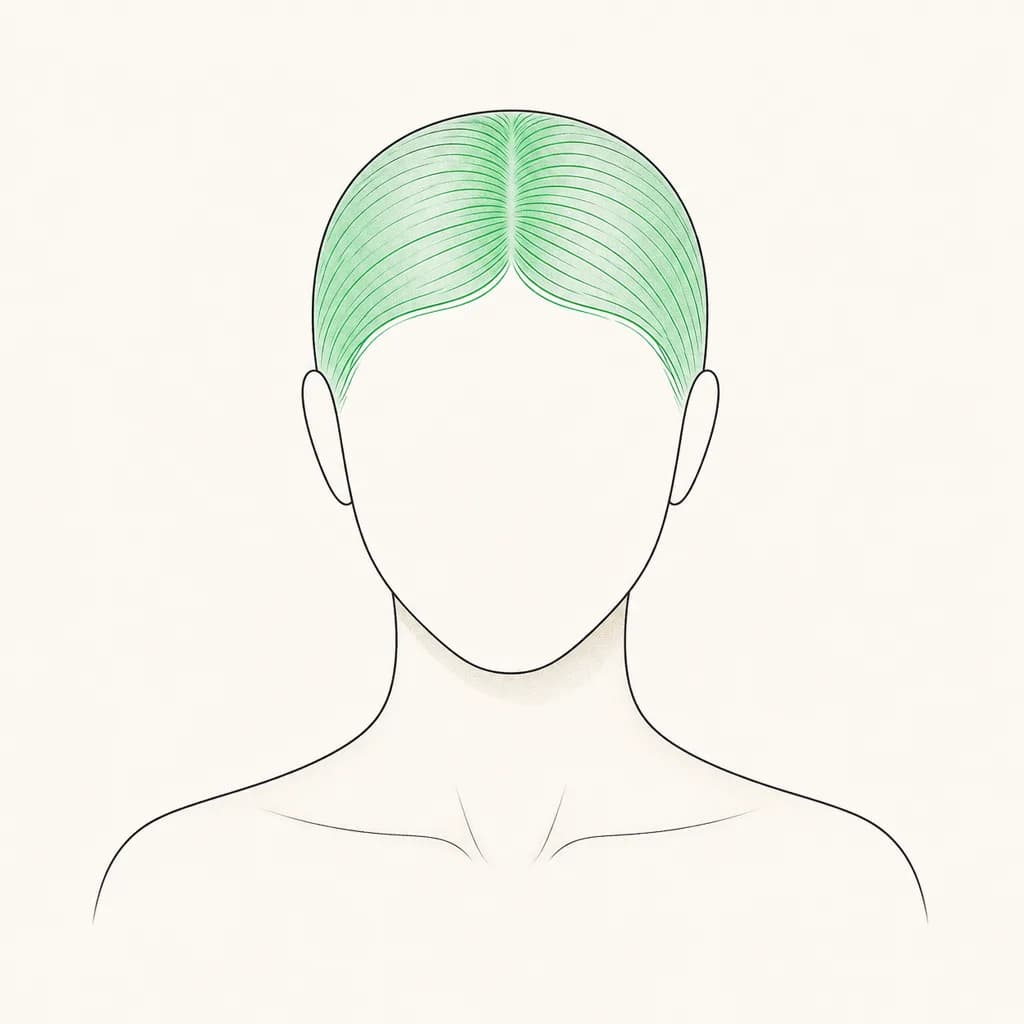
Short answer
Crown breakage in relaxed hair often reflects weakened strands exposed to chemical processing, overlapping applications, tension, heat, or rough handling.
This answers one question. It is not a diagnosis and does not replace an assessment by a licensed doctor.
At a glance
- Possible trigger
- Chemical overlap can weaken previously treated lengths.
- Protect the crown
- Use low tension, less heat, gentle detangling, and careful service placement.
Why the crown may be vulnerable
Breakage appears as short, uneven pieces or frayed ends along the crown. A relaxer changes the hair shaft, and repeated processing or product overlap can leave previously treated lengths fragile. Tight styling, hot tools, brushing, and friction can add mechanical stress. The crown may also receive more manipulation when hair is parted or gathered.
Breakage is different from follicles releasing hairs, although both can occur. Pain, burning, sores, marked itching, scale, or a smooth area are not explained by shaft damage alone. Traction alopecia can follow repeated pulling, while scalp ringworm can cause scalp changes and broken hairs.
Steps that limit further damage
Avoid relaxing hair over already processed lengths and allow a qualified professional to apply product only where needed. Space chemical services according to your hair and scalp’s condition, and stop if there is burning or significant discomfort. Reduce heat, loosen styles, handle the crown gently, and detangle with conditioner and a wide-tooth comb.
Do not disguise worsening breakage with tighter extensions or heavy backcombing. Photograph the crown under similar lighting and note service dates, products, and symptoms. A dermatologist can assess the scalp and distinguish chemical shaft injury from an inflammatory or traction-related condition.
When to seek care
Seek dermatology advice if the crown continues thinning, feels sore, develops redness or crusting, or shows persistent scale. Prompt review is appropriate after a chemical service causes burning, blistering, or open skin. Hair coming out from the root or a rapidly expanding smooth patch warrants assessment rather than another cosmetic service.
Questions for your doctor
Is the damage limited to the shaft, or are the follicles affected? Could my chemical service or styling be causing traction? What should I pause, and when is it reasonable to resume colouring, relaxing, or heat styling?
Find care
General Clinics & Polyclinics in Abu Dhabi
That answer is general. If you want it applied to your own case, these are licensed general clinics & polyclinics listed in Abu Dhabi.
27 Ar Ruwwad St - Shakhbout City - MSH4 - Abu Dhabi - United Arab Emirates
Accepts: Daman, Thiqa, Cigna, MetLife +20 more
Al Ruwais, Al Dhafrah
Accepts: Daman, Thiqa, AXA, Cigna +16 more
Al Bahyah - Al Bahyah Old - Abu Dhabi - United Arab Emirates
Accepts: Daman, Thiqa, Cigna, Allianz Care +18 more
Abu Dhabi
Accepts: Daman, Thiqa, AXA, Cigna +27 more
Ordered by verification status and how complete each clinic's public record is, then alphabetically. This is a directory listing, not a ranking — Zavis does not rate or recommend providers.
A factual listing drawn from the DHA, DOH and MOHAP licence registers. It is not a referral, an endorsement, or advice that any of these providers is right for you.
Questions people ask
Should I relax hair that is breaking?
Pause chemical processing until the scalp and hair have been assessed, especially if breakage is active or the scalp is irritated.
Can relaxed hair break without permanent loss?
Yes. Shaft breakage can leave follicles intact, but ongoing traction or inflammation needs medical attention.
Related
Related reading
Keep reading
Medical disclaimer. This page is general health information, not medical advice, and it cannot diagnose you. Always consult a licensed healthcare provider about your own symptoms and treatment. In an emergency in the UAE, call 998 for an ambulance.