
What should you know about cracks and fissures on feet?
Short answer
Cracks and fissures on the feet are splits in the skin barrier, often linked with dryness or thickening, and deeper wounds deserve medical attention.
This answers one question. It is not a diagnosis and does not replace an assessment by a licensed doctor.
At a glance
- What it is
- A split through the protective skin barrier
- Helpful routine
- Gentle washing, thorough drying, and moisturising
- Urgent concern
- Infection signs or a deep open wound
Understanding the pattern
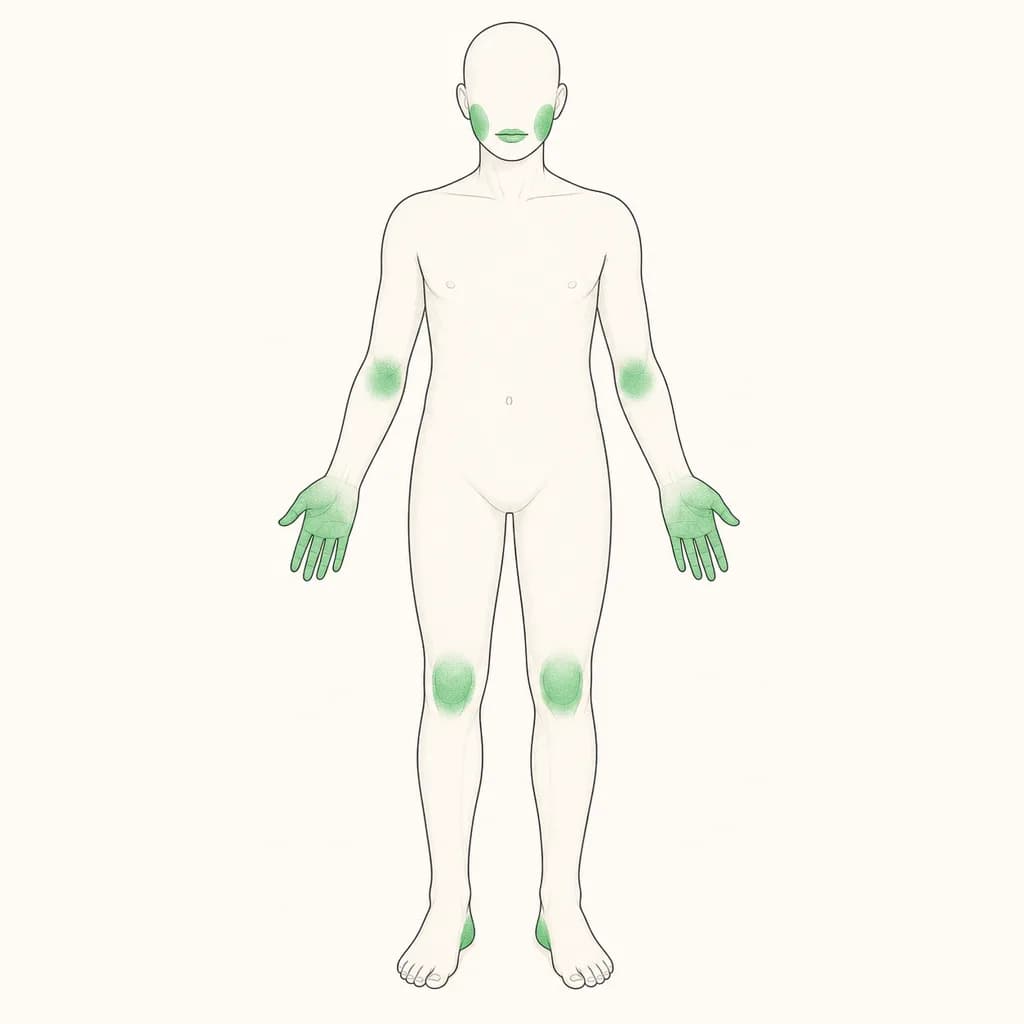
A fissure may occur at the heel, ball of the foot, toe tips, or between the toes. Pressure, friction, dry air, repeated wet-and-dry cycles, and unsuitable footwear can weaken the outer barrier. Atopic Dermatitis or Psoriasis can create inflamed, scaly skin that cracks more readily. Burning, itch, or peeling between toes may need a different assessment. Note whether the problem affects one or both feet, whether it bleeds, and what makes it worse; these details help separate mechanical splitting from an underlying skin disorder.
Practical foot care
Clean with a mild cleanser and lukewarm water, then dry thoroughly without rubbing. Apply a bland, rich moisturiser to dry areas, avoiding product between the toes unless advised. Regular Emollient Therapy can support a damaged barrier. Use socks and shoes that reduce rubbing, and change damp socks promptly. Do not pour harsh antiseptics into a fissure or cut away hard skin yourself. If the crack is open, protect it with a clean dressing and monitor it for change.
Warning signs
Get prompt medical advice for spreading redness, warmth, swelling, pus, fever, red streaking, or pain that is worsening rather than settling. A fissure that is deep, repeatedly reopening, or preventing comfortable walking also merits review. People with diabetes, poor circulation, numbness, or immune suppression should seek advice early for any open foot crack. Do not wait for severe pain if sensation is reduced.
Useful questions
Does the location suggest Atopic Dermatitis, Psoriasis, friction, or another cause? What should I apply to the fissure and surrounding skin? How can I reduce pressure while it heals? Which changes require same-day advice?
Find care
General Clinics & Polyclinics in Abu Dhabi
That answer is general. If you want it applied to your own case, these are licensed general clinics & polyclinics listed in Abu Dhabi.
27 Ar Ruwwad St - Shakhbout City - MSH4 - Abu Dhabi - United Arab Emirates
Accepts: Daman, Thiqa, Cigna, MetLife +20 more
Al Ruwais, Al Dhafrah
Accepts: Daman, Thiqa, AXA, Cigna +16 more
Al Bahyah - Al Bahyah Old - Abu Dhabi - United Arab Emirates
Accepts: Daman, Thiqa, Cigna, Allianz Care +18 more
Abu Dhabi
Accepts: Daman, Thiqa, AXA, Cigna +27 more
Ordered by verification status and how complete each clinic's public record is, then alphabetically. This is a directory listing, not a ranking — Zavis does not rate or recommend providers.
A factual listing drawn from the DHA, DOH and MOHAP licence registers. It is not a referral, an endorsement, or advice that any of these providers is right for you.
Questions people ask
Are all foot fissures caused by dry skin?
No. Dryness and pressure are common contributors, but inflammation, scaling, friction, or infection can also play a part.
What should I record before an appointment?
Note the onset, exact location, itch or pain, bleeding, footwear changes, and products already used.
Related
Related reading
Keep reading
Medical disclaimer. This page is general health information, not medical advice, and it cannot diagnose you. Always consult a licensed healthcare provider about your own symptoms and treatment. In an emergency in the UAE, call 998 for an ambulance.