
What should you know about cracked skin on feet?
Short answer
Cracked skin on the feet commonly follows dryness, friction or pressure, and careful moisturising can help protect the surface.
This answers one question. It is not a diagnosis and does not replace an assessment by a licensed doctor.
At a glance
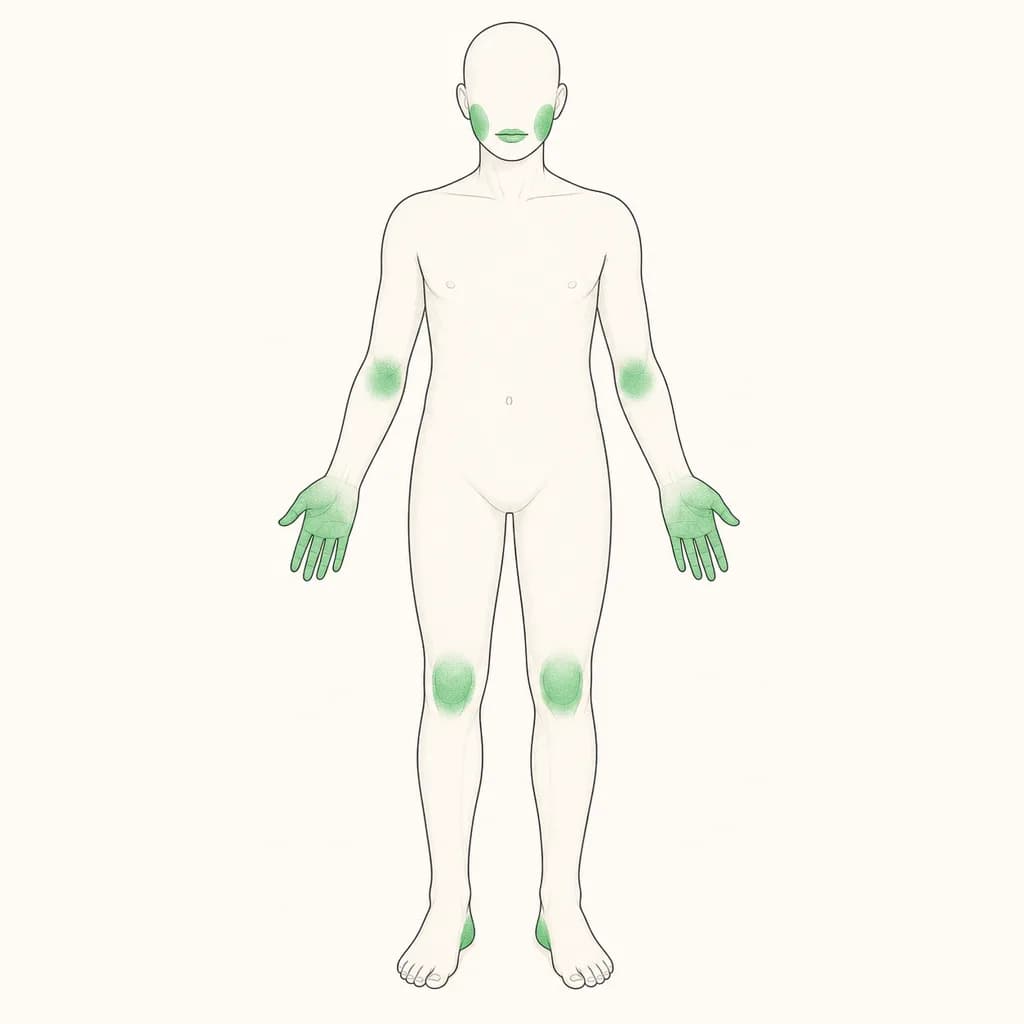
- Frequent locations
- Heels, soles and areas exposed to pressure
- Daily habit
- Moisturise after bathing and keep feet dry between toes
- Get advice early if
- You have diabetes, numbness or circulation problems
Why feet develop fissures
The soles carry pressure and may develop thick, dry skin that splits when it cannot flex easily. Open shoes, frequent bathing, dry indoor air and long periods standing can add stress. Itch, redness and scaling may point toward atopic dermatitis or another irritation; thicker plaques elsewhere can occur with psoriasis. Peeling between the toes has a different pattern and may need assessment rather than heavy occlusive cream. Cracks can hurt during walking and provide an opening for infection, especially when the surrounding skin is inflamed.
Steps that may help
Rinse with warm rather than hot water and dry carefully, including between the toes. Apply a rich, fragrance-free emollient to dry areas after bathing and before bed. Wear breathable socks and shoes that reduce rubbing; change damp socks promptly. Do not cut thick skin with blades or pull loose edges. A pharmacist or clinician can advise whether a stronger softening product is appropriate, particularly if you have reduced sensation or circulation problems.
When medical advice matters
Have a clinician look at cracks that are deep, recurrent, bleeding, draining or surrounded by warmth and spreading redness. Prompt assessment is appropriate with fever, increasing swelling, severe pain or difficulty walking. People with diabetes, reduced foot sensation or circulation problems should seek advice early because a small fissure may be harder to notice and heal.
Questions for your doctor
Is the cracking mainly dryness and pressure, or could dermatitis or psoriasis be involved? Which emollient is suitable for my feet? Do I need advice about footwear, fungal symptoms or foot checks?
Find care
General Clinics & Polyclinics in Abu Dhabi
That answer is general. If you want it applied to your own case, these are licensed general clinics & polyclinics listed in Abu Dhabi.
27 Ar Ruwwad St - Shakhbout City - MSH4 - Abu Dhabi - United Arab Emirates
Accepts: Daman, Thiqa, Cigna, MetLife +20 more
Al Ruwais, Al Dhafrah
Accepts: Daman, Thiqa, AXA, Cigna +16 more
Al Bahyah - Al Bahyah Old - Abu Dhabi - United Arab Emirates
Accepts: Daman, Thiqa, Cigna, Allianz Care +18 more
Abu Dhabi
Accepts: Daman, Thiqa, AXA, Cigna +27 more
Ordered by verification status and how complete each clinic's public record is, then alphabetically. This is a directory listing, not a ranking — Zavis does not rate or recommend providers.
A factual listing drawn from the DHA, DOH and MOHAP licence registers. It is not a referral, an endorsement, or advice that any of these providers is right for you.
Questions people ask
Can soaking feet fix cracks?
Long or hot soaks can dry and soften skin unevenly; brief washing followed by moisturiser is usually kinder to a damaged barrier.
Can I file cracked foot skin?
Avoid aggressive filing over open or painful fissures. A clinician can recommend safer care for thick surrounding skin.
Related
Related reading
Keep reading
Medical disclaimer. This page is general health information, not medical advice, and it cannot diagnose you. Always consult a licensed healthcare provider about your own symptoms and treatment. In an emergency in the UAE, call 998 for an ambulance.