
What should you know about cracked skin on the bottom of the feet?
Short answer
Cracked skin on the bottom of the feet needs moisture for dry intact skin, less pressure and friction, and medical advice when fissures are deep or inflamed.
This answers one question. It is not a diagnosis and does not replace an assessment by a licensed doctor.
At a glance
- Common locations
- Heel, ball of the foot, and outer sole
- Daily care
- Gentle washing, thorough drying, and emollient on intact dry skin
- Urgent warning signs
- Spreading redness, discharge, fever, or difficulty walking
What may be behind sole cracks
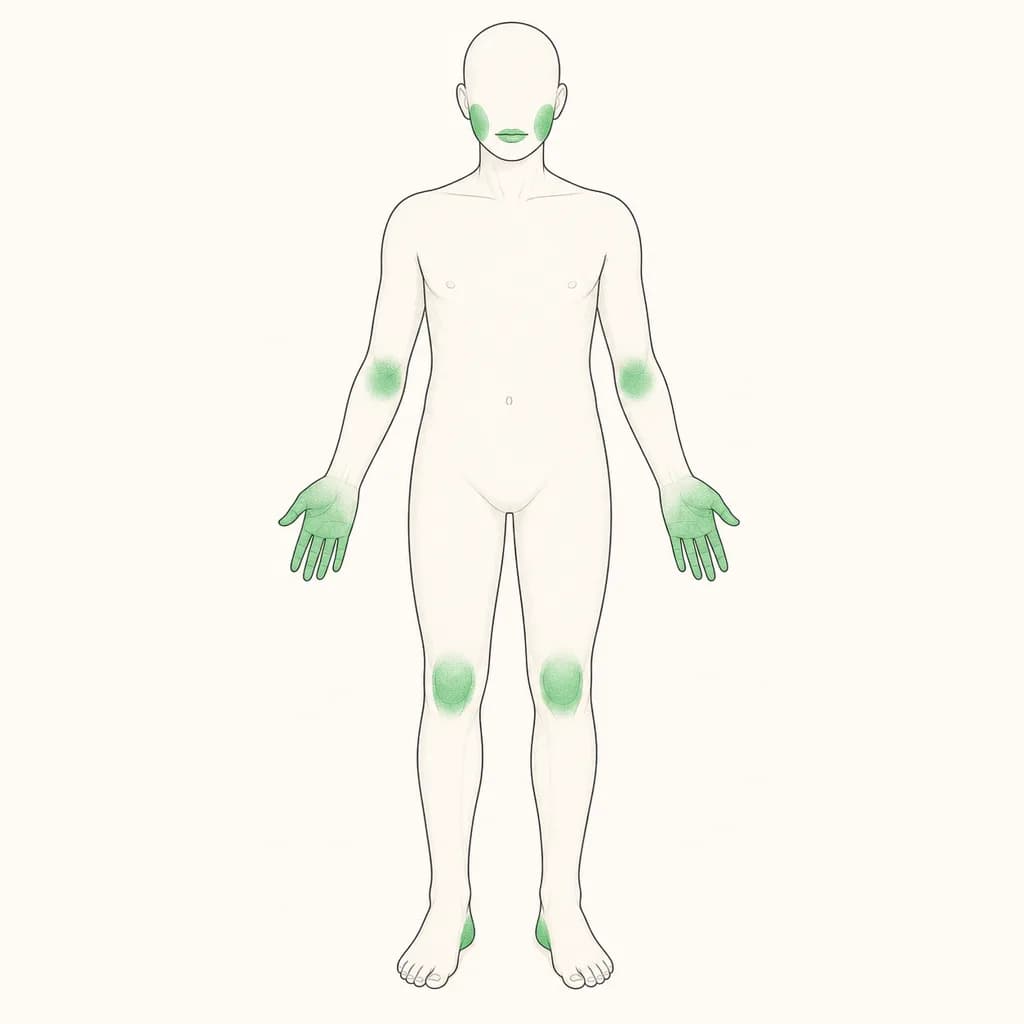
The soles carry body weight, so thickened skin at the heels, ball, or outer edge can split under repeated pressure. Dry air, long periods of standing, and friction from footwear may worsen the problem. Peeling, itch, or a powdery scale can occur with fungal infection. Atopic Dermatitis may cause dry, itchy fissures, and Psoriasis may create sharply scaly areas that crack. Cracked Skin is a symptom and does not identify one diagnosis. The exact site, texture, symmetry, pain, and presence of bleeding or drainage help guide an examination.
Steps that may help
Wash gently, dry thoroughly, and wear supportive footwear that does not rub the affected area. Apply a suitable emollient to clean, dry, intact skin, particularly after washing, while avoiding slippery product between toes or on an open wound unless advised. Do not peel fissured skin or use a blade, rough file, or harsh acid treatment. Emollient Therapy can improve flexibility when thick dryness is contributing. A clinician or pharmacist can help distinguish a barrier problem from fungal infection or inflammatory disease and suggest the appropriate product.
When to seek care
Seek an appointment for deep, bleeding, painful, recurrent, or slow-healing cracks. Prompt assessment is needed for spreading redness, warmth, swelling, pus, fever, red streaks, or reduced ability to walk. If you have diabetes, circulation problems, numbness, or an immune condition, arrange foot care early rather than repeatedly treating a fissure yourself. Tell the clinician where the crack began, what footwear you use, and whether itch or scale affects other areas.
Questions for your doctor
Is the sole crack caused by pressure, dryness, fungal infection, eczema, or psoriasis? Which moisturizer is safe on this area? Should I use padding or a prescribed treatment, and how will I know the skin is healing properly?
Find care
General Clinics & Polyclinics in Abu Dhabi
That answer is general. If you want it applied to your own case, these are licensed general clinics & polyclinics listed in Abu Dhabi.
27 Ar Ruwwad St - Shakhbout City - MSH4 - Abu Dhabi - United Arab Emirates
Accepts: Daman, Thiqa, Cigna, MetLife +20 more
Al Ruwais, Al Dhafrah
Accepts: Daman, Thiqa, AXA, Cigna +16 more
Al Bahyah - Al Bahyah Old - Abu Dhabi - United Arab Emirates
Accepts: Daman, Thiqa, Cigna, Allianz Care +18 more
Abu Dhabi
Accepts: Daman, Thiqa, AXA, Cigna +27 more
Ordered by verification status and how complete each clinic's public record is, then alphabetically. This is a directory listing, not a ranking — Zavis does not rate or recommend providers.
A factual listing drawn from the DHA, DOH and MOHAP licence registers. It is not a referral, an endorsement, or advice that any of these providers is right for you.
Questions people ask
Why do the soles crack even when I moisturise?
Ongoing pressure, friction, thickened skin, dampness, fungal infection, or inflammation may continue to drive fissures and need targeted advice.
Can I use a foot file on a cracked sole?
Avoid filing directly over an open fissure; vigorous removal can deepen the break, so ask a clinician about safer ways to manage thick skin.
Related
Related reading
Keep reading
Medical disclaimer. This page is general health information, not medical advice, and it cannot diagnose you. Always consult a licensed healthcare provider about your own symptoms and treatment. In an emergency in the UAE, call 998 for an ambulance.