
Complications of rhabdomyolysis
Short answer
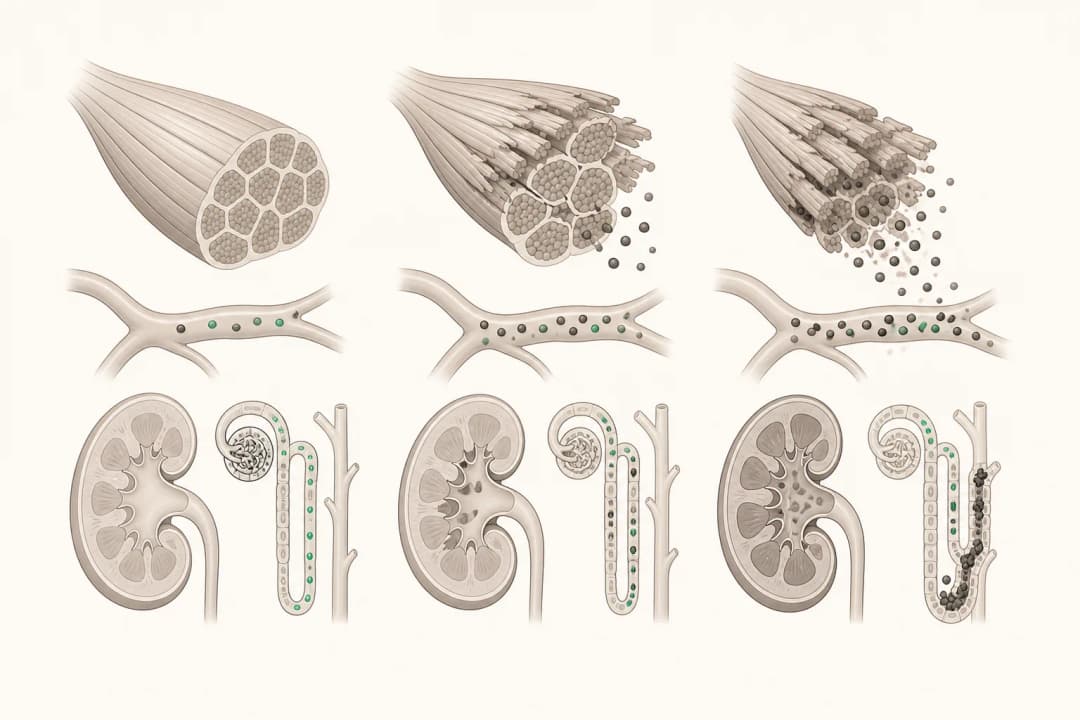
Rhabdomyolysis can cause acute kidney injury, dangerous electrolyte changes, abnormal heart rhythms, and pressure-related damage within swollen muscles.
This answers one question. It is not a diagnosis and does not replace an assessment by a licensed doctor.
At a glance
- Main organ at risk
- Kidneys
- Key tests
- Muscle enzyme, kidney function, electrolytes, and urine testing
- Recovery principle
- Treat the trigger and return to exertion gradually after clearance
The short answer
Muscle cells release myoglobin and electrolytes as they break down. These substances enter the bloodstream, placing stress on the kidneys and disrupting the electrical balance needed for normal heart and muscle function.
Why monitoring matters
Kidney injury may reduce urine output and allow waste products or fluid to build up. Shifts in potassium, calcium, and other electrolytes can cause weakness, confusion, seizures, or an irregular heartbeat. Severe swelling inside a tight muscle compartment can restrict blood flow and injure nerves and muscle.
The amount of soreness does not reliably show the degree of internal disruption. Some people have dark urine or marked weakness, while others lack the full classic pattern. Blood tests, urine tests, heart monitoring, and repeated kidney measurements help clinicians judge severity and response.
What to do now
Suspected rhabdomyolysis needs prompt medical assessment rather than exercise recovery advice alone. Stop strenuous activity, move out of excessive heat, and tell the clinician about recent exertion, injury, illness, seizures, alcohol or drug exposure, supplements, and medicines.
Treatment commonly includes carefully monitored fluids and correction of electrolyte problems. Do not force large volumes of fluid or stop a prescribed medicine without guidance, especially if urine output is falling or heart or kidney disease affects fluid handling. Resume training only after clinical clearance and a staged plan.
Get urgent help
Seek urgent care for severe muscle pain or swelling, unusual weakness, dark brown or red urine, or much less urine than normal, particularly after intense exertion, heat exposure, a crush injury, prolonged immobility, or a new medicine.
Call emergency services for fainting, confusion, seizure, chest discomfort, breathing difficulty, a racing or irregular heartbeat, or rapidly increasing limb pain and tightness. These may reflect an electrolyte emergency, severe kidney effects, or compartment syndrome.
Questions before discharge
Ask what probably triggered the muscle breakdown, whether kidney function and electrolytes have stabilised, when repeat tests are needed, and which medicines or activities to avoid. Request specific guidance on hydration, work, exercise, and symptoms that should bring you back to urgent care.
Find care
General Clinics & Polyclinics in Abu Dhabi
That answer is general. If you want it applied to your own case, these are licensed general clinics & polyclinics listed in Abu Dhabi.
27 Ar Ruwwad St - Shakhbout City - MSH4 - Abu Dhabi - United Arab Emirates
Accepts: Daman, Thiqa, Cigna, MetLife +20 more
Al Ruwais, Al Dhafrah
Accepts: Daman, Thiqa, AXA, Cigna +16 more
Al Bahyah - Al Bahyah Old - Abu Dhabi - United Arab Emirates
Accepts: Daman, Thiqa, Cigna, Allianz Care +18 more
Abu Dhabi
Accepts: Daman, Thiqa, AXA, Cigna +27 more
Ordered by verification status and how complete each clinic's public record is, then alphabetically. This is a directory listing, not a ranking — Zavis does not rate or recommend providers.
A factual listing drawn from the DHA, DOH and MOHAP licence registers. It is not a referral, an endorsement, or advice that any of these providers is right for you.
Questions people ask
Is dark urine always present in rhabdomyolysis?
No. Dark urine can occur when myoglobin is released, but its absence does not rule out rhabdomyolysis. Symptoms and blood testing are needed to assess suspected muscle breakdown.
How is rhabdomyolysis different from ordinary post-exercise soreness?
Ordinary soreness follows exertion and usually does not cause dark urine, reduced urine, marked swelling, or profound weakness. Those features require urgent assessment rather than another workout.
Can rhabdomyolysis affect the heart?
Yes. Electrolyte changes caused by muscle breakdown and kidney dysfunction can disturb heart rhythm, which is why severe cases may need cardiac monitoring.
Keep reading
Medical disclaimer. This page is general health information, not medical advice, and it cannot diagnose you. Always consult a licensed healthcare provider about your own symptoms and treatment. In an emergency in the UAE, call 998 for an ambulance.