
What should you know about complications of molar pregnancy?
Short answer
Molar pregnancy can cause heavy bleeding and other medical problems, while persistent trophoblastic tissue may require further specialist treatment.
This answers one question. It is not a diagnosis and does not replace an assessment by a licensed doctor.
At a glance
- Immediate concern
- Heavy vaginal bleeding can cause anemia or unstable circulation.
- Follow-up signal
- An hCG result that stops falling or rises needs specialist assessment.
- Persistent disease
- Active trophoblastic tissue after evacuation can be treated.
The short answer
Complications may occur before the pregnancy is removed or become apparent during hormone follow-up. Prompt treatment and continued hCG testing help the care team identify active tissue and respond to problems early.
Possible complications
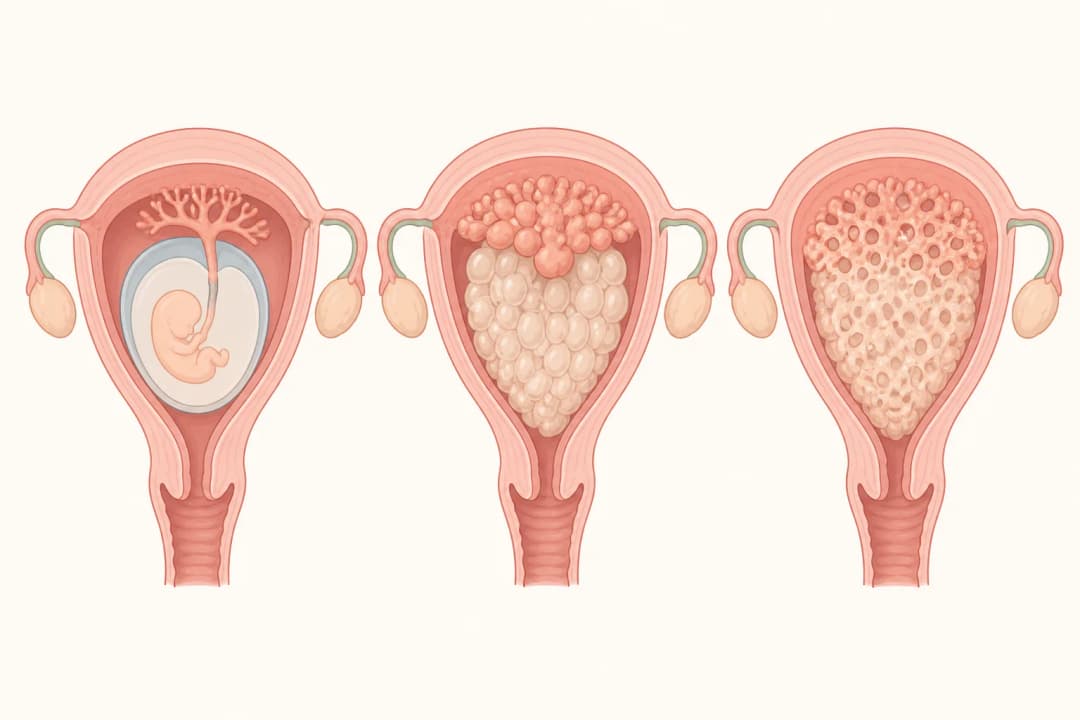
A molar pregnancy can present with vaginal bleeding, which may lead to anemia or, when severe, circulatory instability. Other possible problems include an enlarged uterus, ovarian cysts caused by hormone stimulation, marked nausea and vomiting, overactive thyroid symptoms, and pregnancy-related high blood pressure developing unusually early.
Sometimes trophoblastic tissue continues growing after uterine evacuation. This is called persistent gestational trophoblastic disease. It is detected mainly through hCG results that do not fall as expected or begin rising. Further assessment checks whether disease is confined to the uterus or present elsewhere and guides treatment.
How to protect your recovery
Complete the full hCG monitoring schedule even if you feel well, because persistent tissue may not cause noticeable symptoms. Record bleeding changes, pain, breathlessness, palpitations, headaches, and severe vomiting, then report them to the team managing the molar pregnancy.
Use the contraception agreed with your clinician until monitoring ends. A new pregnancy raises hCG and can hide the signal used to follow trophoblastic tissue. If persistent disease is diagnosed, specialist care may include chemotherapy, with the choice based on the extent of disease and other clinical factors.
When to seek care now
Seek emergency help for bleeding that rapidly soaks pads, fainting, severe weakness, trouble breathing, chest pain, coughing blood, a racing heartbeat with feeling unwell, or severe abdominal pain. Contact the treatment team promptly for fever, offensive discharge, worsening vomiting, a severe headache, vision changes, or bleeding that returns after settling. These signs need clinical assessment regardless of the next scheduled hCG test.
Questions for your doctor
Ask how your hCG trend is changing, what symptoms should trigger a direct call, whether blood tests show anemia or thyroid disturbance, and whether imaging is needed. If persistent disease is found, ask what the diagnosis means, what treatment is proposed, how response will be measured, and how the plan may affect future pregnancy timing.
Questions people ask
Can complications develop when I feel well?
Yes. Persistent trophoblastic tissue may first be detected through an abnormal hCG pattern rather than symptoms, which is why scheduled monitoring remains necessary after treatment.
Does persistent trophoblastic disease mean treatment has failed?
It means active tissue remains and the care plan needs to change. The specialist team assesses the hormone pattern and disease location before recommending treatment, which may include chemotherapy.
Can molar pregnancy affect the thyroid?
Very high pregnancy-hormone activity can stimulate the thyroid. Palpitations, tremor, heat intolerance, or feeling markedly unwell should be reported so the team can assess thyroid function and provide treatment if needed.
Related
Related reading
Keep reading
Cancer care in the UAE
Hospitals & Medical Centers in Abu Dhabi
Most UAE cancer care is delivered inside hospital services rather than by standalone oncology clinics, so these are licensed hospitals & medical centers listed in Abu Dhabi. Confirm the specific cancer service exists before you travel, and know that asking for a second opinion is routine.
Ahalia Hospital Musaffah Building - Musaffah - Musaffah Industrial - Abu Dhabi - United Arab Emirates
Accepts: Daman, Thiqa, AXA, Cigna +26 more
Al Ruwais Industrial City - Abu Dhabi - United Arab Emirates
Accepts: Daman, Thiqa, AXA, Cigna +30 more
Abu Dhabi, Abu Dhabi
Accepts: Daman, Thiqa, AXA, Cigna +30 more
Second opinions are routine in cancer care and asking for one does not affect your treatment. How to arrange a second opinion in the UAE.
Ordered by verification status and how complete each clinic's public record is, then alphabetically. This is a directory listing, not a ranking — Zavis does not rate or recommend providers.
A factual listing drawn from the DHA, DOH and MOHAP licence registers. It is not a referral, an endorsement, or advice that any of these providers is right for you.
Medical disclaimer. This page is general health information, not medical advice, and it cannot diagnose you. Always consult a licensed healthcare provider about your own symptoms and treatment. In an emergency in the UAE, call 998 for an ambulance.