
Cirrhosis and liver enzyme results
Short answer
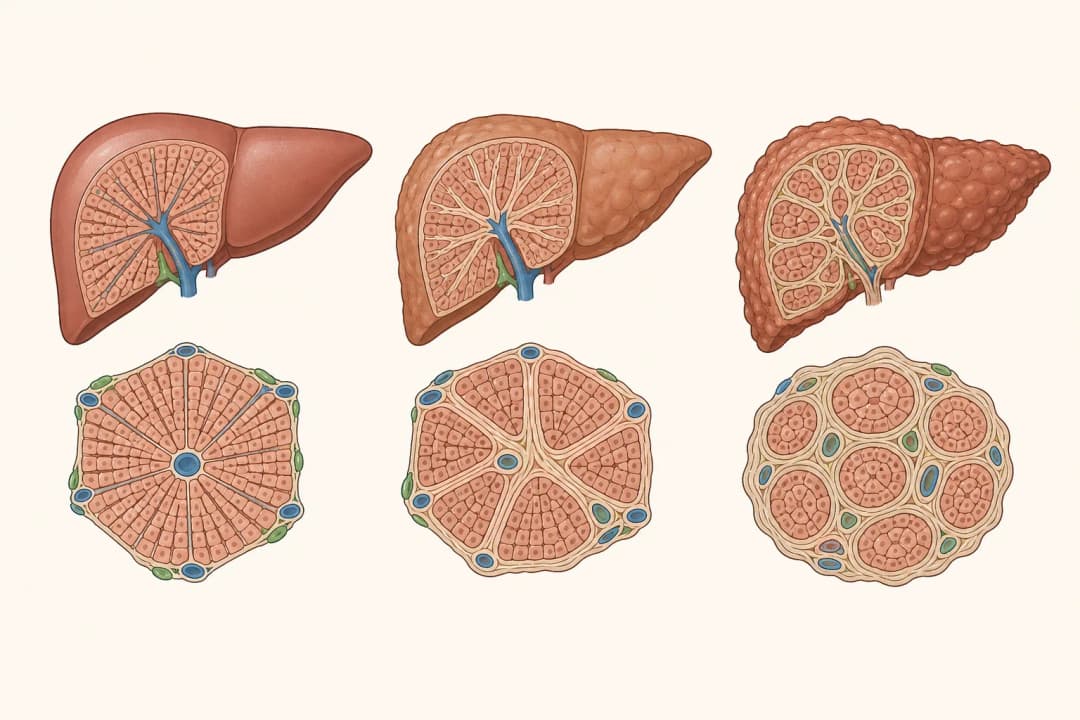
In cirrhosis, liver enzymes may be raised, mildly changed or even within the laboratory range, so they cannot show liver function or disease severity by themselves.
This answers one question. It is not a diagnosis and does not replace an assessment by a licensed doctor.
At a glance
- Key limitation
- Enzyme levels alone do not measure cirrhosis severity
- Useful comparison
- The pattern and change from earlier tests
- Broader assessment
- Symptoms, liver function tests, examination and imaging
The short answer
Clinicians interpret the pattern and trend alongside symptoms, examination findings, imaging and tests of what the liver produces or clears. A result in range does not rule out advanced scarring, and an elevated result does not by itself explain the cause.
What the different blood results mean
ALT and AST can rise when liver cells are irritated or injured. ALP and GGT may increase with problems affecting bile flow, although ALP can also come from bone and GGT can be influenced by alcohol or medicines. These are clues to a pattern, not direct measurements of how much healthy liver remains.
Bilirubin, albumin and clotting results are often reviewed with the enzymes, but they are not all liver enzymes. They give different information about clearing waste, making proteins and supporting blood clotting. Platelets, kidney function and sodium may add context, while ultrasound or other imaging can assess the liver, spleen, fluid in the abdomen and suspicious changes.
How to follow up an abnormal result
Review the full panel with the clinician who knows your cirrhosis rather than focusing on a single flagged value. Ask what has changed from your previous results, whether a medicine, infection, alcohol, blocked bile duct or another liver problem could be contributing, and whether repeat blood tests or imaging are needed.
Take medicines only as directed and check before using painkillers, herbal products or supplements, because a scarred liver may process them differently. Keep planned cirrhosis appointments and imaging. Cirrhosis increases the risk of liver cancer, so surveillance may be advised even when enzyme values are stable and you feel well.
Symptoms that need rapid assessment
Seek urgent medical assessment for vomiting blood, black stools, new confusion, extreme drowsiness, fainting, fever with a swollen abdomen, severe abdominal pain or sudden worsening yellowing of the skin or eyes. These symptoms can signal bleeding, infection, toxin build-up or another complication and should not wait for the next blood test.
Contact your liver team promptly for increasing abdominal swelling, new ankle swelling, reduced urine, persistent vomiting, worsening breathlessness, easy bleeding or a noticeable decline in appetite and strength. The urgency comes from the symptom change, even if a recent enzyme result looked reassuring.
Questions to clarify your liver results
Ask which results reflect liver-cell injury and which reflect liver function, whether the overall trend is stable, and what could explain a new change. Confirm when repeat testing and liver imaging are due, which medicines to avoid, and who to contact if swelling, jaundice, bleeding or confusion develops.
Questions people ask
Can liver enzymes be normal when someone has cirrhosis?
Yes. Enzymes can fall within the laboratory range even when substantial scarring is present. Diagnosis and monitoring therefore rely on more than ALT, AST, ALP or GGT alone.
Does a high ALT show how severe cirrhosis is?
No. ALT can indicate liver-cell injury, but its height does not directly measure scarring or remaining liver function. The clinician considers the complete blood panel, trend, symptoms and imaging.
Are bilirubin and albumin liver enzymes?
No. Bilirubin is a substance the liver processes, while albumin is a protein it makes. Both can help clinicians understand liver function when interpreted in context.
Related
Related reading
Keep reading
Cancer care in the UAE
Hospitals & Medical Centers in Abu Dhabi
Most UAE cancer care is delivered inside hospital services rather than by standalone oncology clinics, so these are licensed hospitals & medical centers listed in Abu Dhabi. Confirm the specific cancer service exists before you travel, and know that asking for a second opinion is routine.
Ahalia Hospital Musaffah Building - Musaffah - Musaffah Industrial - Abu Dhabi - United Arab Emirates
Accepts: Daman, Thiqa, AXA, Cigna +26 more
Al Ruwais Industrial City - Abu Dhabi - United Arab Emirates
Accepts: Daman, Thiqa, AXA, Cigna +30 more
Abu Dhabi, Abu Dhabi
Accepts: Daman, Thiqa, AXA, Cigna +30 more
Second opinions are routine in cancer care and asking for one does not affect your treatment. How to arrange a second opinion in the UAE.
Ordered by verification status and how complete each clinic's public record is, then alphabetically. This is a directory listing, not a ranking — Zavis does not rate or recommend providers.
A factual listing drawn from the DHA, DOH and MOHAP licence registers. It is not a referral, an endorsement, or advice that any of these providers is right for you.
Medical disclaimer. This page is general health information, not medical advice, and it cannot diagnose you. Always consult a licensed healthcare provider about your own symptoms and treatment. In an emergency in the UAE, call 998 for an ambulance.